Solutions
Implementation Org Review Org Monitoring Managed Services
Agents
Discovery Agent Metadata Agent Design Agent Build Agent Test Agent Governance Agent Support Agent
Industry Solutions
Financial Services
Healthcare & Life Sciences
NDIS & Disability Services
Nonprofit
Not-for-Profit
Other Industries
Recruitment & Staffing Real Estate Cosmetic Procedures
Agentforce Claudeforce Blogs Pricing

Agentforce for Developers: How to Build AI-Powered Solutions

Agentforce for Developers: How to Build AI-Powered Solutions

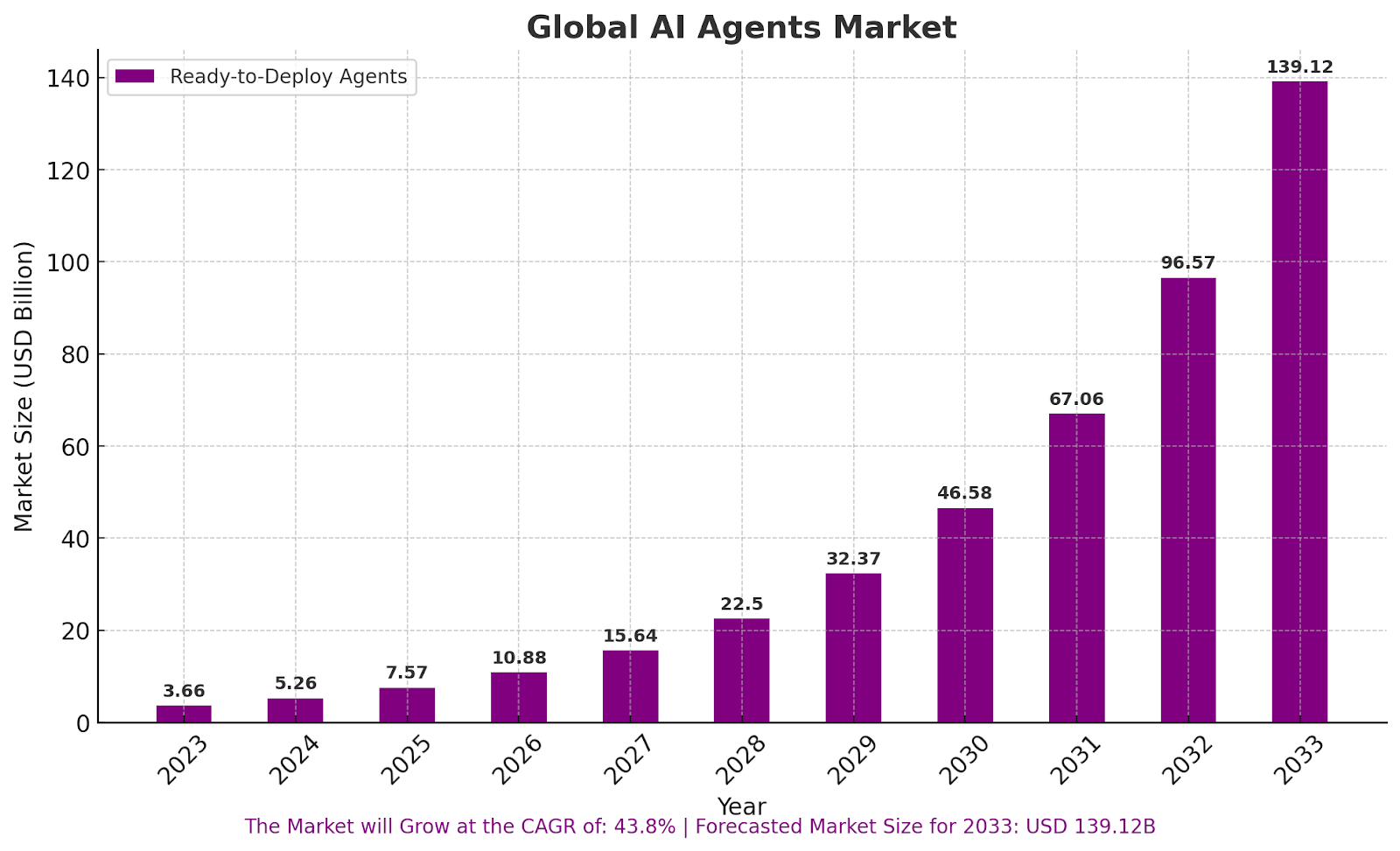
85% of IT leaders anticipate that AI will significantly boost developer productivity within the next three years. This surge in efficiency is largely attributed to AI-powered tools like Agentforce for Developers, which are transforming the way Salesforce professionals approach application development.

With Agentforce, you get a powerful assistant that not only generates code but also helps with debugging, documentation, and unit test creation. Whether you’re working with Apex, Lightning Web Components (LWC), or Visualforce, Agentforce provides AI-driven automation that allows you to focus on high-value tasks rather than repetitive coding work.
AD 4nXcUAQeHaFkZajC2t0MaAUG9CGjOBWl1SxRjVcq8yVuhhjHLv1a845WH

Source: Market.us

Let’s explore how Agentforce for Developers works, its core features, and why it is a game-changer for Salesforce professionals.

What Is Agentforce for Developers?

Agentforce for Developers is an AI-powered suite of tools built specifically for Salesforce developers. Previously known as Einstein Copilot for Developers, it was rebranded to align with Salesforce’s broader AI vision. This suite is powered by Salesforce’s proprietary Large Language Models (LLMs), enabling developers to automate coding, improve accuracy, and accelerate development cycles.

Why Is Agentforce a Game-Changer for Developers?

  • Automates Repetitive Coding Tasks – Saves time by generating and optimizing Apex, LWC, and SOQL queries.
  • Provides AI-Driven Code Suggestions – Helps developers write high-quality, best-practice-compliant code.
  • Enhances Debugging and Documentation – Automatically explains and documents code, reducing manual effort.
  • Ensures Data Security with Einstein Trust Layer – Keeps sensitive Salesforce data protected from external AI providers.

With Agentforce, Salesforce developers can code smarter, not harder by leveraging AI assistance throughout the entire development lifecycle.

“Artificial intelligence and generative AI may be the most important technology of any lifetime.”

 – Marc Benioff, Chair, CEO, and Co-Founder of Salesforce:

How Does Agentforce for Developers Work?

Agentforce integrates seamlessly with Visual Studio Code (VS Code) and Code Builder, providing AI-powered enhancements directly in your development environment. The platform relies on Salesforce’s AI models, CodeGen2.5 and xGen-Code, which enable intelligent code generation and real-time coding assistance.

Key Components of Agentforce for Developers

  1. Dev Assistant – Your personal AI coding assistant that helps with code generation, explanation, and documentation.
  2. Agent Builder – A low-code tool for creating AI-driven custom assistants within Salesforce.
  3. Atlas Reasoning Engine – Enhances AI decision-making, ensuring smarter automation.
  4. Einstein Trust Layer – Provides enterprise-grade security for AI-driven development.

With these components, Agentforce doesn’t just suggest code—it understands your Salesforce environment, making intelligent recommendations that improve efficiency and accuracy.

Core Features of Agentforce for Developers

Agentforce offers a comprehensive set of AI-powered tools that enhance every stage of Salesforce development. Here’s a deep dive into its most impactful features.

1. Dev Assistant: AI-Powered Coding Partner

The Dev Assistant is a conversational AI assistant designed to speed up coding tasks, improve code quality, and reduce errors. It supports multi-turn conversations, allowing developers to refine code, troubleshoot, and automate documentation.

How Dev Assistant Helps:

  • Code Generation – Write Apex or LWC code using simple natural language prompts.
  • Test Case Creation – Automatically generate unit test cases for Apex classes.
  • Code Explanation – Use the /explain command to get a breakdown of any complex code snippet.
  • Inline Code Autocomplete – Get real-time code suggestions based on your coding style.

By leveraging Dev Assistant, developers can reduce coding errors, speed up development, and maintain high-quality standards.

2. Agent Builder: Custom AI Assistants

Salesforce Agent Builder allows developers to create custom AI agents that automate specific tasks within applications. It provides a low-code environment where developers can define actions, set goals, and integrate workflows with Salesforce APIs.

How Agent Builder Works:

  • Define Topics and Goals – Set up AI agents to handle support queries, automation tasks, or complex workflows.
  • Integrate with Apex and APIs – Extend capabilities by integrating custom logic through Apex and third-party APIs.
  • Automate Business Processes – Use AI-driven agents to streamline customer interactions and backend processes.

With Agent Builder, developers can move beyond just coding and start building AI-powered solutions that enhance user experience and operational efficiency.

3. Atlas Reasoning Engine: The AI Decision-Maker

The Atlas Reasoning Engine is the intelligence layer that powers AI decision-making in Agentforce. It enables AI assistants to analyze real-time data, adapt responses, and make automated decisions.

Why Atlas Reasoning Engine Matters:

  • Enhances Context Awareness – AI assistants can understand and respond intelligently to different user inputs.
  • Reduces Errors in Automation – Ensures AI agents follow predefined business rules and security guidelines.
  • Improves AI Accuracy – Learns from historical data to improve decision-making over time.

With Atlas Reasoning Engine, developers can create AI-driven agents that behave intelligently and align with business objectives.

4. Einstein Trust Layer: Enterprise-Grade Security

One of the biggest concerns with AI-driven development is data security. Salesforce addresses this with the Einstein Trust Layer, a built-in security framework that protects sensitive Salesforce data from unauthorized access and third-party AI models.

Key Security Benefits of Einstein Trust Layer:

  • Zero Data Retention – Ensures no customer data is stored or used for AI training.
  • Role-Based Access Controls – Restricts AI-driven actions based on user permissions.
  • Compliance with Enterprise Security Standards – Meets regulatory requirements for data privacy.

By integrating Einstein Trust Layer, Agentforce for Developers guarantees security and compliance without sacrificing AI-driven productivity.

“We’re making this analogy that AI is the new electricity. Electricity transformed industries: agriculture, transportation, communication, manufacturing.”

Andrew Ng, Co-Founder of Coursera and Adjunct Professor at Stanford University

Top Benefits of Using Agentforce for Developers

  • Saves Time – Automates coding, debugging, and documentation.
  • Boosts Productivity – AI-powered suggestions improve development speed.
  • Enhances Code Quality – Ensures best practices with every generated line of code.
  • Provides Customization – Allows developers to build custom AI agents tailored to business needs.
  • Ensures Security – Maintains strict data privacy and compliance with enterprise security protocols.

With Agentforce for Developers, you can code faster, deploy smarter, and build AI-powered Salesforce solutions like never before.

Also Read – What Is DeepSeek? A Complete Breakdown

Getting Started with Agentforce for Developers

Now that you understand the core features and benefits of Agentforce, the next step is setting it up and integrating it into your Salesforce development workflow. Whether you’re using VS Code or Salesforce Code Builder, the installation process is straightforward.

1. Installing Agentforce for Developers

Agentforce for Developers is available through the Salesforce Extension Pack (Expanded) in VS Code and Code Builder. Follow these steps to install and activate it:

  • Step 1: Open Visual Studio Code (VS Code) or Salesforce Code Builder.
  • Step 2: Navigate to the Extensions menu.
  • Step 3: Search for Salesforce Extension Pack (Expanded) and install it.
  • Step 4: Enable Agentforce for Developers within the extension settings.
  • Step 5: Start using AI-powered features like Dev Assistant, inline code autocomplete, and test case generation.

Once installed, Agentforce for Developers seamlessly integrates with your Salesforce development environment, offering AI-powered coding assistance right inside your editor.

How to Use Agentforce for Daily Development Tasks

With Agentforce set up, it’s time to leverage its AI capabilities in your daily Salesforce development work.

1. Generating Apex and LWC Code with Natural Language

Instead of writing boilerplate code manually, you can ask Dev Assistant to generate Apex classes, triggers, or Lightning Web Components (LWC) with a simple command.

  • Example Prompt:
    “Generate an Apex class that retrieves all accounts where the annual revenue is above $1M.”
  • Agentforce Response:

public class HighRevenueAccounts {

    public static List<Account> getAccounts() {

        return [SELECT Id, Name, AnnualRevenue FROM Account WHERE AnnualRevenue > 1000000];

    }

}

With Agentforce, you no longer need to spend time writing repetitive queries—it understands your intent and generates Salesforce-ready code instantly.

2. Using Inline Code Autocomplete for Faster Development

As you type code in Apex, LWC, JavaScript, or SOQL, Agentforce’s AI-powered inline autocomplete suggests relevant code snippets in real time.

  • Example:
    If you’re writing a SOQL query in Apex, Agentforce will automatically suggest relevant filters, fields, and best practices.

This feature ensures consistency, reduces errors, and accelerates coding speed.

3. Explaining Code with AI-Powered Documentation

If you inherit a complex Apex class or LWC component, you can use the /explain command to get an easy-to-understand breakdown.

  • Example Prompt:
    “Explain what this Apex class does.”
  • Agentforce Response:
    • This Apex class retrieves a list of high-revenue accounts.
    • It fetches only Id, Name, and Annual Revenue fields.
    • Uses a SOQL WHERE clause to filter accounts with revenue above $1M.

This feature is a lifesaver when working with legacy codebases or onboarding new developers.

4. Automating Unit Test Generation

Salesforce requires Apex classes to have at least 75% test coverage before deployment. Instead of writing tests manually, you can use Agentforce to auto-generate test cases.

  • Example Prompt:
    “Generate a unit test for the HighRevenueAccounts class.”
  • Agentforce Response:

@isTest

public class HighRevenueAccountsTest {

    @isTest

    public static void testGetAccounts() {

        // Create test accounts

        Account acc1 = new Account(Name=’Test Account 1′, AnnualRevenue=2000000);

        Account acc2 = new Account(Name=’Test Account 2′, AnnualRevenue=500000);

        insert new List<Account>{acc1, acc2};


        // Call method and assert results

        List<Account> result = HighRevenueAccounts.getAccounts();

        System.assertEquals(1, result.size());

        System.assertEquals(‘Test Account 1’, result[0].Name);

    }

}

This feature eliminates manual testing effort and ensures code quality before deployment.

Also Read – Starting with Agentforce: A Confident and Clear Approach

Final Thoughts 

Salesforce developers who adopt Agentforce gain a competitive edge by leveraging AI-driven automation, code optimization, and real-time assistance. Whether you’re a junior developer learning Apex or a seasoned architect building complex enterprise solutions, Agentforce enhances your workflow, saves development time, and improves code quality.
getgenerative.ai implement salesforce 10x faster

Supercharge Your Salesforce Implementation with AI! Streamline your entire lifecycle—from Pre-Sales to Go-Live—with AI-powered Workspace + Agents from GetGenerative.ai. Try it today!

FAQs 

1. Can Agentforce generate complete Salesforce applications?

No, but it can significantly accelerate the development process by automating coding tasks, generating Apex classes, and assisting with debugging and documentation.

2. Does Agentforce require an internet connection?

Yes, as it relies on Salesforce’s cloud-based AI models to generate code, provide explanations, and assist with debugging.

3. Can I use Agentforce for LWC (Lightning Web Components)?

Yes, Agentforce supports Apex, LWC, SOQL, and Visualforce, helping developers write JavaScript, CSS, and HTML more efficiently.

4. Is Agentforce free for developers?

Agentforce is included in the Salesforce Extension Pack (Expanded) but may require specific Salesforce licensing for full feature access.

5. How secure is Agentforce when handling sensitive Salesforce data?

Salesforce ensures enterprise-grade security with Einstein Trust Layer, which prevents unauthorized data access and maintains compliance with industry security standards.
What Is DeepSeek? A Complete Breakdown

What Is DeepSeek? A Complete Breakdown

DeepSeek has emerged as one of the most disruptive players in the AI industry, shaking up the dominance of established giants like OpenAI, Google, and Meta. Developed by a Chinese AI startup, DeepSeek has stunned the tech world with its highly efficient, cost-effective large language models (LLMs) that rival, and in some cases outperform, Western alternatives.

The release of DeepSeek-R1 in January 2025 triggered a massive reaction in both AI circles and global stock markets. Investors scrambled to reassess AI valuations as DeepSeek’s models, which cost a fraction of what its competitors spend, demonstrated remarkable capabilities.

Unlike traditional AI firms that operate on closed-source, high-cost models, DeepSeek follows a more open-source approach, providing developers and businesses access to cutting-edge AI without excessive price barriers. But what exactly is DeepSeek, and why is it making waves in the AI industry?

The Rise of DeepSeek

DeepSeek’s journey began in 2023 when Liang Wenfeng, a former hedge fund manager, founded the company in Hangzhou, China. Liang, who had co-founded the quantitative hedge fund High-Flyer, pivoted his focus toward artificial intelligence, seeking to develop advanced reasoning models that could compete with the best AI systems in the world.

Despite being a relatively new entrant in the AI race, DeepSeek’s rapid innovation and cost-efficient training techniques have allowed it to stand out. While leading AI firms like OpenAI and Google have spent billions developing their flagship models, DeepSeek-R1 was reportedly trained for less than $6 million, a staggering difference that has raised eyebrows across the industry.

AD 4nXcMmEM3DwsGZGace6WNPusg3j6nuS sXib4K3f8IBvCNJcz8jSUF3UrW2es9Tb712MsSoSsb05guD goxax1XWo1HIUL8FDKcYpE4M miIwrOPmNnOm zvbDYEGnn73MtXGoJGC?key=RRl3

Source: Statista

Key Innovations Behind DeepSeek’s AI Models

DeepSeek’s approach to AI development differs significantly from that of its Western competitors. The company has pioneered new training methodologies that reduce computational costs while enhancing reasoning capabilities.

Reinforcement Learning for Advanced Reasoning

DeepSeek employs reinforcement learning techniques that allow its models to improve over time through iterative feedback. Instead of relying solely on massive datasets and supervised fine-tuning, DeepSeek-R1 enhances its performance through trial and error, gradually refining its ability to reason and generate human-like responses.

Efficient Model Training with Limited Resources

One of the most astonishing aspects of DeepSeek is its ability to train high-performance models using older and less powerful AI chips. Despite U.S. restrictions on exporting cutting-edge AI hardware to China, DeepSeek has managed to create state-of-the-art models using more accessible computing resources, challenging the notion that high-end GPUs are necessary for leading AI development.

Mixture-of-Experts (MoE) Architecture

DeepSeek-V3 and DeepSeek-R1 utilize a Mixture-of-Experts (MoE) architecture, which optimizes efficiency by selectively activating only portions of the model for each query. Instead of processing every input with the full weight of the AI’s parameters, MoE ensures that only the most relevant parts of the model are engaged. This drastically reduces computational costs while maintaining high accuracy and performance.

Reward Engineering for Better AI Alignment

DeepSeek has introduced a rule-based reward system, refining the way AI models learn from feedback. Unlike traditional neural reward models, which rely on vast amounts of labeled data, DeepSeek’s system focuses on logical consistency, helping the AI produce more reliable and coherent responses.

“DeepSeek R1 is one of the most amazing and impressive breakthroughs I’ve ever seen—and as open source, a profound gift to the world.” 

Marc Andreessen, Co-founder of Andreessen Horowitz

Comparison: DeepSeek vs. OpenAI and Other AI Models

DeepSeek’s rapid ascent has put it in direct competition with OpenAI’s ChatGPT, Google’s Gemini, and Meta’s Llama. Here’s how DeepSeek stacks up against the competition:

FeatureDeepSeekOpenAI (ChatGPT)Google GeminiMeta (Llama)
Founding Year2023201520232023
Model TypeOpen-source LLMsProprietary LLMsProprietary LLMsOpen-source LLMs
Cost of Training<$6 million (DeepSeek-R1)Estimated $100M+ (GPT-4o)High (Undisclosed)High (Undisclosed)
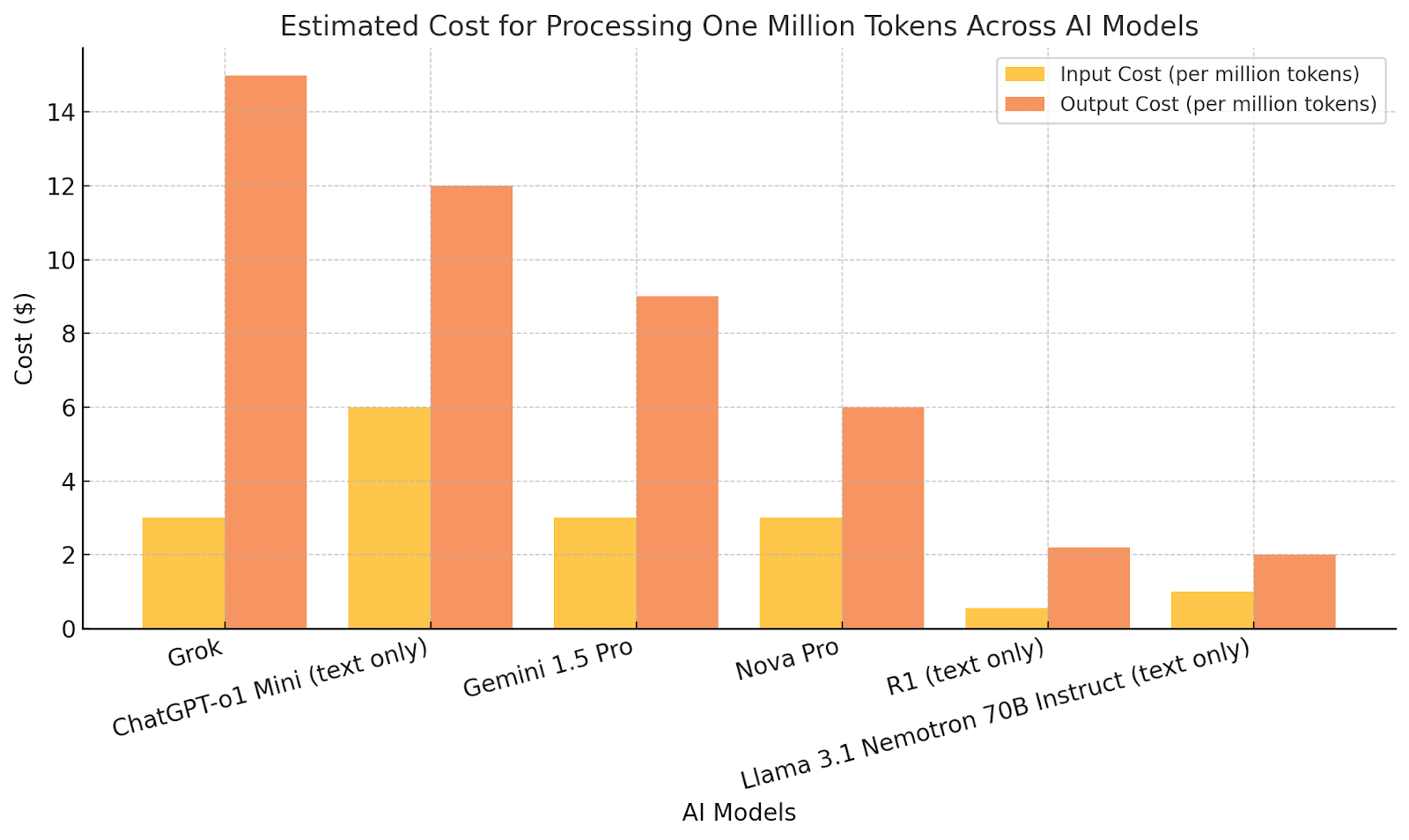
API Pricing (per million tokens)$0.55 (input), $2.19 (output)$15 (input), $60 (output)Not disclosedFree for research use
ArchitectureMixture-of-ExpertsTransformer-basedTransformer-basedTransformer-based
Reasoning AbilityStrong, optimized for efficiencyAdvanced but high-costAdvancedBalanced performance

DeepSeek’s biggest advantage lies in its cost-to-performance ratio, as it delivers comparable or superior results at a fraction of the price of its competitors. This affordability has made DeepSeek particularly attractive to businesses, developers, and AI researchers.

Related Read – DeepSeek vs ChatGPT: Comparing Cost, Performance, and Accuracy

DeepSeek’s Major AI Models

DeepSeek has released several AI models, each designed for specific use cases:

DeepSeek Coder (November 2023)

A model specialized for coding tasks, DeepSeek Coder was the first AI system released by the company. It offers robust programming assistance, supporting multiple languages and helping developers write, debug, and optimize code more efficiently.

DeepSeek LLM (December 2023)

This was DeepSeek’s first general-purpose language model, providing foundational AI capabilities for chatbots, content generation, and automation.

DeepSeek-V2 (May 2024)

An upgraded version of its general LLM, DeepSeek-V2 improved both reasoning ability and efficiency, making it a strong alternative to OpenAI’s GPT models.

DeepSeek-Coder-V2 (July 2024)

A highly advanced coding assistant featuring 236 billion parameters and a 128,000-token context window, making it one of the most capable AI models for complex programming tasks.

DeepSeek-V3 (December 2024)

A cutting-edge AI model featuring 671 billion parameters and an efficient MoE architecture, DeepSeek-V3 became the backbone for later models, including DeepSeek-R1.

DeepSeek-R1 (January 2025)

DeepSeek’s most advanced reasoning model, built upon DeepSeek-V3, aimed at competing with OpenAI’s o1 model. It delivers powerful logical reasoning at a significantly lower computational cost.

Janus-Pro-7B (January 2025)

A vision model designed for image analysis and generation, Janus-Pro-7B showcases DeepSeek’s capabilities beyond text-based AI, positioning the company as a competitor in the multimodal AI space.

Why DeepSeek Is Disrupting the AI Industry

DeepSeek’s rapid rise has not gone unnoticed by the global AI market. The company’s ability to achieve state-of-the-art AI performance at a fraction of the cost has raised concerns among Western tech giants, leading to significant market reactions.

Stock Market Impact

When DeepSeek-R1 launched in January 2025, the Nasdaq Composite dropped by 3.4%, and major AI-focused companies such as Nvidia, Microsoft, and Meta experienced steep stock declines. Investors feared that DeepSeek’s cost-effective AI could undermine the premium pricing models that Western firms rely on.

Geopolitical Implications

DeepSeek’s advancements have also ignited discussions about China’s position in the global AI race. Despite restrictions on high-end AI chips, DeepSeek has demonstrated that China can still develop leading AI technologies. This has raised concerns among U.S. policymakers about technological dominance and national security.

The Open-Source Debate

Unlike OpenAI’s increasingly closed approach, DeepSeek maintains an open-source philosophy, allowing global researchers to build upon its models. While this fosters innovation, it also raises ethical and security concerns about how AI technologies are shared and controlled.

Security Concerns Surrounding DeepSeek

Despite its rapid success, DeepSeek has faced significant scrutiny regarding security, data privacy, and geopolitical implications. As an AI model developed in China, concerns have been raised about how the data processed by DeepSeek is stored, accessed, and potentially monitored.

Data Privacy and Surveillance Risks

One of the biggest concerns about DeepSeek is that all user data is stored in China, raising alarms about potential government oversight. Critics worry that personal and corporate data processed through DeepSeek models could be accessible to Chinese authorities, creating major cybersecurity and privacy risks for businesses and individuals outside China.

This concern has led several governments and organizations to ban the use of DeepSeek within their institutions, citing national security and data protection concerns.

DeepSeek Bans Across the World

Due to its data policies and geopolitical tensions, DeepSeek has been banned or restricted in multiple regions and industries.

Organizations and Governments That Have Banned DeepSeek

  • United States: U.S. Congress, U.S. Navy, Pentagon, and Texas state government
  • Europe: Italy has banned DeepSeek over privacy concerns
  • Australia: Government agencies have prohibited DeepSeek usage
  • Taiwan and South Korea: Various government agencies have restricted access
  • NASA: Due to security concerns regarding proprietary research data

These bans have hindered DeepSeek’s expansion into Western markets, but its open-source nature means that developers in these regions can still access and modify its models independently.

DeepSeek’s Cybersecurity Challenges

As DeepSeek’s popularity surged, it also became a prime target for cyberattacks.

Major Cyberattack on DeepSeek (January 2025)

On January 27, 2025, DeepSeek was hit by a large-scale cyberattack that temporarily disrupted its services. The attack occurred shortly after its AI assistant overtook ChatGPT as the most downloaded app on Apple’s App Store.

Details of the Attack

  • New user registrations were temporarily halted to prevent further breaches
  • The attack overloaded DeepSeek’s web services and API, suggesting a DDoS (Distributed Denial-of-Service) attack
  • DeepSeek deployed security patches and restored full functionality by January 28, 2025

While the attack was quickly mitigated, it highlighted the risks associated with AI platforms operating on a global scale.

DeepSeek Data Leak (January 29, 2025)

Just days after the cyberattack, Wiz Research, a cybersecurity firm, uncovered a massive data exposure within DeepSeek’s backend systems.

What Was Leaked?

  • User chat history and sensitive logs
  • API keys and authentication credentials
  • Operational details about DeepSeek’s infrastructure

This “rookie” cybersecurity mistake sparked further concerns about DeepSeek’s ability to protect user data, reinforcing arguments against its use in sensitive environments.

“To people who see the performance of DeepSeek and think: ‘China is surpassing the US in AI.’ You are reading this wrong. The correct reading is: ‘Open source models are surpassing proprietary ones.” 

Yann LeCun, Vice President & Chief AI Scientist at Meta:

Why DeepSeek’s AI Efficiency is a Game-Changer

Despite security concerns, DeepSeek’s AI efficiency is a major breakthrough that could reshape the industry’s future.

DeepSeek’s Low-Cost Model vs. High AI Development Costs

One of the biggest revelations from DeepSeek’s rise is how much less it costs to develop high-performing AI.

AI Training Costs Comparison

  • DeepSeek-R1: Trained for less than $6 million
  • OpenAI’s GPT-4o: Estimated to have cost over $100 million
  • Google Gemini: High-cost but undisclosed training expenses

This raises a crucial question: Have Western AI companies been overspending on model development?

How DeepSeek Achieved Cost-Effective AI

DeepSeek’s efficiency is primarily due to:

  1. Mixture-of-Experts (MoE) architecture – Activates only the necessary parts of the model, reducing energy use
  2. Reinforcement learning – Allows AI to improve without excessive retraining
  3. Optimized training methods – Uses older AI chips instead of expensive high-end GPUs

By proving that advanced AI can be trained at a fraction of the usual cost, DeepSeek has forced tech companies and investors to rethink AI funding strategies.

The Future of DeepSeek and AI Industry Shifts

DeepSeek’s impact is far from over. The AI industry is now facing a period of rapid change, with open-source AI models becoming more competitive.

Will Open-Source AI Take Over?

DeepSeek follows an open-source model, allowing developers worldwide to access, modify, and improve its AI. This contrasts with OpenAI’s recent shift towards more closed, monetized AI solutions.

If DeepSeek continues on this path, AI innovation may move away from corporate-controlled models and become more decentralized.

Potential U.S. and Global Responses to DeepSeek

Given DeepSeek’s success, Western AI firms and governments may take countermeasures, such as:

  • Increased AI investments – Companies like OpenAI, Google, and Meta may accelerate AI research to maintain dominance
  • Stronger AI export controls – The U.S. may tighten restrictions on AI chip exports even further
  • Development of open-source AI alternatives – Companies may adopt a more transparent approach to counter DeepSeek’s popularity

The AI industry is entering a new phase, where cost-effective AI models like DeepSeek could fundamentally change how AI is developed and used globally.

Conclusion: Is DeepSeek the Future of AI?

DeepSeek has undeniably disrupted the AI industry with its cost-efficient, high-performing models. It has proven that AI development doesn’t have to be expensive and that open-source approaches can rival closed-source powerhouses like OpenAI and Google.

getgenerative.ai implement salesforce 10x faster

Revolutionize your Salesforce implementation lifecycle with GetGenerative.ai – the AI-powered workspace and agents designed to streamline every stage, from Pre-Sales to Go-Live. Experience seamless project management and enhanced efficiency like never before.

FAQs

1. What makes DeepSeek different from OpenAI’s ChatGPT?

DeepSeek is more cost-efficient, open-source, and optimized for reasoning tasks, whereas OpenAI follows a proprietary, high-cost model. DeepSeek’s training costs are significantly lower, making it a competitive alternative.

2. Why is DeepSeek banned in several countries?

Concerns about data privacy, government oversight, and cybersecurity risks have led multiple governments, including the U.S. and Australia, to ban DeepSeek in official capacities.

3. How did DeepSeek develop its AI without high-end GPUs?

Despite U.S. export restrictions on advanced AI chips, DeepSeek trained its models using older, less powerful chips while optimizing its training techniques for efficiency.

4. Can businesses safely use DeepSeek models?

While DeepSeek’s AI models are highly capable, businesses should be cautious about data privacy risks. Running DeepSeek models on private servers or via vetted platforms may be a safer alternative.

5. Will DeepSeek overtake OpenAI in the AI race?

While DeepSeek has gained rapid momentum, OpenAI and other Western firms still hold an edge in enterprise adoption and funding. However, DeepSeek’s innovations are reshaping the AI industry, making it a major contender for the future.

AI Consultant Career Path: Stages, Gates and Branches

AI Consultant Career Path: Stages, Gates and Branches

Almost everything written about this topic answers a different question. Search the term and you get entry advice: which language to learn, which certification to buy, how to build a portfolio. That is the question of how to get in, and it is answered once. A career path is the set of transitions that come afterwards, and those are the parts nobody documents.

There is a second problem with older material. The AI consultant described in 2024 built models. The one being hired in 2026 mostly deploys, integrates and governs systems somebody else built, which changes what each stage of the ladder is actually testing.

Four stages separate a new consultant from a practice lead

The visible ladder is titles. The real ladder is what a client will let you decide without checking.

Stage

What the client is paying for

What you are trusted to decide

Typical time in stage

Associate

Execution against a defined scope

Almost nothing; you propose, someone approves

1 to 2 years

Consultant

A working solution to a stated problem

Design choices inside an agreed approach

2 to 4 years

Senior consultant

The definition of the problem itself

Scope, sequence and what will not be attempted

3 to 5 years

Principal or practice lead

Judgement applied to somebody else’s engagement

Whether the engagement should exist at all

Indefinite

Read the third column downwards and the pattern is clear. Progress is not accumulating tools. It is being trusted with decisions that are more expensive to get wrong, and each promotion is really a transfer of risk from your employer to you.

The fourth column is deliberately wide, because time in stage responds to exposure rather than to years served. Someone on three small engagements a year moves faster than someone on one long one, having seen three times as many problems reach their consequences.

Each career transition is gated by a different proof

This is the part that is missing from the rest of the internet, and it is the reason people plateau without understanding why. The three transitions are not the same test repeated at higher difficulty.

Transition

The gate

The proof that clears it

What stalls people here

Associate to consultant

Can you finish without supervision?

A deliverable that went to a client with your name on it and needed no rework

Waiting to be given work rather than closing gaps nobody assigned

Consultant to senior

Can you be wrong safely?

A recommendation you made, defended, and were held to, including one that did not work

Only ever executing decisions made by others, so no track record of judgement exists

Senior to principal

Can you make other people effective?

An engagement that went well while you were not in the room

Staying the best individual contributor and becoming the bottleneck

The middle row is where most careers actually stop. Executing well is comfortable and it is rewarded, so people stay in it for years and then find that no one can point to a decision they own. Being wrong in public, having predicted the risk in writing beforehand, builds more seniority than a run of quiet successes on other people’s calls.

The third row catches a different personality: the technically excellent consultant who cannot let go. If every engagement needs you present, the practice cannot grow past you, and the promotion that appears to be about seniority is really about whether the work survives your absence.

Judgement compounds while tooling knowledge depreciates

There is data behind that claim, and it comes from learner behaviour rather than from opinion. Coursera’s Job Skills Report 2026, drawn from more than six million enterprise learners across nearly seven thousand organisations, records a 234 percent year-on-year rise in generative AI enrolments and, alongside it, a 120 percent average rise in critical thinking enrolments across the career areas analysed.

The detail worth sitting with is where critical thinking ranks. In the data career area it is the second fastest-growing skill, above prompt engineering, in a field that used to reward hands-on database work almost exclusively. Coursera’s own reading is that data professionals are moving from operating systems directly to supervising AI layers and validating what those layers produce.

That is the career path in one sentence. The technical half of the job is being pushed down the stack by the tools, and the half that survives is deciding whether the output is right. Every gate in the table above is a judgement gate for exactly this reason, and it is why a consultant who invests only in tooling finds the ladder shorter than expected.

Tooling knowledge still matters. It simply has a half-life, because the platform releases three times a year and the model changes underneath it, so what you knew last year is partly obsolete and what you concluded last year mostly is not.

Advisory and delivery are two careers wearing one title

Generic AI career advice fails because it averages two paths that reward opposite behaviour.

The advisory path sells judgement before the work: opportunity assessment, roadmaps, governance, business cases, vendor selection. Progression runs toward influence over larger decisions, and the currency is credibility with executives. The risk is drifting far enough from delivery that recommendations stop being implementable, which is the failure mode clients recognise instantly and describe as strategy that could not survive contact with the org.

The delivery path sells judgement during the work: configuration, integration, agent design, testing, deployment, the awkward production defect at week eleven. Progression runs toward technical ownership of harder systems, and the currency is a record of things that went live and stayed live. The risk is being valued only while your hands are on the keyboard, which caps income at hours.

Neither is superior. What matters is that the gates differ. Advisory seniority is proven by decisions others adopted; delivery seniority is proven by systems that held. Someone optimising for one while being measured against the other stalls without a clear reason why, which is the most common form of invisible career damage in this field.

The two do converge in one place. Roles that carry advisory responsibility while retaining hands-on ownership sit at the highest end of both scales, and that combination is what the FDE career route sets out in detail. For consultants approaching this from the platform side rather than from generalist AI work, the Salesforce consultant hub maps how the ecosystem tracks connect.

The path branches at senior level, and two branches do not reverse

Around the senior-to-principal boundary the single ladder splits. The branches differ less in prestige than in what they cost you, and that cost is worth understanding before rather than after.

Branch

What you gain

What you give up

Reversible?

Deep specialist

Scarcity and pricing power in one domain

Breadth, and exposure if that domain narrows

Yes, slowly

Practice leadership

Scale through other people, and equity conversations

Hands-on currency, within about two years

Difficult

Product or platform

Compounding output rather than billed time

Client contact, and the variety consulting provides

Yes

Independent practice

Full margin and control of the calendar

Bench, brand and the deal flow an employer supplied

Yes, at a cost

The reversibility column is the one to read carefully. Practice leadership is the branch people take without deciding, because promotion arrives and it looks like a continuation of the same path. It is not. Two years after your last build, the delivery route is largely closed, because delivery seniority rests on recency and recency is precisely what management removes.

Independent practice reverses more easily than people assume, since employers hire back consultants who ran their own book. What it costs on the way out is the pipeline someone else was generating, which is the part most independents underestimate and the reason the first year is a sales year rather than a consulting one.

AI consulting careers stall for six identifiable reasons

Pattern

Why it stalls the path

What moves it again

Collecting certifications

Certifications clear screening, not gates

Take a decision publicly and be held to it

Never being wrong on record

No judgement track record exists to promote

Document the call, then own the outcome

Staying indispensable

The practice cannot scale past you

Hand an engagement over and let it run

Chasing every new tool

Tooling depreciates, judgement compounds

Go deep enough on one domain to have views

Treating the title as the ladder

Titles inflate faster than trust does

Ask what you are now trusted to decide alone

Ignoring the advisory or delivery split

Optimising against the wrong measure

Pick the path, then meet its gates deliberately

The first row deserves emphasis because it is the most rewarded wrong answer. Certifications are useful and they are cheap relative to their signalling value, but nobody is promoted to principal for holding nine of them. They open doors that judgement then has to walk through.

The AI consultant career path, condensed

Item

Detail

Stage one gate

Finishing unsupervised, with no rework

Stage two gate

Owning a recommendation, including a wrong one

Stage three gate

An engagement succeeding without you present

What compounds

Judgement, framing, knowing what not to attempt

What depreciates

Tool-specific knowledge, roughly per release cycle

Verified signal

Critical thinking is the second fastest-growing data skill in 2026

The two careers

Advisory sells judgement before the work, delivery during it

Hardest branch to reverse

Practice leadership, after about two years off the tools

The real promotion question

What are you trusted to decide without checking?

The fastest accelerator

Engagement count, not years served

Engagement count accelerates the AI consultant career path

If exposure rather than time drives the ladder, then anything that shortens an engagement raises the rate at which you climb. That is the practical argument for AI in consulting work, and it is a narrower argument than the one usually made: the value is not the hours saved on a single project, it is the extra project you see this year.

GetGenerative.ai agents produce the artifact layer of an implementation, discovery through support, so the consultant spends proportionally more time on the decisions that clear gates and less on the documents that do not. Consultants can start the 7-day free trial and run a live engagement through it before judging whether that trade holds.

Questions people ask about the AI consultant career path

Are AI consultants still in demand in 2026?

Demand has moved rather than fallen. The market that wanted model builders now mostly wants people who can deploy, integrate and govern systems built by vendors, which is a consulting skill set more than a research one. Enrolment data supports the shift, with generative AI learning rising sharply alongside critical thinking rather than instead of it.

How long does it take to become a senior AI consultant?

Commonly six to eight years, but the variable that matters is engagement count rather than elapsed time. Consultants who see several short projects a year meet the senior gate faster than those on one long programme, because the gate is a judgement track record and judgement needs outcomes to have arrived.

Do I need a computer science degree?

No, and increasingly the constraint is elsewhere. The stages above are cleared with judgement about business problems and technical constraint, which a degree helps with but does not supply. What a degree does supply is easier screening at the associate stage, and that advantage disappears after the first two roles.

Should I specialise or stay a generalist?

Generalise until senior, then specialise. Before senior, breadth builds the pattern library that judgement runs on. After senior, breadth stops differentiating you, because clients paying for scoping decisions are buying depth in the domain they are scoping.

What is the difference between an AI consultant and an AI engineer?

Accountability. The engineer is accountable for a system working; the consultant is accountable for it being the right system to build. The roles overlap heavily in delivery work, which is why the strongest delivery consultants are frequently mistaken for engineers and priced differently once the distinction is noticed.

Is moving into management the natural next step?

It is one branch of four, not the default. It scales your output through others and it usually closes the hands-on route within about two years. That trade is worth making deliberately rather than accepting because a promotion arrived at a convenient moment.

What single habit moves this career fastest?

Writing down predictions before outcomes are known. It is the cheapest way to build a judgement track record, it makes you defensible when a call goes wrong, and it converts experience into the evidence that promotion committees and clients both actually respond to.

The Ultimate Guide to LLM Benchmarks

The Ultimate Guide to LLM Benchmarks

As the adoption of Large Language Models (LLMs) continues to transform industries, evaluating their performance is critical. LLM benchmarks play a vital role in measuring the capabilities, accuracy, and versatility of these models across a variety of tasks. From natural language understanding to problem-solving and coding, benchmarks help us understand how LLMs can meet real-world challenges.

In this blog, we’ll explore the top benchmarks that define the performance of LLMs, categorized into Natural Language Processing, General Knowledge, Problem Solving, and Coding. Whether you’re an AI researcher, developer, or enthusiast, this guide will help you navigate the world of LLM evaluation.

1. Natural Language Processing (NLP) Benchmarks

Natural Language Processing is the backbone of LLMs, enabling them to interpret, analyze, and generate human-like text. Here are some of the most significant NLP benchmarks:

  • GLUE (General Language Understanding Evaluation):
    This benchmark tests core NLP tasks such as paraphrasing, sentiment analysis, and inference. Models are scored on their ability to detect paraphrase similarity and perform sentiment analysis accurately. GLUE has become a standard for evaluating the linguistic understanding of LLMs.
  • HellaSwag:
    Designed to assess a model’s ability to predict the next sequence of events, HellaSwag uses adversarial filtering to ensure tasks are challenging. It measures sentence completion accuracy, making it a go-to benchmark for evaluating contextual reasoning.
  • MultiNLI (Multi-Genre Natural Language Inference):
    MultiNLI pushes models to understand inference across multiple genres. It evaluates the ability to assign correct labels to sentence pairs, a critical skill for tasks like sentiment analysis and document summarization.
  • Natural Questions:
    This benchmark tests how well LLMs can extract answers from large datasets such as Wikipedia. It evaluates the correctness of both short and long answers, making it highly relevant for search engines and question-answering systems.
  • QuAC (Question Answering in Context):
    A unique benchmark designed to simulate interactive student-teacher dialogue, QuAC measures a model’s contextual understanding during open-ended conversations.
  • SuperGLUE (Super General Language Understanding Evaluation):
    A successor to GLUE, SuperGLUE tests models on advanced NLP tasks and aggregates scores across diverse tasks, such as reasoning, coreference resolution, and textual entailment.
  • TriviaQA:
    This benchmark focuses on testing a model’s ability to answer challenging trivia questions based on reading comprehension.
  • WinoGrande:
    Known for resolving pronoun ambiguities in complex sentences, WinoGrande evaluates how well a model can understand contextual relationships.

getgenerativeai cta

2. General Knowledge Benchmarks

General knowledge benchmarks test how well LLMs can reason, recall information, and provide accurate answers across a variety of subjects:

  • ARC (AI2 Reasoning Challenge):
    This benchmark requires models to answer science-based multiple-choice questions. It’s a robust test for reasoning and factual knowledge.
  • MMLU (Massive Multitask Language Understanding):
    MMLU evaluates knowledge across 57 different subjects, from history to biology. Its diverse scope makes it a comprehensive benchmark for academic and general knowledge assessment.
  • OpenBookQA:
    Mimicking open-book science exams, this benchmark tests a model’s ability to answer questions using provided facts. It focuses on reasoning based on available data.
  • PIQA (Physical Interaction Question Answering):
    PIQA is designed to test a model’s understanding of physical interactions and scenarios, ensuring practical reasoning.
  • SciQ:
    Focused on science, particularly physics, chemistry, and biology, SciQ challenges LLMs to deliver correct multiple-choice answers in a structured format.
  • TruthfulQA:
    A unique benchmark that checks the truthfulness of LLM responses, ensuring that models do not perpetuate misconceptions or falsehoods.

Also Read – The Ultimate LLM Leaderboard: Comparing Top Language Models

3. Problem-Solving Benchmarks

Problem-solving is a critical domain where LLMs showcase their ability to reason, interpret, and execute complex tasks. These benchmarks assess their logical and mathematical capabilities:

  • AGIEval (Artificial General Intelligence Evaluation):
    AGIEval is designed to test reasoning skills with SAT-style questions. It measures how well an LLM can solve abstract and logical problems, making it an excellent indicator of advanced reasoning-based accuracy.
  • BIGBench (Beyond the Imitation Game Benchmark):
    BIGBench is one of the most extensive benchmarks, encompassing over 204 tasks across multiple domains. It evaluates multistep reasoning and domain-specific task completion, making it ideal for testing the generalization capabilities of LLMs.
  • BoolQ (Boolean Question Answering):
    BoolQ tests the ability of models to answer yes/no questions sourced from platforms like Google and Wikipedia. Its focus on binary decision-making highlights a model’s contextual comprehension skills.
  • GSM8K (Grade School Math 8K):
    GSM8K evaluates how well LLMs solve multi-step mathematical problems. This benchmark is critical for assessing numerical reasoning and arithmetic capabilities.

4. Coding Benchmarks

The rise of LLMs in software development has brought coding benchmarks into the spotlight. These benchmarks test how effectively models can generate, interpret, and debug code.

  • CodeXGLUE:
    This benchmark evaluates LLMs in various coding tasks, such as translating text into code and vice versa. Success is measured by performance across tasks like code completion and documentation generation.
  • HumanEval:
    HumanEval measures the functional correctness of generated code using unit tests. It provides an excellent standard for assessing how accurately a model can produce working solutions.
  • MBPP (Mostly Basic Python Programming):
    Designed for entry-level coding tasks, MBPP evaluates an LLM’s ability to solve basic Python programming challenges. This benchmark is a key indicator of a model’s coding proficiency for beginners.

The Importance of Benchmarks in AI Development

Benchmarks serve as the compass for the rapid development of large language models. They:

  • Help identify strengths and weaknesses in LLMs.
  • Set performance standards that guide innovation in AI research.
  • Build trust among users by ensuring reliability, accuracy, and truthfulness in real-world applications.

As LLMs grow in complexity and adoption, benchmarks are becoming increasingly sophisticated, offering new ways to measure and improve AI performance.

Also Read – Your Go-To Guide: The Ultimate AI LangChain Cheatsheet

Final Thoughts

The future of LLMs lies in continuous improvement, and benchmarks are a cornerstone of this progress. Whether it’s natural language understanding, problem-solving, or coding, these benchmarks ensure that LLMs are aligned with human expectations and use cases. They’re not just about competition—they’re about collaboration, pushing the boundaries of what AI can achieve.

Supercharge your Salesforce implementation with GetGenerative.ai – AI-powered Workspaces and Agents for seamless lifecycle management, from Pre-Sales to Go-Live. Try it now!

DeepSeek vs ChatGPT: Comparing Cost, Performance, and Accuracy

DeepSeek vs ChatGPT: Comparing Cost, Performance, and Accuracy

The competition in AI-powered conversational models has intensified with the emergence of DeepSeek AI, a promising alternative to ChatGPT by OpenAI. While ChatGPT has established itself as a widely used AI chatbot, DeepSeek AI has entered the scene with competitive pricing, optimized performance, and industry-specific capabilities.

For businesses, developers, and AI enthusiasts, choosing between DeepSeek R1 and ChatGPT involves evaluating multiple factors, including cost-effectiveness, accuracy, coding capabilities, and scalability. This blog provides a detailed, data-backed comparison to help you decide which AI model aligns with your needs.

Understanding the AI Models

What is DeepSeek AI?

The artificial intelligence landscape is evolving rapidly, with new players emerging to challenge established leaders like OpenAI and Google DeepMind. One of the most significant disruptors in 2025 is DeepSeek AI—an open-source large language model (LLM) that has quickly gained traction as a cost-effective and high-performance alternative to proprietary models like ChatGPT and Gemini.

Backed by High-Flyer, a major hedge fund, DeepSeek AI was founded in 2023 and has since gained prominence for its efficient training methods, lower compute costs, and superior inference speed. In this article, we explore what makes DeepSeek AI unique, how it compares to ChatGPT, and whether it’s the right AI model for your needs.

DeepSeek AI is designed to offer affordable yet powerful AI solutions, making it an attractive choice for businesses that require large-scale AI processing at reduced costs.

Key Features of DeepSeek AI:

  • Open-Source: Anyone can access, modify, and improve the model.
  • Cost-Effective Training: DeepSeek-V3 was trained on less than $6M worth of Nvidia H800 chips, making it more affordable than GPT-4.
  • Optimized for Inference Speed: The model achieves faster response times than competitors.
  • Scalable Performance: Designed for both individual developers and large enterprises.

What is ChatGPT?

ChatGPT, developed by OpenAI, is one of the most advanced conversational AI models based on the GPT (Generative Pre-trained Transformer) architecture. OpenAI has released multiple versions, including GPT-3.5 (free) and GPT-4 (Pro), with the latest upgrade being GPT-4o.

ChatGPT is widely used for content creation, customer support, research, and coding assistance. It leverages its extensive knowledge base to generate human-like responses across diverse topics, making it a versatile AI model for general and professional use.

Key Differences Between DeepSeek R1 and ChatGPT 4o

FeatureDeepSeek R1ChatGPT 4o
DeveloperDeepSeek AI (China)OpenAI (USA)
ArchitectureOpen-source DeepSeek-V3 (Mixture-of-Experts)Transformer-based GPT (Closed-source)
Training Cost$5.5 millionEstimated $100+ million
Cost per 1M tokens$0.14$7.50
Subscription Plan$0.50/month$20/month
Multimodal SupportText-based onlySupports text and images
CustomizationIndustry-specific adaptabilityGeneral-purpose AI with limited fine-tuning
Best Use CasesFinance, healthcare, legal, codingContent creation, research, customer support

Cost Comparison: Which AI Model is More Affordable?

Cost plays a significant role when selecting an AI model, especially for businesses and developers who process large volumes of data.

DeepSeek R1 Pricing

  • API access: Starts at $0.14 per 1 million tokens, making it one of the most cost-effective AI models available.
  • Subscription Plan: $0.50 per month, significantly lower than ChatGPT’s paid plans.
  • Training Cost: DeepSeek R1 was trained at $5.5 million, reflecting its cost-efficient approach in AI development.
  • Token Cost Advantage: DeepSeek is 27 times cheaper per token compared to OpenAI’s GPT-4o.

ChatGPT Pricing

  • API access: Costs $7.50 per 1 million tokens, making it a much more expensive option than DeepSeek.
  • Subscription Plan: $20 per month for access to GPT-4, offering higher accuracy and better reasoning abilities.
  • Training Cost: OpenAI’s models, including GPT-4o, reportedly cost over $100 million to train, significantly higher than DeepSeek’s $5.5 million.

Which Model is More Cost-Effective?

For businesses and developers looking for an affordable AI solution, DeepSeek R1 offers an undeniable pricing advantage. With API access at just $0.14 per million tokens, it provides a budget-friendly alternative to OpenAI’s ChatGPT.

However, for users who require high-quality, general-purpose AI responses, ChatGPT’s GPT-4 Pro plan at $20/month may still be a preferred choice despite its higher cost per token.

Performance and Accuracy: How Do They Compare?

Both DeepSeek and ChatGPT exhibit strong capabilities, but their core strengths differ based on the tasks they handle.

Mathematics and Logical Reasoning

  • DeepSeek R1: 90% accuracy in mathematical problem-solving, outperforming GPT-4o on structured calculations.
  • ChatGPT: 83% accuracy in advanced reasoning tasks but excels in explanatory responses.

Coding and Debugging

  • DeepSeek R1: Achieves a 97% success rate in solving coding logic problems, making it a strong choice for developers and engineers.
  • ChatGPT: Performs well in general coding but may require multiple refinements to generate optimal solutions.

Content Creation and Writing

  • DeepSeek R1: Generates well-structured responses but focuses more on technical accuracy than creativity.
  • ChatGPT: Excels in storytelling, blogging, and idea generation, making it a better choice for creative writing.

Research and Learning

  • DeepSeek R1: Provides structured, domain-specific summaries but lacks deep contextual explanations.
  • ChatGPT: Offers detailed and well-explained responses, making it ideal for students and researchers.

Which Model Performs Better?

  • If you need domain-specific accuracy in finance, healthcare, or technical fields, DeepSeek R1 is the better choice.
  • If you prioritize general knowledge, creativity, and natural conversational flow, ChatGPT remains more versatile.

Also Read – The Ultimate LLM Leaderboard: Comparing Top Language Models

Scalability and Customization: Which AI Model is More Flexible?

Scalability and customization are critical for businesses and developers who need AI models tailored to specific industry requirements or large-scale deployments.

Scalability: Handling Large-Scale Queries

  • DeepSeek R1: Optimized for enterprise-level scalability and can handle high-volume data processing at a fraction of the cost. It is built on a Mixture-of-Experts (MoE) architecture, which activates only a fraction of its total parameters per request, making it highly resource-efficient.
  • ChatGPT: Designed for general-purpose AI interactions, ChatGPT scales well across various platforms but is more resource-intensive due to its dense transformer-based architecture.

Customization: Adaptability to Industry-Specific Needs

  • DeepSeek R1: Offers highly customizable AI models, allowing businesses to fine-tune its capabilities for industries such as finance, healthcare, and legal sectors.
  • ChatGPT: Has limited customization options, though OpenAI does provide APIs that can be integrated into business applications. However, fine-tuning is not as flexible as DeepSeek’s approach.

Real-World Applications

DeepSeek R1: Best for Technical and Enterprise-Level Tasks

DeepSeek is built with structured data processing in mind, making it ideal for specialized applications.

🔹 Financial Sector: Predicting stock market trends, risk assessments, and investment insights.
🔹 Healthcare Industry: Assisting in medical diagnoses, drug research, and patient management.
🔹 Legal Analysis: Analyzing contracts, summarizing legal documents, and automating compliance checks.
🔹 Advanced Coding Assistance: Debugging complex software problems and providing efficient algorithm solutions.

Best for businesses that need AI solutions focused on structured data and accuracy.

ChatGPT: Best for General AI Use and Creativity

ChatGPT is versatile and widely used across multiple domains, with a strong ability to generate human-like conversations.

🔹 Content Creation: Writing blogs, articles, and brainstorming creative ideas.
🔹 Customer Support: Handling FAQs and automating responses for businesses.
🔹 Education and Research: Tutoring, answering queries, and explaining complex concepts in simple terms.
🔹 Casual Conversations and General Assistance: Providing daily productivity assistance, reminders, and summaries.

Best for users looking for an AI assistant that is engaging, conversational, and creative.

Also Read – Your Go-To Guide: The Ultimate AI LangChain Cheatsheet

Which AI Model Should You Choose?

Choose ChatGPT If…Choose DeepSeek R1 If…
You need a general-purpose AI for tasks like customer support, content creation, or education.You operate in specialized industries like finance, healthcare, or legal analysis.
Your application requires natural conversation flow and creativity.You require high accuracy in structured, data-driven tasks.
You prefer an AI assistant with a free plan.You want a cost-effective AI model for large-scale processing.
You need multimodal support (text + images).You require a customizable model that integrates with enterprise systems.

DeepSeek AI’s Impact on the AI Industry

DeepSeek AI is reshaping the AI landscape by proving that high-performance AI doesn’t have to be locked behind corporate walls. With its rapid adoption and growing support from developers, businesses, and researchers, the model is:

  • Encouraging open innovation in the AI field.
  • Offering a viable alternative to Big Tech AI dominance.
  • Creating new opportunities for AI startups looking for affordable solutions.

Future Developments & What’s Next for DeepSeek AI

DeepSeek AI continues to evolve, with planned improvements that include:

  • Enhanced Model Accuracy: Expanding training data for better contextual understanding.
  • New Developer Tools: Easier integration with enterprise solutions.
  • Expanded Multimodal Capabilities: Potential video and audio processing support.

As AI regulations tighten and ethical concerns grow, DeepSeek AI’s open-source nature provides a refreshing alternative for organizations that prioritize transparency and ethical AI development.

Final Thoughts

DeepSeek AI is quickly proving to be a serious contender in the AI space, offering a powerful, cost-efficient, and transparent alternative to ChatGPT and other closed-source models. Its rapid adoption, high inference speed, and open-source nature make it a game-changer in 2025.

If you’re looking for an affordable, customizable, and open AI model, DeepSeek AI is worth exploring. Whether you’re a developer, researcher, or business, its flexible architecture provides immense value while promoting an ethical and open future for AI.

getgenerative.ai implement salesforce 10x faster

Next Steps
Want to try DeepSeek AI? Visit https://www.deepseek.com/ for downloads and documentation.

Generating Discovery Questions with AI: A Step-by-Step Guide

Generating Discovery Questions with AI: A Step-by-Step Guide


The discovery phase in legal proceedings is critical to building a solid case. It involves gathering and requesting information that can define case strategies, uncover key facts, and shape courtroom arguments. Traditionally, this process is time-intensive, requiring legal teams to craft Interrogatories, Document Requests, and Requests for Admissions manually. However, AI-powered legal technology has changed the landscape, making the generation of discovery questions faster, smarter, and more precise.

By integrating AI into legal workflows, attorneys can generate discovery questions in a fraction of the time, ensuring they are comprehensive, well-structured, and case-specific. AI doesn’t just speed up the process—it enhances it by analyzing large volumes of case-related information, identifying patterns, and refining requests to be more strategic.

This guide explores how to generate discovery questions with AI efficiently, from preparing AI for the task to reviewing and refining its outputs.

The Role of AI in Generating Discovery Questions

Why Discovery Questions Matter in Legal Cases

Discovery questions are a fundamental part of litigation, allowing lawyers to extract crucial information that can impact the outcome of a case. These questions help:

  • Uncover key facts related to the case
  • Gather documentary evidence from opposing parties
  • Establish clarity on witness statements and testimonies
  • Challenge or confirm claims made by the opposition

The more precise and well-structured the discovery questions, the stronger the foundation of a case. AI helps optimize this process by generating strategic, focused, and well-structured questions with minimal manual effort.

How AI Enhances the Discovery Question Process

AI-powered legal tools use Natural Language Processing (NLP) and Machine Learning (ML) to streamline the creation of discovery questions. Instead of drafting each question manually, lawyers can leverage AI to:

  • Analyze existing case files, client documents, and previous discovery requests
  • Generate customized, relevant questions based on case-specific needs
  • Improve efficiency by reducing the time spent on repetitive drafting
  • Refine questions to ensure they align with legal strategy and procedural requirements

With AI’s ability to process complex legal data, attorneys can focus more on case strategy rather than spending hours on drafting and refining discovery documents.

Step-by-Step Guide to Generating Discovery Questions with AI

Step 1: Preparing AI for Discovery Question Generation

Before AI can generate relevant discovery questions, it must be properly primed with case-specific details. AI tools perform best when they have access to detailed, structured input.

Gather Relevant Case Documents

The first step is to upload case-related documents into the AI platform. These may include:

  • Pleadings and complaints outlining the dispute
  • Client statements providing key details about the case
  • Internal communication records that may be subject to discovery
  • Legal precedents and case laws relevant to the current matter

By feeding AI a comprehensive dataset, it can generate discovery questions that are tailored to the legal context of the case.

Set AI Instructions for Precision

AI works best when given clear, structured instructions. Without specific guidance, AI-generated questions may be too generic or misaligned with the case strategy.

To optimize AI output, legal teams should define the scope and focus of discovery questions. A well-structured instruction template might look like this:

“You are an advanced legal assistant specializing in discovery. Your task is to generate discovery questions, including interrogatories, document requests, and admissions requests, tailored to a wrongful termination case. Focus on extracting details about internal performance reviews, HR policies, and termination-related communications. Ensure the questions are clear, legally precise, and strategically targeted to support our claims.”

This instruction template ensures AI understands:

  • The type of case (e.g., wrongful termination)
  • The focus areas for questioning (e.g., HR records, termination policies)
  • The desired level of specificity (e.g., avoiding broad, unfocused questions)

Setting clear AI instructions reduces irrelevant outputs and improves the overall efficacy of discovery question generation.

Step 2: Generating AI-Powered Discovery Questions

Once the AI is primed with the right inputs, it can generate a range of discovery questions, categorized based on legal objectives. These typically fall into three key groups:

1. Interrogatories (Fact-Finding Questions)

Interrogatories are written questions that the opposing party must answer under oath. AI can craft precise interrogatories designed to:

  • Extract factual details about key case events
  • Clarify policies, actions, and intentions of involved parties
  • Identify potential witnesses and supporting documents

💬 Example AI-Prompted Interrogatory:
“Describe the disciplinary actions taken against the plaintiff in the 12 months preceding termination, including dates, involved personnel, and documented justifications.”

By analyzing case files, AI can automatically generate customized interrogatories that probe into critical case aspects.

2. Requests for Production of Documents

This category includes document requests that compel the opposing party to share relevant records, emails, contracts, and other materials. AI can generate document requests based on common evidence needs in a given case type.

💬 Example AI-Generated Request:
“Provide copies of all internal emails and HR records concerning the plaintiff’s job performance, complaints, or termination discussions within the last 24 months.”

AI ensures that document requests remain precise while covering all necessary areas of evidence collection.

3. Requests for Admissions

Requests for admissions ask the opposing party to confirm or deny specific statements, helping narrow down key case elements. AI can generate these based on case facts and legal objectives.

💬 Example AI-Generated Request:
“Admit that the plaintiff was terminated without prior written warning, as required by the company’s disciplinary policy.”

This type of discovery request forces the opposition to commit to specific claims, making litigation more efficient and strategic.

Step 3: Reviewing and Refining AI-Generated Questions

Although AI can draft high-quality discovery questions, legal professionals must review and refine the output to ensure:

  • Legal accuracy and compliance with court rules
  • Relevance to case objectives without unnecessary broadness
  • Strategic advantage in uncovering critical information

Reviewing AI-generated questions helps eliminate redundancy and enhance precision. Lawyers can refine questions by:

  • Removing vague or overly broad wording
  • Adjusting the tone to fit formal legal documents
  • Ensuring questions comply with jurisdictional requirements

Once the discovery questions are reviewed, they can be finalized for submission. AI-assisted refinement ensures that every question serves a distinct purpose in the litigation strategy.

Also Read – Generative AI vs. Predictive AI: What’s the Difference?

Best Practices for Using AI-Generated Discovery Questions

Ensuring Contextual Relevance

AI can generate a wide range of discovery questions, but not all questions will be directly applicable to a case. To maximize efficiency, legal professionals should:

  • Define case-specific parameters before AI processing
  • Refine AI-generated questions to ensure they align with legal objectives
  • Ensure questions remain relevant to the claims and defenses in the case

AI is a powerful tool, but human oversight is crucial to filter out irrelevant or redundant questions.

Balancing AI Assistance with Human Expertise

While AI can streamline legal workflows, it should not replace legal judgment and strategy. Attorneys should:

  • Use AI for initial drafting and question structuring
  • Review outputs to ensure legal compliance
  • Make strategic decisions on which questions to include or exclude

AI excels at generating content quickly, but attorneys must ensure that discovery requests are strategically designed to elicit valuable responses.

Improving AI Output Through Feedback Loops

To refine AI-generated discovery questions over time, legal teams should:

  • Continuously provide feedback to AI tools on question quality
  • Adjust AI training data based on previous case experiences
  • Fine-tune prompts and instructions to improve AI precision

By iterating and refining AI models, attorneys can improve the effectiveness and accuracy of AI-generated discovery questions.

Also Read – Generative AI Roadmap For Absolute Beginners

Challenges and Limitations of AI in Discovery Questioning

Potential Bias in AI-Generated Questions

AI models are trained on pre-existing datasets, which can introduce biases into the generated questions. To mitigate this risk, legal professionals must:

  • Review AI-generated questions critically to identify potential bias
  • Ensure fairness in question formulation to avoid misleading phrasing
  • Cross-check AI-generated content against case specifics and legal guidelines

AI should enhance objectivity and efficiency, not reinforce biased assumptions.

Over-Reliance on AI Without Human Validation

Legal teams must resist the temptation to fully automate the discovery process. Without human validation, AI-generated questions may:

  • Contain irrelevant or overly broad requests
  • Miss critical nuances that a human attorney would identify
  • Be vulnerable to court objections if they lack specificity

A hybrid approach—AI-powered drafting with human oversight—ensures that discovery remains effective and compliant.

Addressing Ethical Concerns in AI-Driven Discovery

Ethical concerns arise when AI is used for legal processes, particularly regarding:

  • Client confidentiality in AI training data
  • Bias in AI-generated content
  • The risk of AI replacing human legal judgment

To mitigate these risks, firms should:

  • Use secure AI platforms that comply with legal ethics guidelines
  • Ensure AI tools operate transparently and responsibly
  • Maintain human oversight in all decision-making processes

By addressing these concerns proactively, legal professionals can harness AI’s advantages without compromising ethics or accuracy.

Conclusion

AI is revolutionizing how discovery questions are generated, making the process faster, more efficient, and more strategic. While AI can significantly reduce the time spent drafting discovery requests, it should be used as a collaborative tool rather than a complete replacement for legal expertise.

salesforce consulting services

At GetGenerative.ai, we’ve reimagined Salesforce implementation—built from the ground up with AI at the core. This isn’t legacy delivery with AI added on. It’s a faster, smarter, AI-native approach powered by our proprietary platform.

👉 Explore our Salesforce AI consulting services

FAQs

1. Can AI generate legally compliant discovery questions?

Yes, but human review is essential to ensure the questions align with legal standards and procedural requirements.

2. Which AI tools are best for generating discovery questions?

Some top AI-powered legal tools include ChatGPT, Harvey AI, Casetext, and Lex Machina, which assist with question generation, legal research, and document drafting.

3. How can AI improve the efficiency of the discovery process?

AI reduces the time spent on drafting, reviewing, and structuring discovery questions by analyzing large volumes of case data quickly.

4. What are the risks of relying too much on AI for legal discovery?

Over-reliance on AI can lead to generic, biased, or procedurally incorrect questions. Legal professionals must review and refine AI-generated outputs.

5. How is AI expected to impact legal discovery in the next five years?

AI will continue evolving, integrating more seamlessly with legal databases, automating research, and refining question accuracy through NLP advancements.

Step-by-Step Salesforce Implementation with AI Agents

Step-by-Step Salesforce Implementation with AI Agents

AI agents are your intelligent allies in ensuring a seamless Salesforce implementation process. These AI-driven mini-agents, combined with human expertise, are redefining how businesses approach CRM projects. 

AD 4nXcZYw5 V4FKDkdM4keLxMn0u0PPCp8n7OIJsUC9QVUWTu3L4av4TJdX1 09heiOqWcptcBTqBPqvFadVmV5BTJY5BHIL8 rCEYa


Let’s dive into the stages of Salesforce implementation and discover how AI agents can revolutionize each step.

Stage 1: PreSales

The journey begins with PreSales, where precision and preparation lay the groundwork for a successful Salesforce implementation.

Key Mini-Agents:

  • Market Research AI: Provides valuable insights into industry trends and competitor benchmarks.
  • Lead Qualifier AI: Evaluates leads based on their fit and potential value, saving time for sales teams.
  • Scope AI: Recommends high-level project scope and timelines, ensuring realistic planning.
  • Pricing & ROI AI: Offers cost estimates and projected returns to facilitate informed decisions.
  • Proposal Writer AI: Generates professional proposal documents and executive summaries.
  • Competitive Analysis AI: Highlights Salesforce’s unique advantages over competitors.
  • Solution Roadmap AI: Outlines short-term and long-term implementation plans tailored to client needs.

Human Role:

The PreSales Agent sets the tone by finalizing pitches, cultivating client relationships, and validating the project’s viability.

getgenerativeai cta

Stage 2: Requirements

Once the project is greenlit, the Requirements stage captures detailed business needs to set a clear roadmap for implementation.

Key Mini-Agents:

  • Meeting Transcriber AI: Automatically records and summarizes stakeholder discussions for seamless documentation.
  • Gap Finder AI: Identifies missing or conflicting requirements that could derail the project.
  • Discovery Planner AI: Suggests follow-up interviews or workshops to fill information gaps.
  • Compliance Checker AI: Flags regulatory or security requirements early in the process.
  • Requirement Flow AI: Converts requirements into initial process diagrams and workflows.

Human Role:

The Requirements Agent ensures that all final requirements are validated, ambiguities resolved, and must-haves prioritized.

Stage 3: Design

With requirements finalized, the Design phase transforms them into a technical blueprint.

Key Mini-Agents:

  • Solution Architect AI: Creates high-level architecture, including data models and integrations.
  • Security & Compliance AI: Builds robust security roles, permission sets, and compliance frameworks.
  • Data Modeler AI: Designs custom objects, fields, and relationships.
  • UX Mapper AI: Suggests user-friendly Lightning page layouts for seamless user experiences.
  • Scalability Planner AI: Identifies potential performance bottlenecks to future-proof the system.

Human Role:

The Design Agent plays a pivotal role in approving the final architecture, aligning it with business goals, and addressing design complexities that require creativity.

Also Read – The Ultimate LLM Leaderboard: Comparing Top Language Models

Stage 4: Build

Once the design is set, the Build stage brings it to life with development and configurations.

Key Mini-Agents:

  • Code Generator AI: Automates the creation of Apex classes, triggers, and Lightning components.
  • Metadata AI: Builds custom objects, fields, and page layouts.
  • DevOps Integrator AI: Streamlines version control, branch management, and code merges.
  • Sandbox Manager AI: Synchronizes sandboxes and ensures environment stability.
  • Error Logger AI: Detects and logs errors in real time, enabling quick debugging.

Human Role:

The Build Agent oversees advanced coding for edge cases, reviews code for best practices, and ensures that all components align with the initial design.

Stage 5: Testing

Before deploying the system, rigorous Testing ensures that every feature functions as intended. This stage is crucial for identifying and resolving any potential issues.

Key Mini-Agents:

  • Automated Test Script AI: Generates functional test scripts from user stories, accelerating testing cycles.
  • Unit Tester AI: Validates individual Apex classes, triggers, and components.
  • Regression Tester AI: Ensures new features don’t disrupt existing functionalities.
  • Integration Tester AI: Checks data flow and communication between Salesforce and external systems.
  • Performance Tester AI: Simulates heavy loads to test the system’s speed and capacity.
  • Security Scanner AI: Identifies vulnerabilities like SOQL injections or insecure endpoints.
  • Defect Tracker AI: Logs and prioritizes bugs automatically, streamlining the resolution process.

Human Role:

The Testing Agent supervises exploratory tests, validates complex use cases, and ensures the solution meets quality standards before moving to UAT.

Also Read – Leveraging AI Agents in Salesforce Implementation

Stage 6: UAT (User Acceptance Testing)

In the UAT phase, real users test the system to ensure it aligns with their needs and workflows. Their feedback is critical for fine-tuning the implementation.

Key Mini-Agents:

  • Scenario Builder AI: Develops user-friendly test scenarios based on real roles and tasks.
  • Persona Simulator AI: Mimics different user personas, from beginners to power users.
  • Feedback Collector AI: Gathers subjective user feedback on experience and usability.
  • Training Content AI: Generates micro-learning videos or quick-reference guides for testers.
  • Adoption Predictor AI: Analyzes feedback to forecast post-go-live user adoption rates.

Human Role:

Stakeholders validate the solution in real-world workflows, providing final acceptance or requesting necessary changes before deployment.

Stage 7: Deployment

Deployment is the climactic phase where the system goes live. Proper coordination ensures minimal disruption during this critical step.

Key Mini-Agents:

  • CI/CD Orchestrator AI: Automates pipeline runs, merges code, and executes final tests.
  • Environment Validator AI: Confirms production readiness for a smooth go-live.
  • Dependency Checker AI: Ensures components deploy in the correct sequence.
  • Release Notes AI: Drafts summaries of new features, bug fixes, and known issues.
  • Post-Deployment Checker AI: Verifies all components are live and functioning correctly.

Human Role:

The Deployment Agent approves the final production push, coordinates with business teams for minimal disruption, and manages any emergency rollbacks if required.

Stage 8: Project Management & Communication (Throughout)

Effective project management ensures alignment across all stages. The PM Agent orchestrates the entire implementation, keeping stakeholders informed and the project on track.

Key Mini-Agents:

  • Task Orchestrator AI: Assigns tasks based on workload and deadlines.
  • Timeline Planner AI: Forecasts milestones and flags scheduling risks.
  • Budget Tracker AI: Monitors real-time spending against the project budget.
  • Risk & Issue Manager AI: Identifies risks and tracks resolution progress.
  • Executive Summary AI: Creates high-level updates for leadership.

Human Role:

The PM Agent oversees project strategy, manages escalations, and nurtures client relationships to ensure project success.

Stage 9: Go Live & Beyond

The final stage focuses on launching the system and ensuring continued success post-implementation.

Key Mini-Agents:

  • Launch Checklist AI: Verifies all tasks like data migration and training are complete.
  • Adoption Tracker AI: Monitors user engagement metrics like login counts and feature usage.
  • KPI Monitor AI: Measures success metrics like sales growth and user productivity.
  • Feedback Loop AI: Continuously collects user feedback for system optimization.
  • Continuous Improvement AI: Recommends future project phases and new Salesforce features.

Human Role:

Post-launch, the Go Live Agent leads training sessions, monitors adoption metrics, and plans future enhancements to maximize ROI.

Also Read – Create Test Cases using AI

Conclusion

AI agents are transforming Salesforce implementation, providing speed, accuracy, and scalability across every stage. From PreSales to Go Live, these intelligent mini-agents work alongside human experts to ensure success at every step. By leveraging these tools, businesses can unlock the full potential of Salesforce, driving innovation and efficiency like never before.

Transform your Salesforce implementation journey with GetGenerative.ai—an AI-powered Workspace + Agents solution designed to seamlessly manage the entire implementation lifecycle, from Pre-Sales to Go-Live. 

Experience unmatched efficiency, accuracy, and collaboration across every stage.

Using Generative AI for Effective Needs Analysis

Using Generative AI for Effective Needs Analysis

Needs analysis involves identifying gaps, challenges, or requirements within an organization to develop tailored solutions. This process ensures resources are used effectively and aligns efforts with business goals. Without accurate needs analysis, organizations risk implementing ineffective strategies that fail to address core issues.

How Generative AI Enhances the Needs Analysis Process

Streamlining Data Collection and Analysis

One of the most challenging aspects of needs analysis is handling vast amounts of data. Generative AI tools excel at processing and organizing data efficiently, helping businesses identify trends, pinpoint performance gaps, and generate evidence-based recommendations.

Facilitating Informed Decision-Making

By understanding root causes and contributing factors, AI-driven analysis supports informed conversations with stakeholders and ensures every aspect of the problem is addressed.

Optimizing Resource Allocation

AI identifies areas of inefficiency and provides actionable recommendations. This allows organizations to allocate resources strategically, minimizing wasted effort and focusing on impactful solutions.

Also Read – Generative AI vs. Predictive AI: What’s the Difference?

Applications of Generative AI in Needs Analysis

Learning and Development

L&D teams often face pressure to quickly design effective training programs. Generative AI simplifies the process by analyzing employee performance data, identifying skill gaps, and tailoring training content to individual needs. This not only saves time but also improves training outcomes.

Software Engineering

In software development, poorly conducted requirements analysis can lead to missed edge cases, rework, and delays. AI supports teams by generating detailed user stories, identifying potential risks, and creating comprehensive checklists for development projects.

Healthcare and Public Services

AI’s ability to analyze complex datasets is particularly useful in fields like healthcare and public services. From identifying patient care gaps to improving public transportation safety protocols, generative AI offers innovative solutions for diverse challenges.

getgenerativeai cta

Real-Life Examples of AI-Powered Needs Analysis

Improving Training Effectiveness

In an experiment conducted by L&D professionals, AI tools like ChatGPT 4.0 and Claude 3.5 were used to analyze training requests. By answering targeted prompts, AI provided detailed insights into potential training needs, reasons behind requests, and expected outcomes. The result was a comprehensive checklist that simplified stakeholder conversations and ensured all critical factors were considered.

Enhancing Software Requirements

A software development team piloting generative AI for requirements analysis experienced measurable improvements. By integrating contextual data into AI prompts, the team generated better-defined user stories and acceptance criteria. This reduced rework and boosted developer confidence, leading to faster project completion.

Also Read – Generative AI Roadmap For Absolute Beginners

Challenges of Using Generative AI in Needs Analysis

Ensuring Data Privacy and Security

Generative AI relies on vast amounts of data to generate insights, raising concerns about data privacy. Organizations must ensure compliance with data protection laws and implement robust security measures to safeguard sensitive information.

Accuracy of AI-Generated Insights

AI tools are not immune to errors. Inaccurate data inputs or incomplete context can lead to misleading outputs. Regular monitoring, validation, and fine-tuning of AI systems are essential to maintain the reliability of insights.

User Learning Curve

Teams new to generative AI often face a learning curve. Understanding how to frame prompts effectively and interpret AI-generated outputs requires time and practice. Investing in training helps teams maximize the technology’s potential.

Also Read – Best Resources to Learn Generative AI for Salesforce Professionals

Best Practices for Implementing Generative AI in Needs Analysis

Clearly Define Objectives

Start with a clear understanding of what you aim to achieve. Defining specific goals for needs analysis ensures the AI tool is aligned with your desired outcomes and avoids generating irrelevant data.

Provide Contextual Inputs

AI performs best when given detailed and accurate context. For example, when analyzing training needs, include factors like organizational changes, employee performance metrics, and past feedback to generate relevant recommendations.

Regularly Monitor and Optimize

Treat AI as a dynamic tool that requires continuous optimization. Regularly assess its performance, gather feedback, and update its configurations to adapt to changing organizational needs.

Conclusion

Generative AI has emerged as a game-changing tool for effective needs analysis. Its ability to process large datasets, uncover patterns, and generate actionable insights makes it invaluable across industries. While challenges like data privacy and accuracy exist, adopting best practices can help organizations maximize its benefits. 

Transform your Salesforce implementation lifecycle with GetGenerative.ai – your AI-powered workspace and agents from Pre-Sales to Go-Live. Start now!

FAQs

1. How does generative AI improve needs analysis?

Generative AI accelerates data processing, identifies patterns, and generates actionable insights, making needs analysis faster and more effective.

2. What industries benefit most from AI-powered needs analysis?

Industries like education, healthcare, software engineering, and public services can leverage AI for tailored solutions and efficient processes.

3. Are there any limitations to using generative AI for needs analysis?

Yes, limitations include data privacy concerns, potential inaccuracies, and the need for a learning curve when adopting the technology.

4. What’s the first step to integrating generative AI in needs analysis?

Begin by clearly defining your objectives, selecting the right AI tool, and providing detailed contextual inputs to ensure accurate outputs.

Trump’s $500 Billion AI Project Stargate: The Role of OpenAI, SoftBank, and Oracle

Trump’s $500 Billion AI Project Stargate: The Role of OpenAI, SoftBank, and Oracle

On January 21, 2025, former U.S. President Donald Trump announced a groundbreaking $500 billion initiative named “Project Stargate.”

This groundbreaking endeavor is set to transform the artificial intelligence (AI) landscape, drive substantial economic growth, and establish the United States as a dominant force in global AI advancements.

Supported by major players like OpenAI, Oracle, and SoftBank, Stargate is poised to redefine how AI integrates into critical sectors, spurring innovation and development across the board.

The Vision Behind Project Stargate

At its heart, Project Stargate is an ambitious plan to build a world-class AI ecosystem in the United States. The project begins with the establishment of 10 cutting-edge data centers in Texas, with plans to expand this advanced network nationwide. These hubs will act as the foundation for driving progress across key industries like healthcare, education, transportation, and manufacturing.

Core Features of Stargate

    • Advanced Infrastructure: Cutting-edge data centers and ultra-fast networks to support sophisticated AI systems.
    • Eco-Friendly Energy Solutions: These facilities will integrate renewable energy sources to support sustainable and environmentally conscious operations.
    • AI-Driven Innovations: The project focuses on leveraging predictive analytics, automation, and real-time decision-making to boost efficiency and productivity across multiple sectors.

getgenerativeai cta

Job Creation and Economic Growth

One of the key highlights of Stargate is its capacity to create over 100,000 employment opportunities. These roles will span construction, engineering, and high-skill positions in AI research and development, creating opportunities for a diverse workforce.

Economic Advantages

  • Stimulating Local Economies: Communities hosting the data centers are projected to see increased investments and economic activity.
  • Upskilling the Workforce: Comprehensive training programs will equip individuals with the skills needed for AI-centric industries.
  • Empowering Startups: Affordable access to AI technologies will encourage entrepreneurship and foster innovation in smaller enterprises.

The Power Trio Behind Stargate

The success of Project Stargate lies in its partnerships with three influential organizations:

OpenAI’s Contributions

  • Advancing AI Research: OpenAI will lead the charge in developing cutting-edge AI technologies for the initiative.
  • Ethical AI Development: A focus on creating responsible and trustworthy AI solutions.

SoftBank’s Financial Support

  • Strategic Investments: SoftBank’s funding will fuel the project’s rapid expansion.
  • Global Expansion of AI Startups: Backing startups and building a strong AI infrastructure worldwide.

Oracle’s Technological Backbone

  • Cloud Expertise: Oracle will provide the secure and scalable cloud infrastructure needed for the project.
  • Focus on Data Security: Ensuring robust protection of sensitive information.

Transformative Applications Across Industries

Stargate isn’t just about infrastructure—it’s a catalyst for groundbreaking changes across various sectors:

Healthcare Innovations

AI is set to revolutionize healthcare by enabling early disease detection, personalized treatments, and faster drug discoveries. Predictive analytics will help reduce errors, improving patient outcomes significantly.

Educational Breakthroughs

AI-driven platforms will personalize learning experiences, bridging the gap in educational access and quality. Tools like virtual tutors and adaptive learning systems will redefine traditional education methods.

Climate and Sustainability Solutions

Stargate’s focus on energy-efficient operations could lead to advancements in renewable energy, climate modeling, and sustainable resource management.

Smart Cities and Transportation

Enhanced AI infrastructure will pave the way for smart cities with intelligent traffic management systems, autonomous vehicles, and optimized urban planning to reduce congestion and pollution.

Challenges on the Horizon

As promising as Stargate is, it comes with its share of challenges:

  • Regulatory Complexities: Aligning with federal and state policies may require extensive negotiation and collaboration.
  • Ethical Concerns: Managing data privacy and addressing ethical implications of AI are critical for public trust.
  • Global AI Race: Competing with nations like China, which are rapidly advancing their AI capabilities, remains a significant concern.

Global Implications of Stargate

Beyond national benefits, Stargate signifies a shift in global AI leadership. By driving innovation and encouraging global collaboration, the United States is setting an example for other countries to follow. Over the next decade, this initiative has the potential to redefine global standards in artificial intelligence, shaping international policies and fostering global partnerships.

Conclusion

Project Stargate marks a bold and visionary leap into the future of artificial intelligence. Through investments in cutting-edge infrastructure, promotion of innovation, and the creation of new economic prospects, this initiative cements the United States’ position as a global leader in artificial intelligence.

The ripple effects of Stargate will extend beyond technology, touching lives, communities, and industries worldwide. This initiative exemplifies the power of collaboration, innovation, and ambition in shaping a better future driven by AI.

Create Test Cases using AI

Create Test Cases using AI

Manually creating test cases can be an exhaustive and time-consuming process. With software systems growing increasingly complex, testing every possible scenario demands effort and precision. 

That’s where Artificial Intelligence (AI) steps in, transforming the way test cases are created. AI is reshaping software testing by automating repetitive tasks, enhancing accuracy, and providing comprehensive test coverage.

What Are Test Cases?

Test cases are structured documents that outline specific conditions, inputs, and expected outcomes to verify whether a software application performs as intended. They are essential to uncover bugs, validate functionalities, and ensure a seamless user experience. Traditionally, crafting test cases required human testers to painstakingly analyze requirements, scenarios, and edge cases—a process prone to human error and oversight.

The Rise of AI in Software Testing

AI has revolutionized many industries, and software testing is no exception. By leveraging technologies like Natural Language Processing (NLP) and machine learning, AI can interpret requirements, identify potential scenarios, and generate test cases automatically. This advancement is not just about automation; it’s about amplifying the tester’s ability to ensure quality at scale.

Why Use AI for Test Case Generation?

Time-Saving Efficiency

Manually creating test cases is tedious and slow. AI accelerates this process by analyzing requirements and generating comprehensive test cases within minutes. This means testers can focus more on higher-value tasks, like exploratory testing, rather than mundane documentation.

Comprehensive Test Coverage

AI can identify scenarios and edge cases that human testers might overlook. With algorithms capable of analyzing vast datasets, AI ensures that even the most unlikely scenarios are tested. This leads to more robust software applications that perform well in real-world conditions.

Error Reduction

Unlike humans, AI doesn’t suffer from fatigue or oversight. AI-generated test cases are consistent and less prone to errors. This accuracy ensures that critical functionalities aren’t missed, reducing the risk of costly bugs slipping into production.

Enhanced Collaboration

AI tools often come with features that promote teamwork, such as shared repositories and version control. Teams can easily review, modify, and track test cases, fostering better collaboration between developers, testers, and product managers.

Also Read – Generative AI vs. Predictive AI: What’s the Difference?

How AI Creates Test Cases

Natural Language Processing (NLP)

AI uses NLP to interpret textual requirements and user stories. By analyzing language patterns, it extracts key functionalities and scenarios to generate relevant test cases. This process bridges the gap between human-written requirements and machine-executable test plans.

Automated Test Step Generation

Beyond creating test cases, AI assists in drafting detailed test steps. It provides clear, actionable instructions, such as steps to perform, expected results, and preconditions. This ensures consistency across all test cases.

Edge Case and Risk Analysis

AI excels at identifying edge cases—rare or unlikely scenarios that may cause system failures. By analyzing historical data and system behavior, it predicts potential vulnerabilities and prioritizes them in testing. This proactive approach minimizes risks and ensures software stability.

getgenerativeai cta

Tools for AI-Powered Test Case Creation

Top Platforms in the Market

Several AI-driven tools have emerged to simplify test case creation. Platforms like BrowserStack, AgileTest, and Testim leverage cutting-edge AI to generate test cases, provide risk analysis, and automate test management. Each tool offers unique features, making it crucial to choose the right one based on project needs.

Choosing the Right Tool

When selecting an AI-powered tool, consider factors like ease of integration, customization options, scalability, and cost. The right tool should align with your team’s workflow and enhance, rather than disrupt, your testing process.

Also Read – AI Ethics Maturity Model

How to Generate Test Cases Using AI

Here’s a step-by-step guide on how AI generates test cases to fit specific project needs:

Define the Scope and Context

To generate relevant test cases, start by defining the scope of testing. Provide detailed inputs such as:

  • Prompts: Write clear, concise descriptions of the scenarios or functionalities to be tested.
  • Requirement Files: Upload detailed documents, such as PDFs or spreadsheets, outlining system requirements.
  • Folders of Existing Test Cases: Share related test cases to maintain consistency and avoid duplication.

This input helps AI understand the context, ensuring that the generated test cases align with your requirements.

Generate Test Cases

Once the context is set, the AI analyzes the input and creates test cases with predefined attributes like titles, descriptions, priorities, and expected results. Many tools also categorize test cases for better organization.

Review and Refine

AI-generated test cases are presented for review. Teams can evaluate the test cases, deselect irrelevant ones, and modify them if needed. This step ensures that the final set of test cases is tailored to the project’s requirements.

Autofill Test Details

AI doesn’t stop at generating test cases. It assists in filling additional details like preconditions, step-by-step instructions, and test data. This autofill feature speeds up documentation while maintaining accuracy.

Benefits of Using AI in Test Case Creation

Reduced Time to Market

By automating test case generation, AI helps reduce the time it takes to prepare for testing. Teams can quickly move from planning to execution, accelerating the overall development lifecycle.

Increased Productivity

AI allows testers to focus on strategic tasks, such as exploratory testing and defect analysis, rather than repetitive documentation work. This boost in productivity leads to a more efficient QA process.

Cost Savings

While implementing AI tools might have an upfront cost, the long-term savings are significant. Automated test case generation reduces the need for extensive manual effort, cutting down labor costs.

Enhanced Quality Assurance

AI ensures comprehensive test coverage, identifying potential bugs and edge cases that manual testers might overlook. This leads to a higher-quality product with fewer post-release issues.

Also Read – How Much Can You Earn as an AI Consultant in 2025?

Challenges and Limitations

While AI offers numerous advantages, it’s not without challenges:

  • Dependence on Input Quality: AI relies heavily on the quality of the input provided. Poorly defined prompts or incomplete requirements can result in irrelevant test cases.
  • Limited Context Understanding: AI might miss nuances in user requirements that a human tester would naturally grasp.
  • Integration Complexities: Adopting AI tools requires seamless integration with existing workflows and tools, which can be challenging for some teams.

Future of AI in Test Case Generation

As AI technology continues to evolve, its role in software testing will expand. Advanced algorithms will offer better context understanding, improved accuracy, and even predictive testing capabilities. The integration of AI with DevOps pipelines will make real-time, automated testing a reality, further enhancing software quality and reducing development cycles.

Conclusion

AI is revolutionizing how test cases are created, making the process faster, more accurate, and highly efficient. By leveraging AI-powered tools, teams can save time, reduce errors, and ensure comprehensive test coverage. As the technology matures, the possibilities for enhancing software testing are endless, making AI an indispensable asset in the QA toolkit.

Streamline your Salesforce implementation with GetGenerative.ai – AI-powered Workspace + Agents to manage everything from Pre-Sales to Go-Live. Explore now!

FAQs

1. Can AI replace manual testers entirely?

AI is a powerful tool that complements manual testing, but it cannot fully replace human testers. Tasks requiring creativity, judgment, and critical thinking still benefit from human expertise.

2. What types of test cases can AI generate?

AI can generate a wide range of test cases, including functional, performance, regression, integration, and edge cases. It also assists in exploratory testing.

3. How accurate are AI-generated test cases?

AI-generated test cases are highly accurate when provided with clear and comprehensive inputs. However, human review is essential to ensure context alignment.

4. What are the costs associated with AI-powered test case tools?

The costs vary depending on the tool, features, and usage scale. Most platforms offer flexible pricing models, including subscriptions and pay-per-use options.

5. How do I get started with AI for test case creation?

Start by exploring AI-powered tools like BrowserStack, AgileTest, or Testim. Define your testing requirements, provide the necessary inputs, and let AI generate the test cases.