Solutions
Implementation Org Review Org Monitoring Managed Services
Agents
Discovery Agent Metadata Agent Design Agent Build Agent Test Agent Governance Agent Support Agent
Industry Solutions
Financial Services
Healthcare & Life Sciences
NDIS & Disability Services
Nonprofit
Not-for-Profit
Other Industries
Recruitment & Staffing Real Estate Cosmetic Procedures
Agentforce Claudeforce Blogs Pricing

Generative AI Roadmap For Absolute Beginners

Generative AI Roadmap For Absolute Beginners

The rise of Generative AI has captured the tech industry’s imagination, and if you’re considering diving into this transformative field, you’re in good company.

The potential of Generative AI is limitless. By 2032, the industry is expected to reach $151.9 billion, driven by its applications in healthcare, marketing, and beyond. As businesses increasingly adopt AI, skilled professionals will be in high demand. Far from being just a passing trend, Generative AI is revolutionizing areas like content creation, business processes, and creative problem-solving. Wondering where to start? 

This roadmap lays out a clear, step-by-step guide to help you navigate and master Generative AI, ensuring you remain at the forefront of this rapidly advancing domain.

What Is Generative AI?

Generative AI, a specialized area of artificial intelligence, enables systems to generate entirely new content, including images, text, music, and even software code. Unlike traditional AI models, which focus on analysis and categorization, generative AI generates entirely new outputs based on patterns learned from data.

With tools such as ChatGPT and DALL-E, generative AI is transforming industries including entertainment, healthcare, and education by automating creative processes and delivering innovative solutions.

getgenerativeai

Why Should You Learn Generative AI?

Generative AI isn’t just a fascinating technology—it’s a career booster. Here’s why learning it is essential:

  • Cutting-Edge Skills: It puts you at the forefront of innovation, making you highly valuable in tech-driven industries.
  • Diverse Applications: From marketing to healthcare, generative AI skills can open doors across various domains.
  • High Demand: Businesses are actively seeking professionals skilled in AI to drive their next wave of growth.
  • Future-Proof Your Career: With AI projected to influence 10% of all data creation by 2025, mastering generative AI ensures you remain relevant.

Also Read – Best Resources to Learn Generative AI for Salesforce Professionals

The Generative AI Roadmap: Step-by-Step Guide

To master Generative AI, follow this structured approach:

Step 1: Build a Strong Foundation in Machine Learning (ML)

Before exploring the intricacies of Generative AI, it’s crucial to establish a foundation in machine learning (ML):

  • Supervised Learning: Understand how models are trained on labeled data to make accurate predictions.
  • Unsupervised Learning: Focus on clustering and pattern recognition without labeled data.
  • Key Algorithms: Gain knowledge about essential ML techniques like random forests, linear regression, and logistic regression.

Since ML serves as the cornerstone of Generative AI, grasping these concepts is critical to tackling more advanced topics.

Step 2: Dive Into Python Programming

Python remains the preferred language for AI development. Acquaint yourself with its syntax, data structures, and powerful libraries.

  • Essential Libraries:
    • TensorFlow and PyTorch for building and training deep learning models.
    • Pandas and NumPy for data analysis and manipulation.
    • Matplotlib for creating insightful data visualizations.

Pro Tip: Start small by automating basic tasks and gradually progress to building AI models.

Step 3: Dive into Data Science and Deep Learning

Generative AI thrives on well-prepared data. Learn how to preprocess, clean, and visualize datasets effectively.

  • Deep Learning Basics:
    • Understand neural networks, activation functions, and backpropagation.
    • Explore architectures like CNNs and RNNs for image and sequential data.

Step 4: Understand Generative Models

Generative AI relies on specialized models to create new data:

  • Generative Adversarial Networks (GANs): These models consist of two components—a generator and a discriminator—that work together to create outputs that closely mimic real data.
  • VAEs (Variational Autoencoders): Ideal for generating variations of input data.
  • Transformer Models: Focus on models like GPT-4 for text generation and BERT for natural language understanding.

Step 5: Explore Generative AI Tools and Frameworks

Hands-on experience with tools is crucial. Start with these:

  • Hugging Face Transformers: Pre-trained models for text tasks.
  • GANLab: For experimenting with GANs.
  • OpenAI API: A gateway to implementing advanced generative AI models.

Tools bridge the gap between theory and application, helping you build real-world projects.

Step 6: Work on Hands-On Projects

Practice makes perfect. Start with beginner-friendly projects like:

  • Image Generation: Use GANs to create realistic images.
  • Text Generation: Train a transformer to produce poetry or stories.
  • Music Composition: Experiment with AI models like MuseNet.

Pro Tip: Platforms like Kaggle and GitHub provide free datasets and project ideas to get started.

Related Read – Master Generative AI – A Must Skill in 2025

Step 7: Stay Updated on Trends and Research

AI evolves quickly. Stay informed by:

  • Follow conferences like NeurIPS and ICLR.
  • Stay connected with the AI community through online platforms like Reddit and LinkedIn. 
  • Regularly read research papers on repositories like arXiv to keep up with the latest advancements.

Step 8: Address Ethical Concerns in AI

  • Model Bias: Use diverse and inclusive datasets to mitigate the risk of perpetuating stereotypes.
  • Deepfakes: Be aware of the misuse potential and work towards transparency.
  • Ownership Issues: Understand copyright concerns in AI-generated content.

Pro Tip: Familiarize yourself with AI ethics frameworks to guide your decisions.

Step 9: Build a Portfolio

Showcase your skills with a strong portfolio. Include:

  • Case studies of projects with detailed problem-solving approaches.
  • Code repositories on platforms like GitHub.
  • Visuals of your generative outputs (e.g., images or text).

Step 10: Network and Collaborate

Join AI forums, attend webinars, and engage in collaborative projects to expand your expertise. Networking not only enhances your learning but also opens career opportunities.

Step 11: Pursue Certifications

Certifications validate your skills and boost your credibility. Consider courses from:

  • Coursera
  • Udemy
  • Google AI

Enhance Your Salesforce Consulting Skills with AI

The Salesforce Consultants Academy by GetGenerative.AI offers tailored programs designed to elevate the skills of Salesforce professionals using advanced AI-powered methodologies. Through exclusive masterclasses led by expert Salesforce consultants, participants gain insights into seamlessly integrating generative AI into consulting workflows. These sessions focus on leveraging AI tools to boost efficiency and designing tailored, industry-specific solutions.

Conclusion

Generative AI is more than a skill—it’s a career-defining opportunity. By following this roadmap, you’ll not only master the technology but also position yourself as a leader in the AI-driven future. Keep learning, stay curious, and take on challenges head-on. Your journey in Generative AI starts now!

For more, visit GetGenerative.AI

FAQs

1. What tools should I use to start with Generative AI?

Begin your journey with foundational tools such as TensorFlow, PyTorch, and Hugging Face Transformers to gain practical experience.

2. How long does it take to learn Generative AI?

You can understand the fundamentals within 4–8 weeks with consistent effort. However, achieving mastery requires continuous practice and application.

3. Is Python necessary for Generative AI?

Yes, Python is the most widely used language in AI, offering rich libraries for development.

4. What industries use Generative AI?

Generative AI is used in healthcare, entertainment, marketing, and product design.

5. Where can I find Generative AI projects to practice?

Platforms like Kaggle, GitHub, and ProjectPro offer excellent resources and datasets for project ideas.
Best Resources to Learn Generative AI for Salesforce Professionals

Best Resources to Learn Generative AI for Salesforce Professionals

According to a McKinsey report, 65% of organizations are now regularly utilizing generative AI, nearly doubling the adoption rate from just ten months prior.

Generative AI is transforming various sectors, and Salesforce professionals are in a prime position to harness its capabilities. By embedding AI into Customer Relationship Management (CRM) workflows, you can automate tasks, improve decision-making, and provide exceptional customer experiences. 

Here’s a detailed guide to the top resources available for mastering generative AI, specifically designed for Salesforce experts.

Trailhead 

Salesforce’s Trailhead platform is the go-to resource for beginners and professionals alike. It’s free, interactive, and tailored for understanding AI within the Salesforce ecosystem.

Key Trailhead Modules

  • Get Started with Einstein Generative AI: Learn about Einstein GPT and its role in automating Salesforce tasks.
  • Generative AI Tools and Language Model Learning: Gain insights into tools and techniques for natural language processing.
  • Get Started with Artificial Intelligence and Data: Understand AI’s fundamentals and responsible implementation in business processes.

Trailhead also offers hands-on challenges and practical scenarios to ensure learners can directly apply their knowledge.

Salesforce Consultants Academy by GetGenerative.AI

The Salesforce Consultants Academy by GetGenerative.AI offers specialized programs designed to enhance the proficiency of Salesforce professionals through AI-driven tools and techniques. The academy provides exclusive masterclasses led by seasoned Salesforce practitioners, focusing on integrating generative AI into consulting practices. These sessions cover topics such as enhancing productivity with AI tools and industry-specific solution design. 

Additionally, the academy hosts hackathons where participants tackle real-world business challenges using GetGenerative.AI, fostering practical experience and innovation. By engaging with the Salesforce Consultants Academy, professionals can master AI-driven tools, participate in hands-on projects, and connect with a community of like-minded individuals. This holistic approach equips consultants to deliver innovative solutions and excel in the evolving Salesforce landscape.

Certifications and Training to Validate AI Expertise

Salesforce Certified AI Associate: This is an ideal starting point for Salesforce professionals venturing into the AI domain. The certification validates your grasp of fundamental AI concepts and their specific applications within the Salesforce ecosystem.

AI Training Programs

Salesforce’s AI for All Initiative democratizes AI education by offering free training and certifications through Trailhead until 2025.  

Instructor-Led Courses from Trailhead Academy

For structured learning, Trailhead Academy provides:

Self-Study Resources to Build Strong Foundations

Before delving into Salesforce-specific tools, gaining a solid understanding of AI is crucial. Here are some highly regarded self-study resources:

  • Jay Alammar’s Blog: Known for simplifying AI concepts with visual explanations.
  • Fast.ai by Jeremy Howard: A comprehensive course that covers machine learning basics, including generative AI.
  • Andrej Karpathy’s Tutorials: Ideal for mastering complex concepts like neural networks and backpropagation.

These resources provide a foundation that makes Salesforce-specific learning more intuitive and effective.

Hands-On Experience: Practical Learning with Salesforce Tools

Salesforce AI Tools

Salesforce offers hands-on tools to experiment with AI integration:

  • Einstein GPT: Salesforce’s flagship AI tool designed for CRM. It automates customer communications, generates insights, and streamlines processes.
  • Prompt Builder and Co-Pilot: These tools help you design effective AI prompts, enabling tailored outputs for specific tasks.

Practical Applications

  • Automate coding tasks, such as creating test classes or optimizing workflows.
  • Use generative AI to craft tailored marketing messages that resonate deeply with your target audience. 
  • Build AI Chatbots for Customer Service.

getgenerativeai

Leveraging Communities 

The Trailblazer Community is a vibrant network of professionals sharing tips, best practices, and innovative AI use cases in Salesforce. Joining this community provides access to valuable insights and mentorship opportunities.

Related Read – Master Generative AI – A Must Skill in 2025

Also, Follow these resources to stay ahead:

  • Salesforce AI Blog: Regular updates on AI trends, ethical considerations, and integration strategies.
  • Hugging Face and DeepMind: Explore cutting-edge AI research and tools from leading organizations.
  • YouTube Channels: Channels like Machine Learning Street Talk and Yannic Kilcher provide in-depth discussions and simplified explanations of AI research.

Conclusion

Generative AI is transforming the Salesforce ecosystem, offering professionals the tools to innovate and excel in their roles. By leveraging resources like Trailhead, certifications, hands-on tools, and self-study materials, you can master this transformative technology. 

Start your learning journey today and position yourself as a leader in the Salesforce industry.

For more, visit GetGenerative.AI

FAQs

1. What is Einstein GPT, and how does it help Salesforce professionals?

Einstein GPT is Salesforce’s generative AI solution that automates tasks like customer communication and workflow optimization, enhancing efficiency.

2. Are Salesforce’s AI certifications valuable?

Yes, Salesforce’s certifications validate your expertise and are highly recognized within the industry, helping you stand out in the job market.

3. Can I learn generative AI without prior coding experience?

Absolutely! Trailhead modules and beginner-friendly resources ensure that even non-technical professionals can grasp AI concepts.

4. What practical skills can I gain from learning generative AI?

You can automate coding tasks, develop intelligent chatbots, and create personalized customer experiences using generative AI.

5. How can I stay updated on Salesforce’s AI innovations?

Follow the Salesforce AI Blog, join the Trailblazer Community, and participate in events like TrailblazerDX to keep up with the latest developments.

Top Challenges in Salesforce B2B Commerce Implementation

Top Challenges in Salesforce B2B Commerce Implementation


Implementing Salesforce for B2B commerce has become a cornerstone for businesses looking to streamline operations and boost customer engagement. However, like any transformative process, it comes with challenges. 

Let’s break down the top implementation challenges and how to mitigate them.

Challenge 1: Data Migration and Integration

1.1 Migrating Fragmented Legacy Data

Large B2B companies often operate with decades-old systems storing inconsistent, duplicate, or outdated customer and product data. A failed data migration can compromise customer experiences and pricing accuracy.

What’s at stake:
Poor data quality leads to errors in order history, incorrect pricing, or broken entitlements.

Best practices:

  • Conduct a data audit to classify essential vs. redundant records.

  • Clean, normalize, and deduplicate customer, product, and pricing data before import.

  • Utilize Salesforce tools such as the Data Import Wizard, Data Loader, or ETL platforms (e.g., Informatica, Talend).

  • Perform phased migrations to avoid downtime—start with sandbox environments and cutover in stages.

1.2 Integrating ERP, CRM, and OMS

Salesforce B2B Commerce must integrate seamlessly with core systems, such as SAP, Oracle, NetSuite, or AS/400, to handle pricing, fulfillment, and credit approvals. But data models often don’t align—legacy ERP might use composite keys while Salesforce uses UUIDs.

Integration challenges include:

  • Mismatched schemas (e.g., units of measure, product hierarchies)

  • API limits and throttling issues

  • Ensuring real-time updates for stock and order statuses

Recommended tools:

  • MuleSoft (Salesforce’s native middleware)

  • Boomi, Jitterbit, or SAP CPI for hybrid architectures

  • Use external IDs, bi-directional sync, and middleware transformations

1.3 Navigating Platform Data Limits

Salesforce B2B Commerce has defined thresholds:

Limit TypeStandard Limit
Products per store4 million
Variants300 million
Buyer entitlements per product2,000
Product images9 per product

If your enterprise exceeds these (e.g., 5M SKUs), you’ll need workarounds such as external search engines (Algolia, Coveo) or limit increase requests.

Design tips:

  • Flatten product hierarchies.

  • Archive obsolete SKUs.

  • Pre-plan entitlements and attribute counts.

Also Read – Key Features of Salesforce B2B Commerce Cloud

Challenge 2: Customization vs. Maintainability

2.1 Excessive Customization

Custom logic in checkout, pricing, or storefront UI may improve UX—but often breaks upgrades. Since Salesforce releases updates 3x a year, heavy customizations can cause regressions.

How to balance customization:

  • Use Commerce App Templates and standard widgets first.

  • Only extend using Lightning Web Components (LWC) or modular Apex where needed.

  • Stick to Salesforce SDKs and APIs rather than modifying the DOM or core layouts.

2.2 Performance and Scalability

Slow-loading catalogs, inefficient filters, or complex queries degrade user experience—especially at scale.

Recommendations:

  • Use CDNs for static assets (e.g., Akamai, Cloudflare).

  • Limit search result sets and use faceted filtering.

  • Load-test your commerce flows—particularly large product searches or quote calculations.

Search Optimization Tips:

  • Limit searchable attributes.

  • Boost relevant keywords.

  • Offload large queries to external search providers like Coveo or ElasticSearch when Einstein Search doesn’t scale.

Challenge 3: Omnichannel Experience

3.1 Delivering a Consumer-Grade Buying Journey

Only 40% of B2B companies meet buyer expectations for omnichannel, despite 60% saying it’s a strategic priority. This gap widens if pricing, support, and product info are inconsistent across channels.

To resolve this:

  • Integrate Sales Cloud, Service Cloud, and Experience Cloud.

  • Sync CRM account hierarchies with commerce entitlements.

  • Display contract-based pricing, customer-specific catalogs, and real-time order history on the storefront.

3.2 Supporting Mobile and Multi-Site Experiences

A growing share of B2B users browse and buy via smartphones. Salesforce offers mobile-optimized templates and Progressive Web App (PWA) features—but companies must implement them thoughtfully.

Recommendations:

  • Optimize all flows (reorders, quotes, cart) for mobile.

  • Use multi-currency and multi-language features for global operations.

  • Ensure local tax rules, payments, and shipping APIs are region-ready.

Challenge 4: User Adoption and Change Management

4.1 Driving Internal Adoption

Even the most advanced B2B commerce platform fails without user buy-in. Sales reps, service agents, and operations staff may resist switching from legacy tools or offline workflows.

Common adoption barriers:

  • Lack of training

  • Misaligned workflows

  • Unclear value proposition to users

Best practices:

  • Start early: Include stakeholders from Sales, Support, and Ops in the implementation phase.

  • Provide role-specific training (e.g., sales reps learning quote approvals, service agents checking order statuses).

  • Set up sandbox environments for hands-on practice.

  • Identify and empower “champions” who advocate for the platform in each department.

  • Track user engagement metrics like login frequency, data completeness, and feature usage.

4.2 Aligning Stakeholders

Cross-functional misalignment is one of the top reasons B2B commerce projects stall. While Marketing may push for UI features, Finance focuses on ERP sync, and Sales want quoting tools—without alignment, scope creep and delays are inevitable.

Recommendation:

  • Form a steering committee with decision-makers from IT, Sales, Marketing, Finance, and Customer Support.

  • Define clear success KPIs such as:

    • “Reduce manual order errors by 40%”

    • “Increase self-service transactions by 30%”

  • Use agile sprints and demos to maintain transparency and build consensus across teams.

Challenge 5: Cost Management and ROI

5.1 Budgeting and Controlling Scope Creep

Implementing Salesforce B2B Commerce isn’t cheap. Between licensing, integration, custom development, and change management, costs can spiral quickly.

Cost drivers:

  • Unforeseen complexity in legacy data

  • Custom integration work

  • Third-party add-ons and apps

  • Prolonged user testing or change management

Solutions:

  • Build a detailed discovery and scoping phase with stakeholder input.

  • Estimate each technical workstream and add 20–30% contingency.

  • Track spending across categories—licensing, services, integrations, and ongoing enhancements.

  • Choose AppExchange vendors carefully—some payment gateways, tax calculators, or product configurators charge hefty fees.

5.2 Proving ROI and Time-to-Value

Stakeholders will ask: How soon does this investment pay off?

B2B Commerce implementations can take 6–9 months to go live. Accelerating ROI means showing measurable wins early.

Suggestions:

  • Launch a pilot store for one region, product line, or customer segment.

  • Use Salesforce reports to monitor:

    • Online order volume

    • Conversion rates

    • Quote-to-order time

  • Highlight manual process elimination: e.g., if order entry automation saves 10 minutes per transaction, calculate productivity gains.

  • Measure support call reduction via customer self-service adoption.

Challenge 6: Security, Compliance, and Governance

6.1 Data Security and Access Management

B2B commerce involves sensitive data—corporate pricing, negotiated contracts, and credit terms. Misconfiguring roles can create risks.

Mitigation strategies:

  • Use role-based access control (RBAC)

  • Restrict API keys and admin permissions

  • Enable multi-factor authentication (MFA)

  • Leverage Salesforce Shield for data encryption, field audit trails, and event monitoring

6.2 Regulatory Compliance (GDPR, HIPAA, etc.)

If your customers include EU entities or healthcare/finance organizations, compliance is non-negotiable.

Ensure compliance by:

  • Implementing consent tracking for customer records

  • Storing data in region-compliant environments

  • Setting up audit logs and retention policies

  • Vetting third-party ISVs (e.g., payment, analytics) for regulatory adherence

Also Read – Salesforce B2B Commerce Implementation Guide 2025

Strategic Recommendations for Implementation Success

Based on the challenges above, here are the most critical success strategies:

✅ Rigorous Planning & Scoping

  • Document workflows, integrations, data schemas

  • Use agile phases: MVP, then progressive enhancement

  • Prioritize features by business impact

✅ Cross-Functional Alignment

  • Establish governance early

  • Set measurable KPIs for sales, marketing, IT

  • Host regular demos to maintain momentum

✅ Salesforce & Partner Ecosystem Leverage

  • Use Trailhead, Salesforce Architect guides

  • Choose certified implementation partners

  • Use MuleSoft or Boomi for ERP syncs

✅ Data Quality and Stewardship

  • Clean data before import

  • Assign data owners for objects (Products, Accounts)

  • Schedule periodic data audits

✅ Continuous Training & Feedback Loops

  • Use in-role training + real scenarios

  • Enable feedback through UAT and help desk

  • Track training effectiveness via adoption metrics

✅ Performance and Monitoring Discipline

  • Use Salesforce Performance Assistant

  • Monitor API limits, page load times, error logs

  • Load-test for traffic spikes

✅ Mobile and Global Readiness

  • Test every workflow on mobile

  • Use PWA and responsive design

  • Set up localized tax, payment, and language configs from the start

Conclusion

While implementing Salesforce B2B commerce comes with challenges, the benefits far outweigh the obstacles. By addressing data migration, user adoption, integration, and scalability issues proactively, businesses can unlock Salesforce’s full potential. A strategic approach and expert guidance will ensure your Salesforce implementation becomes a stepping stone to success.

salesforce consulting services

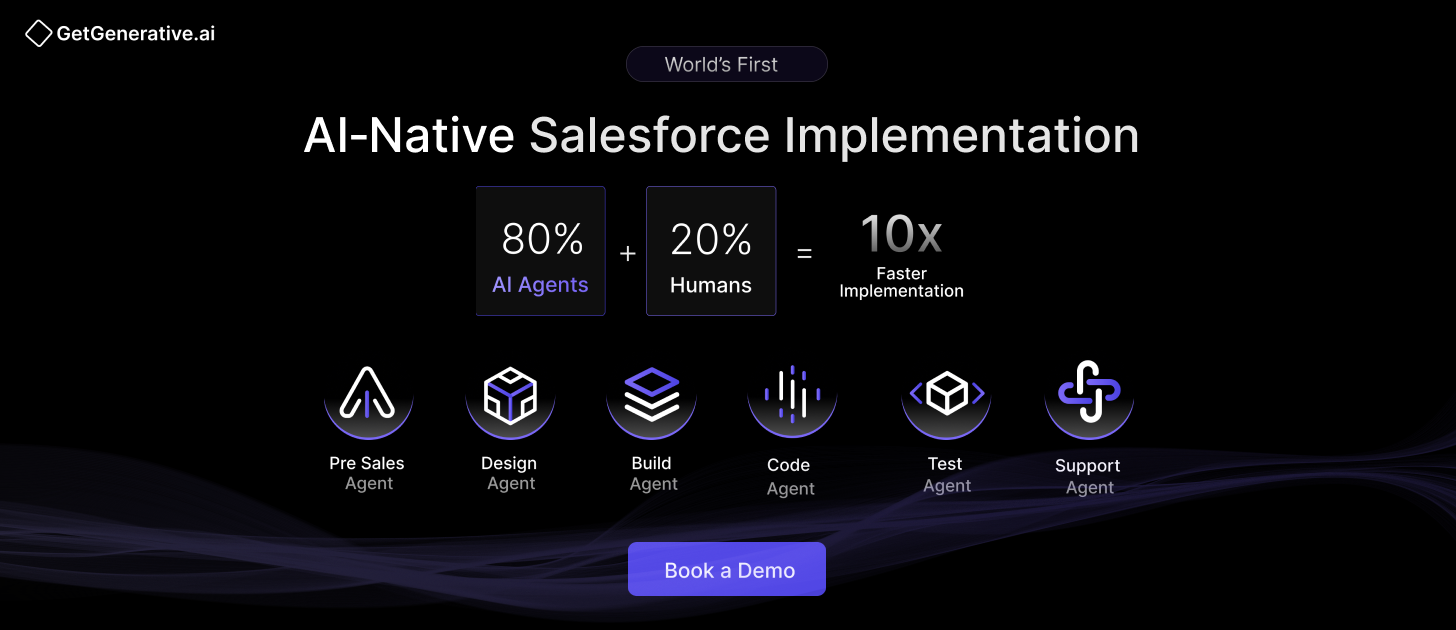
At GetGenerative.ai, we’ve reimagined Salesforce implementation—built from the ground up with AI at the core. This isn’t legacy delivery with AI added on. It’s a faster, smarter, AI-native approach powered by our proprietary platform.

👉 Explore our Salesforce AI consulting services

FAQs 

1. What are the key steps to ensure successful data migration?

Conduct a thorough data assessment, clean and validate data, and use automation tools like ETL for accurate migration.

2. How can I improve user adoption for Salesforce?

Offer personalized training, showcase Salesforce’s user-friendly features, and highlight its impact on daily operations.

3. How do I secure sensitive data during Salesforce implementation?

Use role-based access controls, data encryption, and regular security audits to protect data.

4. Why is scalability important in Salesforce implementation?

Scalability ensures your system can handle future growth without disruptions, saving time and costs on upgrades.

5. When should I hire a Salesforce consultant?

Engage a Salesforce consultant early in the planning phase to identify challenges, refine goals, and ensure smooth implementation.

Tips for a Successful Salesforce Financial Cloud Implementation

Tips for a Successful Salesforce Financial Cloud Implementation


Implementing Salesforce Financial Cloud successfully requires strategic planning, careful execution, and continuous optimization. 

This guide offers actionable tips to ensure a seamless and impactful Salesforce Financial Cloud implementation.

Strategic Planning and Stakeholder Alignment

1. Set Business-Centric Objectives

Before touching a single configuration, define strategic goals:

  • Improve Net Promoter Score (NPS)

  • Shorten onboarding cycle time

  • Increase cross-sell ratios

  • Enhance audit readiness

Stakeholders from sales, service, compliance, and IT must co-create this vision. Conduct requirement workshops, map current-state processes, and identify target-state workflows. According to Synebo, a well-aligned plan significantly improves delivery timelines and post-launch satisfaction.

2. Know Your Segment

Retail banks focus on deposits, lending, and omnichannel services. Wealth managers prioritize risk profiling, portfolio tracking, and relationship depth. Customize accordingly:

  • Enable different layouts for Advisors vs. Service Reps

  • Build dashboards around KPIs like AUM or portfolio churn

  • Tailor Action Plans to workflows like loan onboarding or investment reviews

Also Read – Key Features of Salesforce Financial Services Cloud

Data Strategy: Quality, Governance, and Migration

Poor data quality is one of the top reasons CRM projects fail. Treat data as infrastructure, not an afterthought.

Step 1: Audit and Cleanse

  • Identify all upstream systems: core banking, DMS, legacy CRMs, spreadsheets

  • Prioritize de-duplication, standardization, and enrichment pre-migration

  • Validate key fields: names, account numbers, balances, KYC statuses

Step 2: Govern Early

  • Appoint data stewards for domains (e.g., Client Profiles, Product Accounts)

  • Enforce validation rules, picklists, and required fields

  • Define security policies: use field-level encryption, Shield Platform Encryption for SSNs or income data

Step 3: Integrate Seamlessly

Most FSC implementations require integrating with 5+ external systems (core, LOS, portfolio tools, etc.). Use:

  • MuleSoft Anypoint Platform for API orchestration

  • Salesforce Platform Events for real-time sync (e.g., new account opened)

  • Batch jobs for historical records

Technical Configuration: Build Around FSC’s Industry Model

1. Install and Set Up FSC

  • Use a Full or Partial Sandbox for testing, Developer Sandbox for configuration

  • Install FSC Managed Package from AppExchange

  • Enable critical features: Person Accounts, Financial Goals, Action Plans, etc.

2. Configure Key Objects

  • Households: Roll-up family relationships and financial positions

  • Financial Accounts: Connect to deposits, loans, insurance policies

  • Financial Goals: Track life milestones (retirement, college savings)

  • Client Profile: Store risk scores, investment preferences, and liabilities

3. Automate with Action Plans & Flow

Use declarative tools:

  • Action Plans for onboarding (e.g., ID check → KYC review → document upload)

  • Service Console + Flow Orchestrator to manage guided loan applications or claims

  • Avoid over-customization. Start with the configuration. Use Apex/Lightning Web Components only for unique edge cases.

Also Read – Salesforce CRM Implementation With AI – The Ultimate Guide

Integration with AI, Self-Service, and Analytics

1. Unlock AI-Powered Recommendations

  • Einstein Next Best Action: Recommend insurance upsells based on household profiles

  • Predictive Scoring: Flag at-risk clients for proactive outreach

  • Einstein Bots: Automate support via live chat or SMS

2. Launch Self-Service Portals

  • Use Experience Cloud for customer portals where users can view balances, update KYC, or raise service requests

  • Link chatbots for faster servicing—especially important as 48% of banking clients now prefer digital-first engagement (Gartner)

3. Leverage Tableau/CRM Analytics

  • Visualize KPIs like AUM per advisor, churn risk, and SLA breaches

  • Integrate with Data Cloud to analyze high-volume transactions and behavioral signals

Testing and Quality Assurance: Getting It Right Before Go-Live

A flawless go-live starts with rigorous testing. The cost of discovering errors post-implementation—especially in financial environments—is steep. Every automation, integration, and custom flow must be validated across real-world scenarios.

Phases of FSC Testing:

1. Unit Testing

  • Test individual Flows, Action Plans, and automation rules

  • Validate custom fields and formula logic

  • Automate Apex tests to ensure future deployments don’t break existing functionality

2. User Acceptance Testing (UAT)

Bring in advisors, compliance users, and service reps to:

  • Open new households

  • Simulate onboarding flows

  • File a mock claim or generate a financial plan

3. Performance & Load Testing

  • Run bulk data operations (e.g. loading 10,000 accounts) in Full Sandbox

  • Test report/dashboard rendering for large datasets

  • Simulate end-of-month batch processing or mass email campaigns

4. Integration Testing

  • Ensure bidirectional sync with core platforms, LOS, or data lakes

  • Validate that errors are logged, retried, or escalated appropriately

Key QA Metrics:

  • Test coverage % (target > 85%)

  • Defects per test case

  • UAT completion rates

  • Data migration error rates

Also Read – Salesforce Financial Cloud Implementation Guide 2025

Change Management and User Training: Driving Adoption

Your CRM is only as good as its adoption. Even a perfectly configured FSC platform will fail without strong change management.

Build a Human-Centered Adoption Strategy

1. Role-Based Training

Develop targeted curricula:

  • Advisors: Household management, Financial Goals, Relationship Center

  • Service reps: Case consoles, Action Plans, escalation flows

  • Compliance teams: Consent tracking, audit logs, policy workflows

Use:

  • Hands-on workshops

  • Quick reference cards

  • Embedded guidance via In-App Help

2. Identify Champions

Train early adopters across departments who:

  • Participate in UAT

  • Provide peer training

  • Report bugs or inefficiencies

3. Rollout in Phases

Pilot in one department (e.g. wealth advisory) before scaling to other business units. Iterate based on user feedback.

4. Monitor Adoption Post-Go-Live

  • Track logins, key feature usage (e.g., Financial Plan creation)

  • Use surveys to gauge confidence

  • Offer office hours or a Slack channel for real-time support

Compliance, Risk, and Security

FSC offers powerful tools, but compliance is never automatic. You must embed governance into both the platform and your business processes.

Compliance Configurations Checklist:

  • Field History Tracking: Enable for sensitive fields (balance changes, financial goals)

  • Shield Encryption: Encrypt personally identifiable information (PII) like SSNs or account details

  • Consent Management: Use Disclosure and Consent objects to log opt-ins and KYC status

  • Validation Rules: Ensure no record can be saved without AML flags, risk scores, or advisor approvals

  • Audit Trails: Monitor user activity, setup changes, and field modifications

Regularly review:

  • Permission Sets: Apply least-privilege principles

  • Data Access Logs: Ensure no sensitive data is viewed or exported inappropriately

  • Compliance Dashboards: Track overdue tasks, at-risk accounts, or missing disclosures

Measuring Success: Define ROI from the Start

Without clear KPIs, it’s impossible to justify ROI or drive accountability. Set up pre-launch benchmarks, then track progress post-implementation.

Common FSC Success Metrics:

KPIDescription
Client 360° Completion Rate% of accounts with complete household and financial profile
Advisor ProductivityAccounts managed per advisor
Onboarding Cycle TimeTime from lead to account activation
AUM GrowthAsset increase post-implementation
Compliance Completion% of tasks completed on time (KYC, risk reviews)
Cross-Sell/Upsell RateNew products/services per client

Post-Go-Live Governance & Continuous Innovation

FSC isn’t a “launch it and leave it” product. Staying ahead requires proactive iteration.

1. Form a Salesforce Governance Council

  • Meet quarterly

  • Review user feedback, new requirements, and regulatory changes

  • Prioritize roadmap updates

2. Stay Ahead with Salesforce Releases

  • Review each Salesforce seasonal release (Spring, Summer, Winter)

  • Look for FSC-specific enhancements, like new objects, UI updates, or Einstein features

  • Use sandboxes to test before applying to production

3. Run Innovation Sprints

  • Pilot quick enhancements (chatbots, new analytics dashboards, SMS alerts)

  • Involve business teams to prototype and test small ideas fast

4. Integrate Emerging Technologies

  • Add Financial Data Cloud for behavioral segmentation and predictive scoring

  • Use Einstein GPT or Agentforce to assist advisors in real time

  • Connect external data (e.g., credit scores, real estate) via MuleSoft/Data Cloud

Conclusion

Implementing Salesforce Financial Cloud is a transformative step for financial institutions, but its success hinges on proper planning, execution, and post-launch support. Adopting these strategies helps you capitalize on Salesforce Financial Cloud’s capabilities, optimize processes, and deliver superior customer experiences.

salesforce consulting services

At GetGenerative.ai, we’ve reimagined Salesforce implementation—built from the ground up with AI at the core. This isn’t legacy delivery with AI added on. It’s a faster, smarter, AI-native approach powered by our proprietary platform.

👉 Explore our Salesforce AI consulting services!

Top Challenges in Salesforce Sales Cloud Implementation

Top Challenges in Salesforce Sales Cloud Implementation


Implementing Salesforce Sales Cloud is an exciting opportunity for organizations looking to enhance their sales processes, improve efficiency, and drive growth. However, as rewarding as it is, the journey of implementation comes with its fair share of obstacles. Studies have shown that up to 70% of CRM platform implementations fail, often due to common pitfalls that organizations face.

In this blog, we’ll explore the key challenges of Salesforce Sales Cloud implementation and offer actionable insights to overcome them effectively, ensuring your journey is as seamless and successful as possible.

Why Salesforce Sales Cloud Implementations Can Be Challenging

Salesforce Sales Cloud has the potential to transform the way businesses handle their sales pipelines, but achieving this level of innovation requires more than a straightforward process. Every stage, from goal setting to technical integrations, calls for thorough planning and careful execution.

Let’s dive into the most significant challenges organizations face and learn how to tackle them head-on.

1. Strategic Vision and Stakeholder Misalignment

The Challenge: No Clear Strategic Roadmap

One of the primary reasons implementations struggle is a lack of strategic clarity. Many organizations initiate their Sales Cloud deployment without fully articulating business goals, KPIs, or how the platform aligns with broader digital transformation initiatives. As a result, teams operate with fragmented expectations—sales want visibility, marketing seeks campaign automation, and leadership asks for cross-functional analytics, with no unified goalpost.

Leadership Gaps

Even when projects kick off strong, inconsistent executive commitment throughout the implementation lifecycle weakens momentum. When leadership views Salesforce as a tech upgrade instead of a business transformation tool, the initiative quickly loses strategic value.

Recommended Solutions

  • Set SMART goals before project kickoff

  • Assign a dedicated executive sponsor with defined success KPIs

  • Form a cross-functional steering committee to unify departmental goals

  • Treat change management as a cultural transformation, not just a tech project

2. Data Migration and Integration Complexities

The Challenge: Data Quality and Legacy Systems

Data migration continues to be one of the most complex, underestimated tasks in Salesforce implementations. An Experian study shows that over half of data migration projects are delayed, and just 36% stay within budget. Legacy CRMs often contain years of inconsistent schemas, duplicated entries, and outdated records, setting the stage for downstream issues.

The Challenge: Integration Architecture

Today’s enterprises depend on real-time sync between Salesforce and ERP, marketing automation, or support platforms. But without robust ETL frameworks and data governance, these integrations can cripple performance and compromise accuracy.

Recommended Solutions

  • Conduct a full data audit before migration

  • Allocate 20–25% of your implementation budget to data and integration

  • Use ETL tools and build repeatable, scalable pipelines

  • Create data governance standards and validation routines from day one

3. Change Resistance and User Adoption Barriers

The Challenge: People, Not Just Platforms

According to McKinsey, 60% of CRM projects fail due to human factors—not the software. Sales teams often view CRMs as administrative overhead, not revenue enablers. A disconnected change strategy results in slow adoption, missed opportunities, and lost ROI.

The Challenge: Ineffective Training

Salesforce data shows users typically leverage only 50% of available features. That’s not a tech problem—it’s a training gap. Generic training misses the mark, especially when it doesn’t connect workflows to real-world sales scenarios.

Recommended Solutions

  • Implement role-specific, scenario-based training in sandbox environments

  • Establish “super user” networks and peer mentoring

  • Use in-app help and just-in-time learning tools like Salesforce Walkthroughs

  • Track adoption via usage metrics, feature engagement, and support requests

4. Over-Customization and Configuration Imbalance

The Challenge: Too Much Code, Too Little Value

Salesforce’s flexibility is both its strength and a common trap. Customization often balloons project complexity, cost, and long-term maintenance. Research shows customization accounts for up to 50% of project costs, with diminishing returns if overused.

The Framework: Configure First, Customize with Intent

Configurations use Salesforce’s native tools—flows, automation, reports—while customizations involve Apex code, Visualforce, or LWC. The latter should be used sparingly and only when configuration cannot meet business needs.

Recommended Solutions

  • Follow a “configure first” policy with strict governance around customization

  • Fully document all custom objects and code

  • Periodically review technical debt and refactor where needed

  • Avoid one-off customizations that reduce upgradability or scalability

Also Read – Tips for Successful Salesforce Sales Cloud Implementation

5. Budget Overruns and Resource Misallocation

The Challenge: Hidden Costs and Misjudged Timelines

Implementation costs range widely—from $10K to over $200K, depending on project size. Scope creep, unplanned integrations, and underestimated data efforts frequently lead to budget overruns. A Forrester report noted 41% of migration projects exceeded budget.

The Challenge: Limited Internal Expertise

Without certified Salesforce admins, architects, or developers, many firms depend entirely on external partners, driving up costs and reducing internal ownership.

Recommended Solutions

  • Develop a comprehensive, phased budget witha  buffer for contingencies

  • Build internal capabilities through Salesforce certification and training

  • Use a phased rollout model to manage cost and complexity

  • Track hours and resource allocation against defined project milestones

6. Compliance, Security, and Governance Gaps

The Challenge: Data Privacy and Regulatory Compliance

From HIPAA to GDPR to SOX, different industries impose stringent compliance requirements. Yet many firms overlook security and audit frameworks until late in the implementation.

The Risk: Data Breaches and Legal Exposure

Without strong data governance—covering access controls, audit logs, and field-level security—organizations expose themselves to reputational and financial risk.

Recommended Solutions

  • Define data classification, access levels, and retention policies early

  • Use Salesforce’s native security controls (encryption, MFA, audit trails)

  • Involve legal and compliance stakeholders in planning stages

  • Conduct regular permission audits and vulnerability scans

7. Platform Evolution and Release Management

The Challenge: Constant Change

Salesforce delivers three major updates per year. Each release can affect integrations, flows, and reports, introducing risk if not properly managed.

The Cost: Technical Debt

Over time, unoptimized workflows, redundant code, and deprecated features accumulate, creating technical debt that reduces agility and increases support costs.

Recommended Solutions

  • Create a formal release management process with sandbox testing

  • Monitor Salesforce release notes and join pilot programs when possible

  • Build rollback strategies to recover from issues

  • Regularly refactor and sunset outdated functionality

8. Performance and Scalability Issues

The Challenge: System Degradation at Scale

As your Salesforce org grows, performance bottlenecks can emerge, from slow page loads to report lags and governor limit errors. This leads to frustration and decreased adoption.

The Enterprise Requirement: Scale Smart

Scalability requires forward-looking architecture decisions: data modeling, API usage, query optimization, and caching patterns.

Recommended Solutions

  • Monitor org performance from Day 1 using Salesforce Optimizer and logs

  • Design scalable data models and avoid unnecessary lookups or large joins

  • Apply query indexing, caching, and bulk data handling best practices

  • Design with Salesforce governor limits in mind for future growth

Also Read – Salesforce Sales Cloud Implementation Template

Conclusion

By addressing these challenges head-on—whether it’s setting a clear vision, managing change, or ensuring data quality—you can unlock Salesforce’s full potential and drive lasting success. Remember, preparation, collaboration, and continuous improvement are the keys to a seamless Salesforce journey.

salesforce consulting services

At GetGenerative.ai, we don’t just add AI to legacy processes—we’ve engineered a fully AI-native Salesforce implementation model from the ground up.

The result? Faster deployments, smarter solutions, and real business impact delivered at speed.

👉 Explore our Salesforce AI consulting services

FAQs

1. Why do many Salesforce implementations fail?

Poor planning, unclear objectives, and resistance to change are some of the most common reasons implementations fail.

2. How can user adoption of Salesforce Sales Cloud be guaranteed?

Offer specialized training tailored to specific roles, simplify processes to make workflows more intuitive, and actively engage employees in the implementation journey from the outset.

3. What is the role of a Salesforce implementation partner?

A qualified implementation partner provides the expertise needed to customize Salesforce effectively while ensuring the project aligns with your broader business goals and delivers measurable results.

4. How do I avoid data migration issues during implementation?

Conduct a thorough data audit, use data migration tools, and involve experts to ensure accuracy and consistency.

5. What steps should I take to manage scope creep?

Develop a clear implementation roadmap, monitor progress regularly, and establish strict project boundaries to stay on track.

Common Mistakes to Avoid in Salesforce Data Cloud Implementation

Common Mistakes to Avoid in Salesforce Data Cloud Implementation


Implementing Salesforce Data Cloud can transform your organization, offering powerful tools to centralize, analyze, and act on customer data. However, a successful implementation is not just about the technology—it’s about avoiding common pitfalls that can derail your efforts. From poor planning to neglecting user training, these mistakes can cost time, resources, and business growth. 

Let’s dive into the most common errors and how to avoid them.

Define Clear Objectives and Use Cases

1. Lack of Measurable Goals

Too many Data Cloud implementations begin with vague ambitions like “unify our customer view” or “enable personalization”—without defining what success looks like. This leads to scope creep, misaligned expectations, and poor ROI.

Best Practice:
Set quantifiable goals from the start. For example:

  • Reduce churn by 5% in Q3

  • Increase cross-sell conversion rate by 10%

  • Merge loyalty program data from three systems into one profile view

2. Misaligned or Underspecified Use Cases

Even with clear objectives, skipping over detailed use case planning is a critical error. Salesforce Data Cloud’s value comes from the use cases it powers, such as dynamic segmentation, predictive scoring, and cross-channel journey orchestration.

Jack Searle of Capgemini explains:

“Data Cloud projects are mostly discussion and planning. Much of it is spent on identifying use cases… it can be harder to do without a full understanding of your Salesforce setup, usage, and business processes.”

Recommendation: Run discovery workshops before implementation. Prioritize 2–3 high-impact use cases to launch with (e.g., abandoned cart recovery, VIP customer targeting). Use these early wins to build momentum for broader rollouts.

Conduct Thorough Planning and Resource Estimation

3. Underestimating Scope and Complexity

Salesforce Data Cloud is not a “plug-and-play” solution. It requires deep planning across data modeling, identity resolution, ingestion pipelines, and governance.

Common Oversight:
Teams often underestimate the effort required for data mapping, profiling, integration testing, security configuration, and training. Projects spiral when unexpected data issues surface midstream.

Solution:
Adopt an Agile, phased approach. Use sprints to test and validate assumptions before scaling. Build in contingency buffers for each phase—especially data onboarding and transformation logic.

4. Inflexible or Misaligned Planning

Over-planning can be just as dangerous as under-planning. Salesforce releases frequent platform updates—so rigid implementation plans can quickly become obsolete.

Advice from the Field:

“Plans are nothing; planning is everything.” – Dwight D. Eisenhower
This adage is echoed by many Salesforce consultants. Define your roadmap, but revisit assumptions continuously.

5. Misaligned Teams and Ownership

Projects fail when leadership treats Data Cloud as “just another IT initiative.” You need executive sponsorship and a cross-functional team that spans business, data, IT, and compliance.

Checklist for Project Readiness:

RoleResponsibility
Executive SponsorBudget and strategic alignment
Data ArchitectData model design and identity rules
Integration EngineerSource connectors and sync testing
Data StewardData quality and governance
Business AnalystUse case definition and KPIs
Admin/TrainerUser setup, training, and adoption

Prioritize Data Quality and Governance

6. Poor Data Profiling

Data Cloud thrives on clean, well-understood data. One of the most damaging mistakes is to ingest massive volumes without first understanding what’s in them.

7. Lack of Governance and Standards

Without governance, your environment will become chaotic—multiple versions of the same field, undocumented transformations, and inconsistent naming conventions.

Real-World Example:
If one data source has a field labeled Account_Segment__c and another has Target_Market__c, but both represent the same concept, users will get confused unless a data dictionary or crosswalk table defines the canonical version.

8. Skipping Basic Data Hygiene

Don’t demo your unified profile with fake emails like test@test.com or placeholder names like “John Doe.” Bad data kills credibility instantly.

Action Steps:

  • Filter or clean test and junk records

  • Backfill or discard low-quality fields

  • Use Data Cloud’s transformation functions to standardize input formats (dates, phone numbers, etc.)

Also Read – Salesforce Data Cloud Features

Plan Architecture and Integrations Carefully

9. Neglecting System Integrations

Data Cloud’s strength lies in unifying all customer data across systems—but many implementations isolate it. Assuming Data Cloud will “just see” your existing data sources is a costly mistake.

Common Oversight:
Teams often connect only Salesforce clouds (Sales, Marketing, Service) and leave out ERP, POS, or third-party systems like Snowflake, Databricks, or legacy CRMs.

Actionable Advice:

  • Inventory all data sources before implementation.

  • Use standard connectors or middleware like MuleSoft where needed.

  • Select integration types based on business needs: streaming for real-time actions, batch for analytics.

10. Data Trapping and Silos

If you’re syncing Data Cloud segments back into Salesforce manually via CSVs, you’ve simply created another silo.

Best Practice:
Use native zero-copy integrations and APIs to surface unified profiles back into Marketing Cloud, Sales Cloud, and Service Cloud.

11. Ignoring Scalability

Salesforce Data Cloud can handle massive volumes—but only if your pipelines and architecture are scalable.

Design for Scale:

  • Use modular ingestion pipelines

  • Implement retry logic for failed jobs

  • Monitor ingestion latency and backlog

  • Consider Salesforce Hyperforce for global scaling

  • Design data models to accommodate new fields/sources without full reengineering

Example:
During peak retail season, brands often see data spikes. If your data pipeline can’t scale, segmentation and activation will lag, undercutting personalization efforts.

Manage Costs and Resources Wisely

12. Misunderstanding the Credit Model

Unlike license-based models, Salesforce Data Cloud uses consumption-based pricing (credits). Each ingestion, transformation, or activation burns credits.

Common Pitfall:
Bulk-loading all historical data “just in case” leads to credit overuse and budget overruns.

Recommendations:

  • Load only essential historical data in phased tiers

  • Set alerts for credit usage in the Salesforce Digital Wallet

  • Audit pipelines regularly—pause jobs that aren’t adding value

13. Resource Under-allocation

A successful implementation needs more than a Salesforce admin. It requires architects, data engineers, analysts, and change managers.

Minimum Team Composition:

RoleMust-Have?
Salesforce Admin
Data Engineer
Integration Lead
Architect (DMO/identity)
Business Analyst
Compliance OfficerOptional, but recommended
Trainer / Adoption Champion

Avoid Over-Engineering

14. Complexity Kills Adoption

Some companies try to build overly sophisticated segmentation logic, dynamic models, and nested hierarchies—only to confuse the end users.

Best Practice:
Start with 3–5 simple segments tied to known business goals. Use native tools like Einstein Segment Recipes and Flow Automations to keep logic accessible.

15. Customization Overload

Balance is key. While avoiding complexity, don’t settle for default settings if your business needs require custom data models, connectors, or logic.

Tailor Thoughtfully:

  • Extend the schema only for fields critical to KPIs

  • Use crosswalk tables for source harmonization

  • Avoid customizations that hinder future Salesforce updates

Also Read – Salesforce Data Cloud Implementation Guide 2025

Enforce Security and Compliance

16. Overlooking Regulatory Compliance

Data Cloud often holds PII, purchase history, case data, and other sensitive records.

Laws to Consider:

  • GDPR (EU)

  • CCPA (California)

  • HIPAA (Healthcare)

Best Practices:

  • Perform a Privacy Impact Assessment (PIA)

  • Use Salesforce Shield for encryption and monitoring

  • Apply row-level security and field-level access controls

17. Weak Role-Based Access Controls

Not every user should see or edit every field or segment. Failing to restrict permissions increases security risk.

Recommendations:

  • Use Permission Sets and Sharing Rules strategically

  • Audit access logs regularly

  • Train admins on security best practices

Invest in User Adoption and Change Management

18. Late Stakeholder Engagement

Involving end-users late in the process leads to frustration and rejection.

Actionable Advice:

  • Demo features to marketing/sales teams early

  • Co-develop segments with business users

  • Identify “power users” in each department as champions

19. Inadequate Training

Data Cloud has a steep learning curve. If users don’t understand it, they won’t use it.

Role-Based Training Tips:

  • Marketers: Focus on segment building and activations

  • Analysts: Focus on DMOs, DLOs, and query paths

  • Admins: Focus on governance, integrations, and credit usage

Build for Continuous Governance and Optimization

20. “Set It and Forget It” Syndrome

Many organizations treat go-live as the finish line. In reality, it’s the starting point.

Post-Implementation Musts:

  • Assign ongoing ownership (internal or managed partner)

  • Schedule monthly system health checks

  • Set up alerts for ingestion failures, segment failures, or credit spikes

21. Lack of Iteration

Data Cloud needs to evolve with your business.

Suggestions:

  • Revisit your data model every 6–12 months

  • Retire unused segments

  • Add new sources as campaigns expand

  • Use KPIs to assess impact and reprioritize data credits accordingly

Conclusion

Salesforce Data Cloud’s success lies in the execution. Avoid common pitfalls like poor planning, data mismanagement, and insufficient training. Instead, focus on clear objectives, robust security, and intentional data use. By adhering to these proven strategies, your organization can maximize the benefits of Salesforce Data Cloud.

salesforce consulting services

At GetGenerative.ai, we’ve reimagined Salesforce implementation—built from the ground up with AI at the core. This isn’t legacy delivery with AI added on. It’s a faster, smarter, AI-native approach powered by our proprietary platform.

👉 Explore our Salesforce AI consulting services

FAQs

1. What is the main challenge in Salesforce Data Cloud implementation?

The most common challenge is the lack of clear objectives. Without defined goals, it’s difficult to align teams and measure success.

2. How can I improve data quality before implementation?

Start with data cleansing, validation, and audits. Use Salesforce’s built-in data management tools to maintain data consistency and accuracy throughout the implementation process.

3. Why is user training critical for Data Cloud?

Empowering your team with proper training enhances their ability to use the platform effectively, increasing adoption rates and productivity.

4. Can Salesforce Data Cloud scale with my business?

Yes! Salesforce Data Cloud is designed for scalability, provided you plan for growth during implementation.

5. How to Measure the Success of Your Data Cloud Implementation?

Define KPIs aligned with your goals, establish baseline metrics, and track progress over time using data-driven insights.

Tips for Successful Salesforce Sales Cloud Implementation

Tips for Successful Salesforce Sales Cloud Implementation


Customers report an average 37% increase in revenue after implementing Sales Cloud. But despite this potential, the road to success isn’t guaranteed. Industry data reveals that nearly 70% of CRM initiatives fail to meet their intended goals.

Why do so many Salesforce implementations fall short?

The answer often lies not in the technology itself, but in how it’s deployed—lack of alignment, poor planning, insufficient training, and weak data practices are all culprits. The cost of failure is high, leading to productivity losses, user frustration, and wasted investment.

This guide provides 8 expert-backed tips for achieving success with Salesforce Sales Cloud implementation.  

1. Establish a Clear Vision and Cross-Functional Alignment

CRM projects often fail because they are seen as “just another IT rollout.” In reality, Sales Cloud is a business transformation initiative that must be approached with a strategic mindset.

What to Do:

  • Set measurable business goals. Define what success looks like—e.g., “20% increase in lead conversion within 12 months” or “30% improvement in forecast accuracy.” These KPIs will guide configuration decisions and keep teams aligned.

  • Secure executive sponsorship. Assign a senior leader who can champion the initiative, secure funding, and align it with broader transformation objectives.

  • Form a steering committee. Include stakeholders from Sales, Marketing, Operations, and IT. This group should manage prioritization, resolve conflicts, and ensure that end-user needs are represented.

  • Integrate with broader transformation goals. Sync the CRM rollout with other ongoing digital initiatives (like customer service revamps or data governance programs) to create a unified tech strategy.

2. Invest in Realistic Scoping and Robust Planning

One of the biggest pitfalls is underestimating the scope and complexity of Salesforce implementations. A Forrester study found 41% of CRM projects exceed their budgets, often due to hidden data migration challenges, unclear requirements, or unrealistic timelines.

What to Do:

  • Conduct a detailed requirements analysis. Involve business users early to capture real pain points and avoid building features that won’t be used. Gartner reports that 45% of software features go unused, often because they weren’t needed in the first place.

  • Phase your implementation. Break the project into manageable stages (e.g., Phase 1: Accounts/Opportunities, Phase 2: Integrations, Phase 3: Analytics). This allows for quick wins, course correction, and gradual adoption.

  • Budget beyond licenses. Account for training, data work, integration, change management, and post-go-live support. Experts recommend allocating 20–25% of the total budget to data and integration efforts alone.

  • Use proven PMO practices. Leverage Agile or hybrid project management models with clear milestones, risk management, and stakeholder checkpoints.

3. Clean Your Data and Plan for Seamless Integration

Salesforce thrives on clean, reliable data. Poor-quality data is a leading reason for user mistrust and adoption failure. According to Experian, only 36% of data migration projects stay within budget, and over 50% are delayed due to unexpected data issues.

What to Do:

  • Audit and cleanse data early. Identify and eliminate duplicates, outdated contacts, and inconsistent formats. Involve business SMEs to validate accuracy.

  • Establish data governance. Set validation rules, required fields, and duplicate management logic. Assign ownership to data stewards for continuous quality assurance.

  • Integrate wisely. Prioritize which systems need real-time vs. batch integrations (e.g., ERP, CPQ, marketing tools). Use middleware like MuleSoft or Boomi where needed.

  • Automate data flows. Leverage Salesforce-native tools (e.g., Web-to-Lead, Data Loader) or scalable ETL pipelines for regular updates.

  • Test thoroughly. Simulate live workflows—e.g., an opportunity originating in Salesforce and syncing to ERP—to verify data accuracy across systems.

4. Configure First, Customize Cautiously

Sales Cloud is one of the most configurable platforms on the market. But this power often leads to over-customization, which can increase technical debt, break during Salesforce updates, and slow down adoption.

What to Do:

  • Start with standard objects and automation tools. Leverage built-in tools like Flows, Lightning App Builder, and validation rules before turning to code.

  • Avoid unnecessary custom code. Use Apex or custom components only when truly required—and only with a business case.

  • Document customizations. Maintain an internal “change log” and org documentation to reduce future confusion.

  • Review technical debt periodically. Use Salesforce Optimizer and do regular org health checks to clean up unused fields, workflows, and code.

  • Establish governance. Form a configuration review board to evaluate change requests and enforce standards.

Also Read – Top Salesforce Sales Cloud Implementation Partners

5. Prioritize User Training and Change Management

Even the most technically sound Salesforce Sales Cloud implementation can fail if users don’t adopt it. Studies show that over 60% of CRM failures are due to people-related factors, such as inadequate training, poor communication, or lack of perceived value. A system only delivers ROI when it’s actively used.

What to Do:

  • Engage users early. Involve sales reps in requirement gathering and testing to create system champions and build early buy-in.

  • Clarify “What’s in it for me?” Show reps how Salesforce helps them close more deals, automate tasks, and simplify forecasting. When users see personal value, adoption skyrockets.

  • Deliver role-based training. Design training by role (e.g., sales reps vs. managers vs. operations staff). Use a mix of classroom, video, and hands-on sandbox sessions.

  • Create internal champions. Designate “super users” across regions or teams who can mentor peers and provide first-line support post-launch.

  • Use in-app guidance. Leverage Salesforce’s Walkthroughs, Help Menus, and Trailhead to offer on-demand learning and embedded instructions.

  • Track adoption metrics. Use Salesforce dashboards to monitor login frequency, record updates, and pipeline activity. This data can identify coaching opportunities or training gaps.

  • Gamify and reward. Recognize teams with high CRM hygiene, data completeness, or usage rates. Incentives can drive engagement in the early months.

6. Test Rigorously and Pilot Before Full Rollout

One of the most overlooked steps in a Salesforce implementation is robust testing. But cutting corners during testing is a high-risk gamble. Issues like permission gaps, broken workflows, or slow-loading pages erode trust fast, and recovering that trust is difficult.

What to Do:

  • Create comprehensive test cases. Validate all user flows—lead conversion, opportunity stages, forecasting, reporting, etc.—across user roles.

  • Run User Acceptance Testing (UAT). Involve real end-users to simulate day-to-day scenarios. Their feedback will uncover usability gaps the project team may miss.

  • Pilot the system with a small group. A limited rollout (by region or team) reduces risk. Gather real-world feedback before expanding to the broader org.

  • Test data and performance at scale. Run reports, check data volume performance, and validate dashboards under load conditions. Salesforce governor limits can affect poorly optimized code and queries.

  • Verify security settings. Test different profiles and roles to ensure access is properly restricted and compliant with internal policies.

7. Establish Strong Governance, Security, and Compliance Practices

Salesforce often becomes the system of record for customer, deal, and revenue data. That makes security, compliance, and ongoing governance non-negotiable—especially in regulated industries like healthcare, financial services, and government.

What to Do:

  • Define access roles and data classifications. Use Salesforce’s role hierarchy and sharing rules to enforce least-privilege access. Sensitive fields (e.g., pricing, margin) should be locked down.

  • Implement audit trails and monitoring. Use Field History Tracking and, for sensitive systems, Salesforce Shield’s Event Monitoring to detect anomalies.

  • Enable MFA and field-level security. MFA is now required for all Salesforce users. Apply encryption where necessary and mask fields with PII.

  • Work with legal/compliance teams. Ensure processes meet requirements under GDPR, HIPAA, SOX, or other relevant frameworks. This includes right-to-erasure, consent tracking, and data retention.

  • Review permissions quarterly. Implement a formal access review process. Users often accumulate access over time—regular cleanups help minimize risk.

  • Control app installations and sandbox refreshes. Limit who can install AppExchange packages and who has access to full sandboxes, which may include real data.

8. Monitor, Iterate, and Continuously Optimize

A CRM is not a “set it and forget it” system. Organizations that treat Salesforce as a living, evolving platform are the ones that realize long-term strategic value and competitive advantage.

What to Do:

  • Monitor KPIs and usage metrics. Track outcomes like lead-to-close rates, sales velocity, quota attainment, and CRM usage by rep or region. Identify what’s working and where friction remains.

  • Establish a Center of Excellence (CoE). Whether internal or external, a CoE can manage enhancements, user requests, roadmap planning, and governance.

  • Review Salesforce release notes. Salesforce delivers 3 major updates per year—new features may help you replace legacy customizations or automate previously manual tasks.

  • Solicit ongoing user feedback. Regular surveys or feedback sessions ensure that enhancements are driven by real needs, not assumptions.

  • Adopt agile sprints post-go-live. Continue to improve Salesforce in small, iterative steps—adding fields, automating reports, or refining processes.

  • Celebrate success and share impact. Publicize wins—e.g., “Sales cycle reduced by 22%,” “Revenue per rep up 18%.” Success stories build confidence and help institutionalize adoption.

Related Read – Top Challenges in Salesforce Sales Cloud Implementation

Conclusion 

Salesforce Sales Cloud isn’t just a CRM—it’s a strategic platform for customer growth, sales execution, and operational visibility. But realizing this potential requires deliberate leadership, rigorous planning, user-focused design, and ongoing optimization.

salesforce consulting services

At GetGenerative.ai, we’ve reimagined Salesforce implementation—built from the ground up with AI at the core. This isn’t legacy delivery with AI added on. It’s a faster, smarter, AI-native approach powered by our proprietary platform.

👉 Explore our Salesforce AI consulting services

FAQs

1. How long does it take to implement Salesforce Sales Cloud?

The time required for implementation depends on the complexity of your business needs. For most organizations, the process takes an average of 2–4 months.

2. Can small businesses benefit from Salesforce Sales Cloud?

Yes, without a doubt! Salesforce Sales Cloud is designed to be flexible and scalable, making it an excellent fit for businesses of any size.

3. What is the biggest challenge in implementing Sales Cloud?

The most common challenges are data migration issues and user adoption. Proper planning and training can address these effectively.

4. Do I need an IT team for Salesforce Sales Cloud implementation?

While having an IT team is helpful, small businesses can leverage Salesforce’s tools and certified partners to manage implementation.

5. How do I measure the success of my implementation?

Track KPIs like lead conversion rates, sales pipeline progress, and user adoption to evaluate the impact of your implementation.

Common Challenges in Implementing Salesforce Service Cloud

Common Challenges in Implementing Salesforce Service Cloud

Implementing Salesforce Service Cloud has its challenges. Below, we’ll delve into the most common and significant challenges businesses face during Salesforce Service Cloud implementation, offering a detailed overview of each and why they matter.

Top Challenges in Implementing Salesforce Service Cloud

1. Lack of Clear Objectives and Vision

A successful implementation begins with a well-defined vision and clearly articulated goals. However, many organizations need to fully understand their intended outcomes before deploying Salesforce Service Cloud. This lack of clarity leads to poorly planned strategies, misaligned processes, and ultimately, unsatisfactory outcomes.

Why it Happens:

  • Businesses may lack a detailed roadmap outlining their goals.
  • Teams might focus too much on the tool’s features rather than aligning its capabilities with business objectives.
  • Stakeholders often have conflicting expectations, leading to miscommunication and mismatched priorities.

Impact: Without clear objectives, teams may implement features that are unnecessary, miss critical functionalities, or fail to measure success effectively. This often results in wasted resources and reduced ROI.

Solution: Define measurable goals, such as improving first-response times, increasing customer satisfaction scores, or enhancing agent productivity. Create a strategic roadmap that aligns with these goals and ensures every stakeholder is aligned and informed about the process.

2. User Adoption Challenges

One of the most underestimated challenges of implementing Salesforce Service Cloud is getting employees to use it effectively. User adoption is critical to ensuring the platform delivers its intended value. Unfortunately, resistance to change and inadequate training can severely hamper this.

Why it Happens:

  • Employees may feel overwhelmed by the platform’s new interface and features.
  • Organizations often prioritize the technical setup while neglecting training and onboarding.
  • Teams may see the tool as an additional burden rather than a productivity booster.

Impact: Low user adoption results in underutilization of the platform’s features, reduced productivity, and slower customer response times.  

Solution: Implement a robust change management strategy. Involve employees from the start, provide hands-on training, and offer continuous support. Highlight how Salesforce Service Cloud simplifies their tasks and improves customer service.

getgenerativeai

3. Data Migration and Integration Issues

During Salesforce Service Cloud implementation, migrating data from legacy systems and integrating it with existing tools can be a daunting task.

Why it Happens:

  • Legacy systems may contain duplicate, incomplete, or outdated data, which complicates migration.
  • Integration with existing tools like ERP systems or communication platforms often requires extensive customization and technical expertise.
  • The absence of a structured migration plan can result in critical errors or even loss of valuable data.

Impact: If not handled properly, data migration and integration issues can delay the implementation process, compromise data integrity, and disrupt service operations.

Solution: Start with a comprehensive data audit before migration. Organize and clean the data meticulously to remove redundancies and ensure accuracy. Use experienced data migration specialists and tools to ensure a smooth transition. For integrations, leverage Salesforce APIs and middleware to connect existing systems seamlessly.

4. Over-Customization Complexities

Salesforce Service Cloud offers extensive customization options, which is both a strength and a potential pitfall. Excessive customization can complicate the system, making it cumbersome, less efficient, and harder to maintain in the long run.

Why it Happens:

  • Organizations may try to tailor every aspect of the platform to their needs without considering long-term usability.
  • Stakeholders may request features that are not essential but add complexity.
  • Lack of guidance from experienced Salesforce consultants can result in poorly designed customizations.

Impact: Over-customization makes the system harder for agents to navigate, reducing efficiency and adoption rates. It also increases implementation costs and maintenance overheads.

Solution: Focus on essential customizations that align with business goals. Maximize the use of built-in features whenever possible and seek guidance from seasoned Salesforce consultants to ensure customizations are both necessary and efficient. 

Also, Read – Top Features of Salesforce Service Cloud

5. Security and Compliance Concerns

With customer data at the core of Salesforce Service Cloud, ensuring its security is a critical challenge. Breaches in data security and non-compliance with regulations can undermine customer confidence and expose businesses to serious legal consequences.

Why it Happens:

  • Companies may not have robust security protocols in place during implementation.
  • Inadequate training on data handling practices increases the risk of errors.
  • Cybersecurity threats, such as phishing and malware, pose ongoing risks.

Impact: Security lapses can lead to significant financial losses, legal entanglements, and damage to a company’s reputation. Such incidents can erode customer trust, which is often challenging to rebuild.

Solution: Implement a robust security framework that includes encryption, multi-factor authentication, and regular audits. Educate staff on compliance standards, such as GDPR and CCPA, to maintain secure data handling practices.

6. Reporting and Analytics Challenges

Salesforce Service Cloud offers robust reporting capabilities, but many businesses struggle to leverage them effectively. Without meaningful insights, businesses cannot make informed decisions or improve their customer service strategies.

Why it Happens:

  • Teams may not be trained to use Salesforce reporting tools.
  • Poor data quality can lead to inaccurate reports.
  • Overwhelming dashboards may confuse agents instead of providing actionable insights.

Impact: Lack of proper reporting limits visibility into customer behavior and agent performance, hindering decision-making and service improvements.

Solution: Simplify dashboards and provide training on generating and interpreting reports. Regularly validate data to ensure accurate insights and use reporting tools to track KPIs effectively.

7. Inadequate Implementation Partner Selection

Selecting the right implementation partner plays a vital role in ensuring Salesforce Service Cloud’s success. A partner lacking sufficient expertise and experience can lead to unsatisfactory outcomes.

Why it Happens:

  • Businesses may prioritize cost savings over quality and expertise.
  • Some partners need a deeper understanding of the Salesforce ecosystem or specific industry needs.
  • Poor communication and weak project management can result in delays, budget overruns, and unmet expectations.

Impact: An inexperienced implementation partner can cause project delays, budget overruns, and incomplete implementations, reducing the overall ROI.

Solution: Evaluate implementation partners based on their certifications, experience, and client reviews. Choose a partner with a proven track record in Salesforce Service Cloud implementations and a strong understanding of your industry’s needs.

8. Limited Post-Implementation Support

The journey doesn’t end with implementation. Ongoing support is crucial to ensure the platform evolves with your business needs.

Why it Happens:

  • Companies may overlook the need for post-implementation services during the planning phase.
  • Lack of dedicated support teams for troubleshooting and updates.

Impact: Without proper post-implementation support, businesses may struggle with system maintenance, user adoption, and future upgrades.

Solution: Partner with a vendor that offers comprehensive post-implementation support, including regular updates, training refreshers, and scalability planning.

Strategies to Overcome These Challenges

Implementing Salesforce Service Cloud may be challenging, but these strategies can set you up for success:

  • Set Clear Goals: Establish measurable objectives and communicate them across teams.
  • Invest in Training: Provide continuous training to ensure employees are confident using the platform.
  • Plan Data Migration: Cleanse, validate, and organize your data before migration to prevent disruptions.
  • Tailor Customizations: Focus on essential features and avoid over-complicating workflows.
  • Engage Experts: Work with seasoned implementation partners to guide you every step of the way.
  • Ensure Security: Adopt strict data security measures and educate employees on compliance practices.

Also Read – Salesforce CRM Implementation With AI – The Ultimate Guide

Conclusion

Implementing Salesforce Service Cloud is no small feat, but the rewards are worth the effort. By proactively addressing these challenges, businesses can harness the full capabilities of Salesforce Service Cloud and elevate their customer service operations. Ultimately, success extends beyond adopting the platform—it’s about fundamentally transforming customer engagement strategies.

To learn more, visit GetGenerative.ai today!

FAQs

1. What are the most common Salesforce Service Cloud implementation challenges?

Challenges include poor user adoption, data migration issues, over-customization, security concerns, and lack of clear objectives.

2. How can I ensure successful user adoption of Service Cloud?

Provide comprehensive training, involve employees early in the process, and highlight how the platform simplifies their workflows.

3. What are the risks of over-customizing Salesforce Service Cloud?

Over-customization can make the system complex, leading to confusion among users and decreased productivity.

4. Why is data migration a critical aspect of Salesforce implementation?

A smooth data migration ensures accuracy and prevents disruptions in customer service operations.

5. How can I choose the right Salesforce implementation partner?

Look for partners with extensive experience, proven success stories, and a deep understanding of your industry’s needs.

Overcoming Data Migration Challenges in Salesforce Service Cloud Implementation

Overcoming Data Migration Challenges in Salesforce Service Cloud Implementation

Migrating to Salesforce Service Cloud comes with its fair share of complexities. From data quality issues to compliance concerns, understanding the challenges and implementing effective strategies is crucial to ensuring a successful migration.

In this guide, we’ll explore common Challenges and offer actionable solutions to help your organization navigate the journey smoothly.

Top Common Data Migration Challenges

1. Data Quality Issues

High-quality data is the foundation of any successful migration. Unfortunately, data from legacy systems often presents several problems:

Inconsistent Data Formats

  • Variations in date formats (e.g., MM/DD/YYYY vs. DD/MM/YYYY).
  • Different phone number structures (e.g., with/without country codes).
  • Inconsistent naming conventions (e.g., “Inc.” vs. “Incorporated”).

Duplicate Records

  • Multiple profiles for the same customer.
  • Redundant case records across systems.
  • Overlapping service histories.

Incomplete Data

  • Missing critical information like email addresses or phone numbers.
  • Partial case histories or customer interactions.
  • Broken relationships between related records (e.g., accounts and contacts).

Also Read – Salesforce Data Migration Tools: A Comprehensive Guide

2. Complex Legacy Systems Integration

Migrating from legacy systems often uncovers technical hurdles:

Incompatible Data Structures

  • Differences in field types, lengths, and values.
  • Custom fields that don’t align with Salesforce.
  • Complex relationships that are difficult to replicate.

Technical Limitations

  • Outdated APIs or lack of API access.
  • Limited export capabilities for large datasets.
  • Performance issues during large-scale data extraction.

System Dependencies

  • Interconnected systems with hidden data relationships.
  • Embedded business logic that needs to be re-created.
  • Legacy custom integrations that require careful handling.

getgenerativeai

3. Timeline and Resource Constraints

Project management plays a critical role in migration, but it often faces these hurdles:

Time Management Issues

  • Unrealistic deadlines driven by business pressures.
  • Ensuring business continuity during migration.
  • Coordination across teams in different time zones.

Resource Allocation Problems

  • Limited technical expertise for data migration.
  • Competing business priorities and budget constraints.
  • Insufficient resources for thorough testing.

4. Data Volume and Performance Challenges

Large datasets bring unique challenges that require robust solutions:

Large Dataset Handling

  • Processing millions of records efficiently.
  • Managing Salesforce API limits.
  • Optimizing batch processing and storage capacity.

Performance Impact

  • Potential system slowdowns during migration.
  • Backup and recovery challenges.
  • Network bandwidth limitations affecting transfer speed.

5. Compliance and Security Concerns

Migrating sensitive customer data demands stringent adherence to regulations and security protocols:

Data Protection Requirements

  • Compliance with GDPR, HIPAA, or CCPA.
  • Maintaining encryption and audit trails.
  • Ensuring industry-specific regulatory adherence.

Security Protocols

  • Implementing secure data transfer methods.
  • Controlling access during the migration process.
  • Safeguarding sensitive customer information.

6. Business Process Alignment

Ensuring business continuity during migration involves addressing these challenges:

Process Mapping Difficulties

  • Aligning existing workflows with Salesforce processes.
  • Preserving service level agreements (SLAs).
  • Adapting custom business rules to new limitations.

Change Management

  • Training users on the new system.
  • Documenting updated processes.
  • Communicating changes effectively to stakeholders.

7. Data Validation and Testing

Thorough validation and testing are critical to a successful migration:

Testing Complexity

  • Designing comprehensive test scenarios.
  • Validating relationships between data fields.
  • Testing performance under load conditions.

Quality Assurance

  • Balancing automated and manual testing.
  • Pinpointing unique edge cases and identifying potential regression problems.
  • Confirming that the migrated data adheres to predefined quality benchmarks.

8. Addressing Post-Migration Issues

Even after completing the migration, organizations may encounter unforeseen challenges that require prompt attention.

Data Reconciliation

  • Verifying the completeness of migrated data.
  • Fixing broken relationships or missing records.
  • Resolving any failed migration attempts.

System Optimization

  • Performance tuning for queries and indexes.
  • Managing storage efficiently.
  • Monitoring system performance to ensure reliability.

Also Read – Salesforce Service Cloud Implementation Guide

Strategies for Overcoming Migration Challenges

Successfully migrating to Salesforce Service Cloud requires a proactive approach. Here’s how you can address these challenges:

  1. Conduct a Comprehensive Pre-Migration Assessment: Review and evaluate your existing data to ensure its accuracy, consistency, and completeness.
  2. Design Detailed Migration Plans: Develop a well-structured roadmap outlining timelines, milestones, and assigned responsibilities.
  3. Implement Rigorous Testing Processes: Leverage sandbox environments to thoroughly test and validate the migration process.
  4. Foster Clear Communication: Keep all stakeholders well-informed and aligned throughout the migration journey.
  5. Allocate Sufficient Resources and Time: Invest in skilled professionals and realistic timelines for migration.
  6. Use Appropriate Migration Tools and Technologies: Leverage tools like Salesforce Data Loader, MuleSoft, or Informatica.
  7. Create Contingency Plans for Potential Issues: Prepare for unexpected challenges with backup plans and support.
  8. Establish Clear Success Criteria and Metrics: Define what a successful migration looks like for your organization.

Also, Read – Salesforce CRM Implementation With AI – The Ultimate Guide

Conclusion

Migrating to Salesforce Service Cloud may seem daunting, but with careful planning and execution, these challenges can be effectively addressed. By understanding potential roadblocks and implementing tailored strategies, your organization can ensure a seamless transition, paving the way for enhanced customer service and operational efficiency.

To learn more, visit GetGenerative.ai today!

FAQs

1. What are the most common challenges in Salesforce Service Cloud migration?

Challenges such as data inconsistencies, the complexities of integrating legacy systems, and adhering to compliance requirements are among the most frequent challenges encountered.

2. How can I ensure data integrity during migration?

Thorough validation, testing, and maintaining a robust backup strategy are key to ensuring data integrity.

3. What tools can help simplify data migration?

Salesforce Data Loader, MuleSoft, and Informatica are popular tools for efficient data migration.

Top Mistakes to Avoid During Salesforce Marketing Cloud Implementation

Top Mistakes to Avoid During Salesforce Marketing Cloud Implementation


A successful implementation of Salesforce Marketing Cloud isn’t just about activating features; it requires careful planning, strategic alignment, and ongoing management to avoid costly mistakes. 

In this article, we’ll explore the top mistakes companies make during SFMC implementation and how to sidestep them to unlock the full potential of this powerful platform. 

Related Read – Salesforce Marketing Cloud Implementation Guide

1. Skipping the Discovery Phase

The Mistake:
Rushing into SFMC configuration without understanding current marketing workflows, data landscapes, and stakeholder needs. Studies show that nearly 40% of implementations skip or underinvest in this stage.

The Impact:
This leads to misaligned solutions, limited adoption, and disjointed experiences that don’t serve marketing or business objectives.

The Solution:
Conduct structured discovery workshops with marketing, sales, IT, service, and compliance teams. These sessions should map out:

  • Existing tools and systems

  • Customer data sources and flows

  • Core challenges and objectives
    Allocate 15–20% of your implementation timeline to this phase. Document business requirements, technical constraints, and integration points to guide downstream decisions.

2. Not Defining Clear Objectives and KPIs

The Mistake:
Implementing SFMC without specific, measurable goals.

The Impact:
Vague ambitions like “better customer engagement” don’t translate into actionable plans or measurable ROI, making it difficult to prove value.

The Solution:
Set SMART goals aligned with the broader business strategy. For example:

  • “Increase lead conversion by 20% in Q3”

  • “Reduce email creation time by 50%”
    Track both leading indicators (setup efficiency, segmentation accuracy) and lagging indicators (revenue growth, customer retention). Establish a measurement framework to monitor performance from deployment through optimization.

3. Poor Data Quality and Integration

A. Migrating Bad Data

The Mistake:
Transferring inconsistent, unclean, or duplicate data into SFMC.

The Impact:
This causes automation failures, inaccurate segmentation, and unreliable reports.

The Solution:
Perform a full data audit before integration. Cleanse, deduplicate, and standardize data using profiling tools. Define ownership and validation rules, and implement governance protocols to ensure data hygiene post-launch.

B. Inefficient Data Model Design

The Mistake:
Replicating normalized CRM structures in SFMC without optimization.

The Impact:
This results in sluggish performance, complex queries, and difficulty managing segmentation or personalization at scale.

The Solution:
Build flattened marketing-ready data extensions that consolidate fields from various CRM objects. These enable faster lookups and more agile customer targeting. Avoid over-complication—opt for models tailored to marketing use cases, not CRM architecture.

4. Misconfigured Technical Setup

A. Ignoring Email Authentication Protocols

The Mistake:
Failing to configure SPF, DKIM, or DMARC correctly—or mismanaging Sender Authentication Packages (SAP).

The Impact:
Poor deliverability, high spam rates, and damaged sender reputation.

The Solution:
Ensure all authentication protocols are in place. Separate IPs for transactional and marketing messages. Verify domain DNS settings and continuously monitor deliverability metrics for anomalies.

B. Insufficient Testing Before Launch

The Mistake:
Neglecting end-to-end testing across customer journeys, templates, and automations.

The Impact:
Errors make it into production, affecting user experience and campaign reliability.

The Solution:
Establish a dedicated testing business unit. Conduct unit tests, journey validations, and integration tests using anonymized production-mirror data. Automate recurring test routines and regression checks for campaign updates.

5. Ineffective User and Role Management

A. Poor Role Configuration

The Mistake:
Assigning overly generic or conflicting roles without understanding access dependencies.

The Impact:
Users may be blocked from performing critical tasks or unintentionally gain excessive permissions.

The Solution:
Use the Principle of Least Privilege. Create custom roles mapped to team responsibilities. Maintain documentation of role hierarchies and periodically review access audits to tighten security.

B. Improper Business Unit Structuring

The Mistake:
Implementing Business Units (BUs) without clear governance or foresight.

The Impact:
Leads to operational silos, fragmented data, and difficulties in cross-BU collaboration.

The Solution:
Plan BU structures based on geography, brand, or function. Define shared data and resource policies. Establish BU governance policies and designate BU administrators to ensure consistency and scalability.

6. Journey Builder and Automation Pitfalls

A. Over-Engineered Journeys

The Mistake:
Building complex journeys with excessive logic, poor error handling, and no real-world testing.

The Impact:
Customers get stuck, receive irrelevant messages, or fall out of touch entirely.

The Solution:
Design with simplicity and scalability in mind. Test all possible paths, edge cases, and conditions. Add fallback paths and error notifications. A/B test for optimization and maintain ongoing journey audits.

B. Automation Studio Misfires

The Mistake:
Overlooking issues in SQL queries, data updates, or timing logic in Automation Studio.

The Impact:
Campaigns fail silently, data isn’t refreshed, or incorrect customer actions are triggered.

The Solution:
Build staging environments. Validate every automation with simulated data and edge cases. Use logging, alerting, and error-handling workflows. Monitor for high-water mark and sync issues regularly.

7. Change Management and Training Gaps

The Mistake:
Rolling out SFMC without structured onboarding, training, or internal adoption programs.

The Impact:
Teams default to legacy tools or misuse the platform, reducing ROI and increasing frustration.

The Solution:
Develop training tracks tailored to user roles. Assign internal champions for peer coaching. Launch in phases to allow gradual learning and feedback loops. Provide regular platform updates and best-practice refreshers.

8. Governance and Documentation Oversights

The Mistake:
Failing to document processes, configurations, or decision histories.

The Impact:
Increases the risk of redundant work, technical debt, and onboarding difficulties for new team members.

The Solution:
Set documentation standards across templates, journeys, and automations. Version control all SFMC assets. Conduct quarterly governance reviews to ensure platform integrity and ongoing alignment with business objectives.

9. Misjudging Costs and Resource Needs

A. Underestimating Total Cost of Ownership (TCO)

The Mistake:
Only budgeting for licensing costs, while ignoring training, support, integrations, and admin staffing.

The Impact:
Budget overruns, missed timelines, and cut corners on essential capabilities.

The Solution:
Build a TCO model that includes:

  • Platform costs

  • Integration efforts

  • Training and support

  • Internal staffing needs
    Set ROI benchmarks and allocate contingency funds for unforeseen challenges.

B. Inadequate Resource Planning

The Mistake:
Assuming existing teams can absorb SFMC responsibilities with little disruption.

The Impact:
Delays, burnout, and critical gaps in platform management.

The Solution:
Assign dedicated SFMC roles (admin, developer, analyst). Plan capacity realistically and invest in knowledge transfer. Define ownership for each key area of the implementation lifecycle.

Also, Read – Salesforce CRM Implementation With AI – The Ultimate Guide

Conclusion

Salesforce Marketing Cloud is a transformative tool for businesses, offering powerful capabilities for engaging with customers on a highly personalized level. However, to truly harness its potential, avoiding these common mistakes during implementation is key. 

salesforce consulting services

At GetGenerative.ai, we’ve reinvented the way Salesforce is implemented. Our AI-native platform isn’t an add-on to legacy methods—it’s a purpose-built, intelligent system that accelerates every step of the journey. Faster timelines. Smarter delivery. Real results.

👉 Discover our AI-driven Salesforce consulting services.

FAQs

1. What is the importance of the discovery phase in SFMC implementation?

The discovery phase helps align SFMC capabilities with business goals, avoiding missteps and setting a solid foundation for implementation.

2. Why shouldn’t email addresses be used as Subscriber Keys?

Using email addresses as Subscriber Keys can lead to issues when customers update their emails. Unique identifiers are more flexible and reliable.

3. How does training impact SFMC success?

Proper training equips users to utilize SFMC features effectively, ensuring high adoption rates and a better return on investment.

4. What role does data quality play in SFMC?

Good data quality enables precise segmentation, accurate insights, and effective customer engagement, which are crucial for successful campaigns.

5. Is ongoing support necessary after implementing SFMC?

Yes, ongoing support ensures the system stays up-to-date, technical issues are promptly resolved, and users have continued access to help, maximizing SFMC’s effectiveness.