Solutions
Implementation Org Review Org Monitoring Managed Services
Agents
Discovery Agent Metadata Agent Design Agent Build Agent Test Agent Governance Agent Support Agent
Industry Solutions
Financial Services
Healthcare & Life Sciences
NDIS & Disability Services
Nonprofit
Not-for-Profit
Other Industries
Recruitment & Staffing Real Estate Cosmetic Procedures
Agentforce Claudeforce Blogs Pricing

Salesforce Service Cloud Consultant: The 2026 Guide

Salesforce Service Cloud Consultant: The 2026 Guide

If you are searching for the Salesforce Service Cloud Consultant certification, you are searching for a credential that has been renamed. Salesforce now issues it as the Agentforce Service Consultant certification, and the exam guide, the Trailhead credential page and the trailmix all carry the new name.

The role itself has not narrowed. It has widened, because the same person is now expected to design agent behaviour alongside case management.

Service Cloud Consultant became Agentforce Service Consultant

The rename matters practically rather than cosmetically, for three reasons.

Search results and study material now split between two names, so a study plan assembled from older resources can miss whole sections of the current exam. Job listings lag further behind, and most still advertise the old title, which means you are frequently applying for a credential under a name the certification body no longer uses. And the rename signals what was added to the exam blueprint rather than a simple relabel.

The same pattern applies across the consultant track, where the Sales Cloud equivalent is now issued as Agentforce Sales Consultant. The current names are listed in the Salesforce credential catalogue.

The role designs case management, routing and channel integration

Independent of the name, the work is consistent. A consultant in this role is accountable for six things.

Case management design. Record types, assignment and escalation rules, entitlements and service level agreements, and the console layout the agent actually works in.

Routing. Omni-Channel configuration, queues, skills-based assignment and capacity models, which is where most service implementations either work or quietly fail.

Channel integration. Email-to-case, telephony, messaging, chat and self-service, each with different constraints and different failure modes.

Knowledge management. Article structure, data categories and the review cycle, which now carries more weight because agents ground their answers on the same articles.

Analytics. Reports and dashboards for handle time, first-contact resolution, backlog and CSAT, defined so that a supervisor can act on them rather than only read them.

Adoption. Training, rollout and the change work that decides whether the configuration gets used.

Agentforce changed what the role configures

This is the substantive shift behind the rename, and it adds work rather than replacing it.

A consultant designing service now also scopes which agents go live, defines subagents and actions, and decides where an agent hands off to a human. Knowledge quality moves from a hygiene concern to a hard dependency, because an agent grounding on contradictory articles produces contradictory answers at scale. Testing splits into two tracks, since agent behaviour is scored against quality thresholds rather than passed. And consumption becomes a design consideration, because agent actions are metered and the number of actions per conversation is something the consultant decides.

Einstein Bots, which older guidance still names as the service bot layer, has been superseded by Agentforce Service Agent for new builds. Any preparation material still teaching bot design as the primary conversational skill is a release behind.

The exam tests scenarios rather than feature recall

Verified details from the current Salesforce exam guide.

Item

Detail

Credential name

Salesforce Certified Agentforce Service Consultant

Content

60 multiple-choice questions, plus up to five unscored

Passing score

78 percent on the English version

Recommended background

Administrator-level platform knowledge and hands-on Service Cloud experience

The passing score is worth pausing on, because it has caught people out. Candidates in the Trailblazer and Reddit communities have reported sitting the exam expecting an older, lower threshold and failing at 77 percent, one point short. Any study guide, practice platform or blog quoting a passing score in the sixties is describing a previous version of this exam. Confirm the figure, the registration fee and the time allocation on the current official exam guide rather than on any third-party summary.

The reason experienced admins fail this exam is that it is written as scenarios. Questions describe a contact centre with a constraint, and ask what you would configure. Knowing what Omni-Channel does is not enough; you need a view on when skills-based routing beats queue-based routing for a given volume and staffing model.

Practise in a Developer org rather than reading. Build a console, configure routing with two skill sets, set up entitlements with a milestone, and connect one channel end to end. That afternoon is worth more than a week of study guides.

Certification validates capability; delivery experience proves it

Certification is not mandatory to do the work, and it is close to mandatory to be hired for it, which is a distinction worth being clear-eyed about.

What it does reliably: gets you past a filter, gives you a structured path through features you would otherwise learn piecemeal, and signals to a client that someone independent has checked your knowledge.

What it does not do: demonstrate that you can run a discovery workshop with a frustrated service director, or decide which of two competing escalation models fits an organisation. Those are the things that actually separate consultants, and they only come from delivery.

The pragmatic sequence is certification early for access, then delivery experience for judgement, then a second credential in an adjacent area once you know which direction the work is pulling you.

Compensation varies by region, specialism and contract type

Published salary figures for this role vary widely between sources and date quickly, so treat any single number with caution, including the ones on recruiter guides.

What consistently moves compensation is more useful than a range. Region matters, though remote work has compressed the gap. Contract and freelance rates run materially above equivalent permanent salaries and carry the corresponding risk. Industry specialism, particularly in regulated sectors, commands a premium because the compliance knowledge is scarce. And adjacent skills stack: consultants who can also design and test agents, or who bring Field Service or CPQ depth, sit in a smaller pool than pure Service Cloud generalists.

For current figures, live job listings in your market are a better source than any published guide, because they reflect what is being paid now rather than what was surveyed last year.

Consultants who add agent skills widen the role

The clearest career move available to someone in this role right now is agent capability, because it is where demand is growing and supply is thin.

Concretely, that means being able to scope agents against real service use cases, define subagents and actions, configure grounding on a knowledge base you have first cleaned, set quality thresholds and test against them, and explain consumption cost to a finance stakeholder. None of those are exotic; all of them are currently rare in a single person.

For the broader route through the profession, the consultant career hub covers the paths available, and working faster with AI agents covers what changes about billable work once you use them yourself.

The Agentforce Service Consultant role is misunderstood in six ways

Misconception

Reality

It is an admin role with a different title

The work is solution design and stakeholder negotiation, not configuration alone

The certification proves you can deliver

It proves knowledge; delivery judgement comes from projects

Service Cloud is the whole scope now

Agent design, testing and consumption sit inside the same role

Routing is a configuration detail

Routing design decides whether the contact centre works

Knowledge management is a content problem

It is now the grounding layer agents answer from

Study guides transfer between releases

The credential renamed and the blueprint moved with it

The Agentforce Service Consultant role, condensed

Item

Detail

Current credential name

Salesforce Certified Agentforce Service Consultant

Former name

Salesforce Certified Service Cloud Consultant

Exam content

60 multiple-choice questions plus up to five unscored

Passing score

78 percent, English version

Core scope

Case management, routing, channels, knowledge, analytics, adoption

Added scope

Agent design, agent testing, consumption awareness

Superseded technology

Einstein Bots, replaced by Agentforce Service Agent for new builds

Best preparation

Hands-on configuration in a Developer org

Artifact load rather than configuration consumes a consultant’s week

Look at what the six responsibilities above actually produce. Discovery notes and a scoped roadmap. A solution design covering case model, routing rules and entitlements. User stories with acceptance criteria for every automation. Test scripts for each channel. Then defect logs, status documents and a handover pack. The configuration itself is a small fraction of the hours.

That is the load GetGenerative.ai is built around, and the mapping to this role is direct.

Consultant output

Agent

Stated effort saved

Scoped roadmap, business case, resourcing plan

Discovery

Up to 70% on business case creation

Solution design, user stories, acceptance criteria, Jira setup

Design

Up to 70% on stories and solution design

Test strategy, test cases, run management, defects

Testing

Up to 50% on test cases and defect management

As-is view of an existing service org before you redesign it

Metadata

Up to 80% on org review and remediation

BAU and enhancement analysis after go-live

Support

Up to 70% on post-go-live support

Two of those matter more for service work specifically. The Metadata Agent reads an existing org before you propose changes to it, which is the difference between designing a case model on assumptions and designing it against the automations already firing on Case. And the Testing Agent covers the conventional track cleanly, which frees the time that agent scoring now demands as a second exercise.

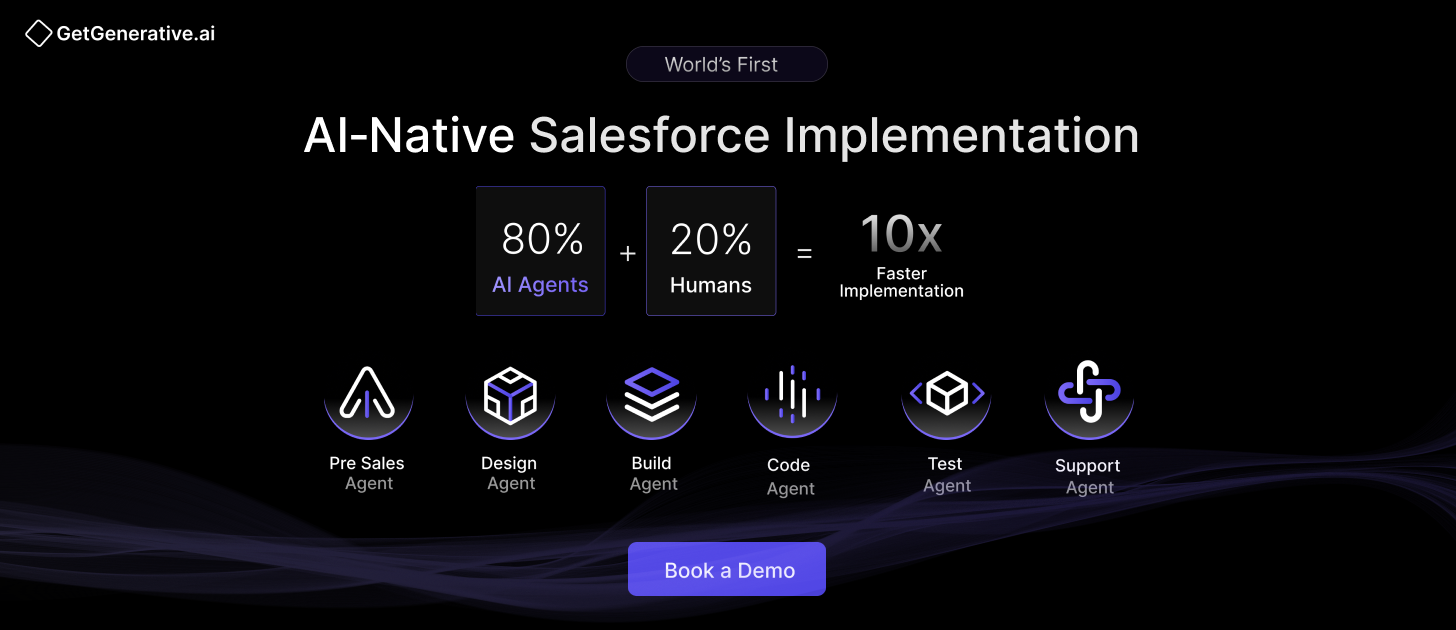
Output lands in Salesforce, Jira and GitHub rather than returning as documents you retype. Consultants working solo or in small teams can start the 7-day free trial with full agent access and run it against a live engagement.

Questions consultants ask about the Agentforce Service Consultant role

What is a Salesforce Service Cloud Consultant?

A consultant who designs and implements customer service solutions on Salesforce, covering case management, routing, channels, knowledge and analytics. Salesforce now certifies the role as Agentforce Service Consultant, reflecting that agent design sits inside the same remit.

Has the Service Cloud Consultant certification been renamed?

Yes. It is issued as the Salesforce Certified Agentforce Service Consultant certification. Study material and job listings still use the old name in many places, so check that any preparation resource matches the current exam guide.

What is the passing score for the exam?

78 percent on the English version, across 60 multiple-choice questions with up to five additional unscored questions. Confirm fee and duration on the current official exam guide rather than a third-party summary.

Do I need the Administrator certification first?

It is not a hard prerequisite, but Administrator-level platform knowledge is assumed throughout the exam. Attempting it without that grounding usually means learning platform fundamentals and service-specific design at the same time, which is inefficient.

How long does it take to become a Service Cloud consultant?

With focused study and real project exposure, one to two years from a starting admin role. The certification can be earned faster than that; the judgement the role requires cannot.

What should a Service Cloud consultant learn next?

Agent design, testing and consumption modelling. It is the clearest gap in the current market, it sits inside the same certification now, and it is rare to find in one person alongside strong contact centre design.

Order of Execution in Salesforce

Order of Execution in Salesforce

Understanding the order of execution is crucial for building efficient and bug-free applications in Salesforce development. 

According to survey results, over a quarter of developers (27%) identified managing longstanding technical debt as the primary obstacle in Salesforce development. Additionally, one-fifth of respondents (20%) reported difficulty determining project requirements.

What is the order of execution in Salesforce?

The execution order in Salesforce refers to the sequence in which various automations, validations, and custom logic are processed when a record is saved. This sequence is deterministic and follows a specific pattern, ensuring consistent behavior across the platform.

How does the Salesforce process trigger?

Salesforce processes triggers as part of the overall order of execution. Triggers are executed at specific points during the save process before triggers fire before the record is saved to the database and after triggers firing after the record has been saved.

Detailed steps in Salesforce execution order

  1. System validation rules
  2. Before triggers
  3. Custom validation rules
  4. Duplicate rules
  5. Record-triggered flows (before saving)
  6. Record save
  7. After triggers
  8. Assignment rules
  9. Auto-response rules
  10. Workflow rules
  11. Processes and flows
  12. Escalation rules
  13. Roll-up summary fields
  14. Sharing rules
  15. Record-triggered flows (after save)
  16. Criteria-based sharing recalculation

Salesforce trigger processing sequence

Understanding the trigger processing sequence for Service Cloud Consultants is crucial for optimizing case management and customer service processes. Let’s break down the sequence in detail:

Before Triggers:

  • Executed first in the order of execution
  • Types: before insert, before update, before delete
  • Use cases:
    • Populating default case values before insertion
    • Updating related records before the main record is saved
    • Performing complex validation logic

System Validation and Custom Validation Rules:

  • Executed immediately after before triggers
  • Ensures data integrity and business rule compliance
  • Service Cloud example: Validating that a case has all required fields before escalation

Record Save (not committed):

  • The record is saved to the database but not yet committed
  • This allows for potential rollbacks if subsequent steps fail

getgenerativeai


After Triggers:

  • Executed after the record is saved but before the commit
  • Types: after insert, after update, after delete, after undelete
  • Use cases:
    • Updating related records based on the new/changed case data
    • Initiating asynchronous processes like sending emails or creating tasks
    • Calculating SLA timers or updating case metrics

Assignment Rules, Auto-response Rules, Workflow Rules, and Processes:

  • Execute after triggers but before the final commit
  • Critical for automating Service Cloud processes:
    • Assignment rules route cases to appropriate queues or agents
    • Auto-response rules send initial customer communications
    • Workflow rules update related records or send notifications
    • Process Builder processes can execute more complex multi-object automations

Record Commit:

  • The transaction is finalized, and changes are committed to the database

Key Considerations for Service Cloud Consultants:

  • Triggers should be designed to handle bulk operations efficiently
  • Avoid recursive trigger scenarios that can impact performance
  • Utilize trigger handlers and a robust trigger framework for maintainability
  • Consider the implications of triggers on assignment rules and workflows
  • Use platform events for scenarios requiring custom execution sequences
  • Implement queueable Apex for long-running operations that could timeout in a synchronous context

Also Read – Salesforce Service Cloud Implementation Guide

How to debug triggers in Salesforce?

Debugging triggers in Salesforce requires a methodical approach:

  1. Use System.debug() statements strategically within your trigger code
  2. Leverage the Developer Console’s debug logs to trace execution
  3. Implement a trigger framework that allows for easy debugging and maintenance
  4. Utilize Apex Replay Debugger for step-by-step execution analysis
  5. Implement a custom logging system for complex scenarios

For Service Cloud implementations, focus on debugging scenarios that involve multiple objects and complex customer service processes.

Best practices for configuring workflow rules

When configuring workflow rules for Service Cloud:

  1. Prioritize time-dependent workflows for SLA management
  2. Use field updates judiciously to avoid recursive triggers
  3. Implement workflow rules for automated case routing and escalation
  4. Leverage cross-object workflow rules for holistic customer service processes
  5. Always consider the order of execution when designing workflow rules

Why is understanding the order of execution important?

For Service Cloud Consultants, understanding the order of execution is critical because:

  1. It helps in designing efficient case management processes
  2. It allows for accurate SLA calculations and enforcement
  3. It ensures proper data consistency across related objects (e.g., Cases, Contacts, Accounts)
  4. It helps in troubleshooting complex automations and identifying performance bottlenecks
  5. It enables the creation of scalable and maintainable Service Cloud solutions

Is the execution order configurable in Salesforce?

No, the execution order in Salesforce is not configurable. It follows a predetermined sequence to ensure consistency across all orgs. However, Service Cloud Consultants can leverage this fixed order to their advantage by:

  1. Designing automations that work harmoniously with the execution order
  2. Using platform events for scenarios that require custom execution sequences
  3. Implementing queueable Apex for operations that need to occur outside the standard order
  4. Utilizing async operations for long-running processes that might impact performance

Conclusion

Mastering the execution order in Salesforce is crucial for Service Cloud Consultants. It enables the creation of robust, efficient, and scalable customer service solutions. By understanding this fundamental concept, consultants can optimize automations, improve system performance, and deliver exceptional service experiences.

Enhance your Salesforce consulting with GetGenerative.ai. Effortlessly craft outstanding proposals, enabling you to dedicate more time to providing exceptional client service. 

Start today!

Frequently Asked Questions (FAQs)

1. How does the order of execution impact Service Cloud performance? 

It affects the speed of case processing, SLA calculations, and overall system responsiveness.

2. Can triggers interfere with workflow rules in Service Cloud? 

Yes, improperly designed triggers can cause conflicts with workflow rules, especially in complex case management scenarios.

3. How do record-triggered flows fit into the order of execution? 

Record-triggered flows execute at specific points in the order of execution, before or after the record is saved to the database.

4. What’s the best way to handle complex logic that spans multiple objects in Service Cloud? 

Utilize a combination of triggers, flows, and queueable Apex to distribute processing and maintain performance.

5. How can I ensure my Service Cloud customizations adhere to best practices regarding the order of execution?

Regularly review and refactor your automations, use debugging tools, and consider implementing a trigger framework for better control and maintainability.

Salesforce Requirement Gathering Template

Salesforce Requirement Gathering Template

Requirement gathering isn’t just a preliminary checkbox in the Salesforce implementation process — it’s the defining factor for project success. According to industry research, over 70% of failed projects stem from poorly gathered requirements (Contentsnare). When done right, structured requirement gathering can reduce scope creep, enhance user adoption, and ensure solutions are aligned with business goals.

In Salesforce projects, the flexibility and depth of the platform make it especially important to standardize how requirements are collected. A comprehensive, well-crafted requirement-gathering template serves as a shared blueprint between stakeholders and consultants. It captures not just what needs to be built, but why — ensuring that the final solution delivers measurable value.

“The discovery phase can make or break a project.” — Salesforce Consultant, CloudAlly

This guide provides a fully detailed walkthrough of what a Salesforce requirement gathering template should include, best practices to follow and common pitfalls to avoid. Let’s get started! 

AD 4nXfcqNvCOr4RsIcUgNdfwtv3LT1CJyMijTkgZd4BY3wvXVxt5Uds4 QYIC28yNI3AcUjXlUAQEzzuE H7dWJOXSkm902GXbnrgKPwGfOOzgFJqT Ew0MaXog y2g8PgYB94sw8N8VQ?key=c7fPSpw1 GqfPRbYAbUUPJb8


Key Components of a Salesforce Requirement Gathering Template

1. Project Overview and Scope

This section lays the foundation for the implementation. It ensures alignment among all stakeholders by documenting the business context, expectations, and boundaries upfront.

Key Elements to Capture:

  • Project Name & Description:
    E.g., “Sales Cloud implementation for global lead-to-cash process.”

  • Business Objectives & Outcomes:
    Define measurable goals.
    E.g., “Increase lead conversion rate by 20% over 12 months.”

  • Scope & Deliverables:
    Clarify what’s in scope (and out). Specify Salesforce Clouds, features, integrations, and exclusions.

  • Timeline & Milestones:
    High-level phases like Discovery, Build, UAT, Go-Live.

  • Key Stakeholders:
    Names, roles, and departments — brief for context.

Example Insight: A project to streamline sales operations might appear simple, but if one stakeholder thinks it’s about improving conversions and another believes it’s about enhancing customer service — misalignment can derail everything. Clarifying the objective upfront avoids conflicting expectations later.

2. Stakeholder and User Information

Engaging the right people from the start is critical. Each persona brings unique needs that shape the solution’s effectiveness.

What to Document:

  • Stakeholder Names & Roles: Include business sponsors, department leads, IT heads, power users.

  • Contact Details: For follow-ups and clarification.

  • User Personas & Teams: Identify who will use Salesforce (e.g., sales reps, managers, service agents, finance).

Best Practice: Ensure cross-department representation. For instance, at a retail company (“Frank Wallets”), consultants involved the CEO, Sales Manager, Support Head, and IT Manager — ensuring all perspectives were addressed in the requirement set.

⚠️ Pitfall to Avoid: Leaving out end users. This often leads to low adoption rates — people won’t use a system built without their input.

3. Current State Analysis (Systems and Processes)

Before mapping the future, understand the present. Document the “as-is” processes, tools, and pain points that exist in the organization.

Template Sections:

  • Existing Tools/Systems:
    CRMs, spreadsheets, databases, ticketing systems, email tools.
    E.g., “Sales managed in Excel; support via legacy ticketing tool.”

  • Process Workflows:
    Map out lead flow, case handling, or approval chains. Use flowcharts or simple step lists.

  • User Pain Points:
    Gather specifics.
    E.g., “Sales reps drop follow-ups due to lack of alerts”; “Agents can’t access customer history.”

  • Data Volume & Quality:
    Note estimated record counts, duplication issues, or data gaps.

💡 Consultant Tip: Don’t just document — challenge assumptions. Ask “Why do you do it that way?” and look for inefficiencies that Salesforce can fix.

🧠 Real-World Case: A nonprofit once listed “cases from website” as a requirement. Only after mapping their current process did they uncover that agents manually searched emails for updates — leading to a more meaningful feature: automatic case updates and history tracking.

Also Read – Salesforce Discovery Workshop – Questionnaire

4. Business Process Needs and Personas (Future State)

This section translates business goals into functional requirements. Think of it as the “to-be” model — how the organization wants Salesforce to support and enhance their operations.

What to Include:

  • Target Process Flows (To-Be):
    Define the ideal process inside Salesforce. For Sales Cloud, this might be:
    Lead → Qualification → Opportunity → Quote → Close.
    For Service Cloud:
    Case Created → Triage → Escalation → Resolution → Closure.

  • User Stories or Use Cases:
    Capture needs in a relatable, user-focused format.
    E.g., “As a support agent, I want to merge duplicate contacts to view a customer’s full history.”

  • Persona-Specific Requirements:
    Different users, different needs.

    • Sales Rep: Log calls, create opportunities

    • Sales Manager: Pipeline dashboards, forecast view

    • Support Agent: Case history, quick templates

    • Support Manager: SLA tracking, queue management

💬 Expert Insight: Vague inputs like “We want better lead tracking” often miss the mark. A more actionable version is:
“Implement lead scoring with alerts for hot leads and a report showing conversion by source.”

🔁 Why It Matters: Functional clarity now prevents scope creep and mismatched expectations later. Each process step should be mappable to a user action in Salesforce.

5. Key Performance Indicators (KPIs) and Success Metrics

To ensure alignment with business goals, define what success looks like numerically.

Capture the Following:

  • Current Baselines & Desired Targets:
    E.g., “Lead conversion rate: current = 10%, target = 20% in 12 months.”

  • KPI Examples by Cloud:

    • Sales Cloud: Win rate, average deal size, sales cycle length

    • Service Cloud: First contact resolution, CSAT, average case age

    • Marketing Cloud: Open rate, conversion per campaign, unsubscribes

  • Success Criteria:
    Clarify how the client will evaluate if Salesforce is “working.” Ask:
    “If these KPIs improve, would that mean success to you?”

📊 Value Add: When stakeholders agree on success metrics early, it keeps implementation focused. It also allows post-launch ROI reporting — a powerful way to validate the project’s impact.

6. Security, Access, and Compliance Requirements

This section ensures your Salesforce setup respects organizational hierarchy, user roles, and regulatory compliance.

Details to Include:

  • Role Hierarchy & Visibility:
    Define access layers.
    E.g., “Regional sales managers should not see each other’s pipelines.”

  • Profiles & Permissions:
    Note any restrictions like read-only access or field-level security.
    E.g., “Restrict access to salary data; encrypt PII fields.”

  • Approval Processes:
    Map workflows requiring sign-offs.
    E.g., “Discounts over 20% need VP approval; refund requests over $100 need finance approval.”

  • Compliance Needs:
    If GDPR, HIPAA, or finance laws apply, capture requirements for:

    • Data retention

    • Access logging

    • Consent tracking

    • Secure sharing

  • Authentication & SSO:
    Note if the client uses identity providers like Okta or Azure AD.
    E.g., “Enable SSO for all users with multi-factor authentication.”

🛡️ Why This Is Critical: In one project, a missed requirement around opportunity visibility led to a rebuild of sharing rules late in the project. Documenting security needs early avoids surprises.

7. Data Migration and Integration Requirements

Migrating old data and connecting external systems are two of the most underestimated components of any Salesforce project.

What to Document:

  • Migration Scope & Sources:
    E.g., “Import 100,000 contacts and 5 years of opportunity data from HubSpot.”

  • Data Cleansing Needs:
    Any cleanup before import?
    E.g., “Remove duplicates, standardize phone number formats.”

  • Integration Points:
    List all systems that will connect to Salesforce. For each, define:

    • Source and destination

    • Direction (one-way or bi-directional)

    • Frequency (real-time, hourly, daily)

    Examples:

    • “Sync closed deals with SAP for invoicing”

    • “Pull customer loyalty data into Marketing Cloud for segmentation”

  • Transformation Rules:
    E.g., “Concatenate First Name and Last Name into Full Name field on import.”

  • Data Governance & Ownership:
    Define who owns what.
    E.g., “Sales owns contact updates; marketing owns campaign data.”

Also Read – Salesforce RFP Template: A Comprehensive Guide

8. Reporting and Analytics Requirements

Salesforce’s value lies in its ability to turn data into decisions. That starts with knowing what insights stakeholders expect.

What to Capture:

  • Reports Needed:
    E.g., “Pipeline by stage and rep,” “CSAT by support agent,” “Campaign ROI by source.”
    Define the metrics and intended users for each.

  • Dashboard Expectations:
    E.g., “Sales Manager Dashboard with monthly sales, open activities, and rep leaderboard.”

  • Schedule & Recipients:
    E.g., “Email Weekly Opportunity Snapshot to VP Sales every Monday 9 AM.”

  • Advanced Analytics (if applicable):
    Note requirements for Tableau CRM, Einstein Discovery, or third-party BI tools.
    E.g., “Need trend forecast of support ticket volume and predictive CSAT scoring.”

Pro Tip: Align reports with KPIs already defined. If the client needs to track sales by region vs. target, ensure Salesforce captures both regional data and targets — otherwise, you’ll be unable to report on it post-launch.

9. Additional Considerations

These often-overlooked items can derail projects if not addressed early.

Licenses & Editions:

  • What Licenses Will Be Used or Bought?
    E.g., “Enterprise Edition with 25 Sales Cloud licenses; 50 Experience Cloud licenses for partners.”

  • Impact on Scope:
    Some features (e.g., CPQ, Field Service, Einstein) require specific licenses.

Language & Localization:

  • Preferred Language:
    E.g., “English and French for Canadian operations.”

  • Region-Specific Needs:

    • Currency formats

    • Date/time formats

    • Legal/regulatory localizations

Other Constraints:

  • E.g., “Mobile access for field reps is mandatory,” “Implementation must finish before annual user conference,” “Data must reside in EU region due to GDPR.”

Note: Capture these even if they feel minor. For example, misunderstanding license availability or ignoring multi-currency requirements can delay go-live or cause rework.

Best Practices for Effective Salesforce Requirement Gathering

Templates are tools — but the approach is what drives success.

What Top Consultants Always Do:

  1. Research Before You Ask: Learn the client’s industry, review their processes, and tailor your questions.

  2. Include All Stakeholders: From exec sponsors to end users, every voice matters — especially during cross-cloud implementations.

  3. Ask “Why?” and “How?” — Not Just “What?” Understand the motivation and context behind every requirement.

  4. Use Visuals to Confirm Understanding: Process flows, mockups, and screen walkthroughs help clarify needs — and reveal overlooked steps.

  5. Frame Questions Around Business Goals: Don’t start with, “Do you need Opportunity Teams?” Ask, “How do reps collaborate on deals?”

  6. Document Everything with Clarity: Use bullet points, tables, and visuals. Track assumptions, priorities (MoSCoW), and version changes.

  7. Validate Requirements with the Client: Re-confirm in walkthroughs. “Does this capture what we discussed?” prevents misalignment.

  8. Build Flexibility In: Discuss future growth. “What happens if your user base triples?” Planning for scale avoids rebuilds.

Golden Rule: “A well-understood requirement is a feature half-built.”

Your role is not just to document, but to guide, clarify, and challenge where needed.

Also Read – RFP Response Templates – The Ultimate Guide

Common Pitfalls to Avoid

PitfallWhat HappensHow to Avoid
Skipping End-User InputSolution doesn’t match real-world useInclude reps, agents, and other daily users
Vague or High-Level RequirementsMisinterpretations in design and buildClarify with user stories, examples, and success criteria
Ignoring Existing Processes & ToolsIntegration issues and resistance to adoptionDocument current systems and workflows thoroughly
Over-Scoping or Scope CreepProject delays, budget overrunsPrioritize requirements, use change control, maintain a backlog
Rushing DiscoveryMissed details lead to rework post-UATAdvocate for adequate discovery time, build buffer for Q&A
Poor Documentation or HandoverTeam members misinterpret or forget requirementsMaintain clean, versioned documentation with visual references

Conclusion

A well-structured Salesforce requirement-gathering template is indispensable for ensuring successful project execution. By systematically collecting and organizing essential information, you can build a robust foundation for your Salesforce solutions, ultimately leading to higher client satisfaction and project success. Implement these practices in your future projects to enhance the quality of your requirement-gathering process.

Tired of spending hours gathering requirements and building proposals from scratch?

salesforce consulting services

With GetGenerative.ai, our AI-powered Workspace and Agents help you manage every stage of your Salesforce project — from Pre-Sales to Go-live. Generate complete proposals, define scope, and align stakeholders in minutes.

👉 Explore how it works — book your demo today

Frequently Asked Questions (FAQs)

1. What is requirement gathering? 

Requirement gathering is the first step of the Software Development Life Cycle (SDLC), where the project team learns about the client’s needs and how they expect the system to function.

2. Why is requirement gathering important? 

It’s crucial to understand the client’s business, identify pain points, and form the foundation for an effective solution.

3. What information is typically gathered? 

User roles, current systems, challenges, business processes, KPIs, role hierarchies, approval processes, document needs, communication methods, and reporting requirements.

4. How should requirement gathering meetings be conducted? 

Prepare in advance, involve all stakeholders, record the meetings, clarify and confirm details, and explain concepts using visual aids.

5. What are some best practices for gathering requirements? 

Prepare specific questions, engage all stakeholders, summarize key points, ask follow-up questions, use diagrams, review regularly, and ensure clear documentation.

Salesforce AppExchange Partner Program

Salesforce AppExchange Partner Program

Salesforce’s AppExchange Partner Program is renowned as a leading enterprise marketplace globally. It empowers Independent Software Vendors (ISVs) with cutting-edge AI, data, and CRM technologies. It provides a robust platform for partners to drive significant business growth and deliver innovative solutions that extend Salesforce’s core capabilities.

1. Program Design

At its core, the AppExchange Partner Program is designed to synchronize partners’ success with that of their customers. It operates on a robust framework built around four principal pillars:

  • Customer Success: Ensuring that partners’ innovations lead directly to customer satisfaction and efficiency.
  • Innovation: Encouraging continuous development and creativity to stay ahead of market demands.
  • Growth: Supporting scalable solutions that expand partner capabilities and market reach.
  • Impact: Driving meaningful change in partners’ industries, demonstrating tangible benefits through their solutions.

These pillars are intricately measured through the AppExchange Partner Trailblazer Score, a comprehensive metric system that evaluates partner performance. As partners ascend from the Base to Summit tiers, they unlock progressively advanced resources and benefits, fostering an environment ripe for growth and success.

2. Partner Benefits and Resources

Salesforce’s commitment to partner empowerment is evidenced by its extensive provision of tools and resources tailored for every stage of an ISV’s journey:

  • Development Resources: Partners are equipped with detailed guides and tools, such as Salesforce DX and Managed Packaging, to streamline app creation and maintenance. This toolkit ensures high-performance and customer-centric solutions.
  • Marketing and Sales Support: From visibility enhancement in the AppExchange marketplace through the AppExchange Marketing Program to detailed sales kits and Trialforce for lead conversion, Salesforce provides a spectrum of marketing and sales aids to boost partner outreach and revenue.
  • Continuous Education and Collaboration: The program encourages perpetual learning and networking through resources like Trailhead and the Partner Learning Camp, active engagement in community groups, and expert consultations.

Also Read – Salesforce AppExchange: A Comprehensive Guide

3. App Distribution Models

Salesforce offers nuanced distribution models that cater to diverse partner needs, allowing for tailored approaches to market and customer engagement:

  • ISVFORCE Model: This model is ideal for partners whose applications extend Salesforce’s core functionalities. It focuses on integration with existing Salesforce customers.
  • OEM Model: This model allows partners to reach beyond the Salesforce customer base, offering applications that leverage Salesforce technologies but also operate independently of the Salesforce core products.

4. Economic Model

Salesforce’s AppExchange includes a transparent revenue-sharing model that aligns with the partner’s growth in the program. The structure varies based on the chosen distribution model but is designed to foster a mutually beneficial relationship between Salesforce and its partners. Notably, the program introduces the Marginal PNR Model, which offers reduced royalty rates as partners scale their operations, enhancing profitability.

getgenerativeai

5. Continuous Learning and Support

Salesforce encourages ongoing education and skill enhancement through its Trailhead platform and various support communities within the Partner Ecosystem. These resources ensure that ISVs can innovate and adapt to changing market needs.

Conclusion

The Salesforce AppExchange Partner Program presents a comprehensive framework that supports ISVs in app development and distribution and provides substantial marketing and sales resources to ensure their global success. With its structured tiers, extensive support, and robust economic models, the program offers a clear path for partners to thrive in the ever-evolving tech landscape.

Enhance your Salesforce consulting with GetGenerative.ai. Effortlessly craft outstanding proposals, enabling you to dedicate more time to providing exceptional client service. 

Start today!

Frequently Asked Questions (FAQs)

1. What is the AppExchange Partner Program?

A Salesforce initiative that supports ISVs with resources to build, market, and sell their apps globally.

2. What are the key pillars of the program?

Customer success, innovation, growth, and impact.

3. How is partner performance measured?

Through the AppExchange Partner Trailblazer Score, which assesses performance based on the program’s key pillars.

4. What benefits do partners receive?

Development tools, marketing and sales resources, and various levels of support depending on their tier.

5. What are the AppExchange distribution models?

ISVFORCE and OEM, catering to different partner needs and customer bases.

6. What is the economic model of the program?

A revenue-sharing model that varies by distribution model and aligns with partner growth.

What Is the Role of a Presales Manager in Salesforce?

What Is the Role of a Presales Manager in Salesforce?

Customer Relationship Management (CRM) has become the backbone of successful sales strategies. At the forefront of this revolution is Salesforce, the world’s leading CRM platform. According to recent statistics, Salesforce commands a 19.5% market share in the CRM space, with over 150,000 companies relying on its services globally. 

This dominance has created a surge in demand for skilled professionals who can bridge the gap between Salesforce’s powerful capabilities and client needs. Enter the Presales Manager – a crucial role in reshaping how businesses approach CRM solutions.

What does a Presales Manager in Salesforce do?

A Presales Manager in Salesforce is a technical liaison between the sales team and potential clients. Their primary responsibilities include:

  1. Demonstrating Salesforce products and solutions to prospective clients
  2. Customizing presentations to address specific client needs
  3. Collaborating with sales teams to develop winning strategies
  4. Providing technical expertise during the sales process
  5. Addressing client concerns and questions about Salesforce capabilities

How do you become a Presales Manager for Salesforce?

Becoming a Presales Manager for Salesforce typically involves the following steps:

  1. Gain a strong foundation in sales and customer relationship management
  2. Acquire in-depth knowledge of Salesforce products and services
  3. Obtain relevant Salesforce certifications (e.g., Salesforce Certified Administrator, Salesforce Certified Sales Cloud Consultant)
  4. Develop strong communication and presentation skills.
  5. Gain experience in a sales or technical role within the CRM industry
  6. Build a network within the Salesforce ecosystem

What career paths are available for a Presales Manager in the CRM industry?

A Presales Manager role can lead to various career opportunities within the CRM industry:

  1. Sales Engineering Director
  2. Solutions Architect
  3. Chief Technology Officer (CTO)
  4. Customer Success Manager
  5. Product Manager
  6. Independent CRM Consultant

Also Read – Salesforce Sales Cloud Consultant: A Complete Guide

How does Salesforce CRM change the responsibilities of a Presales Manager?

Salesforce’s robust platform and continuous innovation have significantly expanded the traditional responsibilities of a Presales Manager. The unique features and capabilities of Salesforce CRM require a more specialized skill set and a broader range of responsibilities:

Deeper technical knowledge:

  • Mastery of Salesforce’s extensive product suite, including Sales Cloud, Service Cloud, Marketing Cloud, and Industry Cloud solutions
  • Understanding of Salesforce’s AI capabilities, such as Einstein Analytics and Prediction Builder
  • Proficiency in Salesforce development tools like Apex and Lightning Web Components

Customization expertise:

  • Ability to design and demonstrate custom Salesforce solutions tailored to specific industry verticals (e.g., healthcare, financial services, retail)
  • Skill in using Salesforce’s declarative tools like Process Builder and Flow to create custom business processes
  • Knowledge of the AppExchange ecosystem to recommend and integrate third-party applications

Integration focus:

  • Familiarity with Salesforce’s API structure and integration capabilities
  • Understanding of common integration patterns and middleware solutions
  • Ability to explain how Salesforce can integrate with legacy systems, ERP solutions, and other business-critical applications

Cloud technology proficiency:

  • Deep understanding of multi-tenant architecture and its benefits
  • Ability to address security concerns related to cloud-based solutions
  • Knowledge of Salesforce’s infrastructure and compliance certifications (e.g., SOC 2, ISO 27001)

Continuous learning:

  • Staying updated on Salesforce’s thrice-yearly release cycle and new feature rollouts
  • Regularly attending Salesforce events like Dreamforce and TrailheaDX
  • Participating in the Trailblazer Community to share knowledge and stay informed about platform changes

Data migration and management expertise:

  • Understanding of data migration best practices when moving to Salesforce
  • Knowledge of Salesforce’s data management tools like Data Loader and Data Import Wizard
  • Ability to advise on data cleansing and enrichment strategies

Mobile-first mindset:

  • Proficiency in demonstrating Salesforce’s mobile capabilities, including the Salesforce Mobile App
  • Understanding of mobile-specific features like offline access and mobile push notifications
 

getgenerativeai

Analytics and reporting prowess:

  • Expertise in Salesforce’s reporting and dashboard capabilities
  • Ability to showcase how Salesforce can provide actionable insights through tools like Einstein Analytics

Ecosystem awareness:

  • Understanding of Salesforce’s acquisition strategy and how new products are integrated into the core platform
  • Ability to position Salesforce against competitors in the CRM space
  • Knowledge of Salesforce’s partner ecosystem and how it extends platform capabilities

Change management focus:

  • Ability to address organizational change management concerns related to CRM implementation
  • Understanding of Salesforce’s adoption tools and best practices
  • Skill in demonstrating the ROI and business value of Salesforce solutions

These expanded responsibilities require Presales Managers to be not just product experts but also trusted advisors who can guide clients through their digital transformation journey using Salesforce CRM. 

Also Read – The Ultimate Salesforce Sales Cloud Features Cheat Sheet

What are the daily tasks of a Presales Manager working with Salesforce?

A typical day for a Presales Manager in Salesforce might include:

  1. Conducting product demonstrations and proof of concepts
  2. Collaborating with sales teams on opportunity strategies
  3. Analyzing client requirements and mapping them to Salesforce solutions
  4. Preparing and delivering technical presentations
  5. Responding to Request for Proposals (RFPs) and Request for Information (RFIs)
  6. Staying updated on Salesforce product roadmaps and industry trends
  7. Mentoring junior team members on Salesforce best practices

What skills are essential for success in this role?

To excel as a Presales Manager in Salesforce, the following skills are crucial:

  1. In-depth knowledge of Salesforce products and services
  2. Strong technical acumen and problem-solving skills
  3. Excellent communication and presentation abilities
  4. Strategic thinking and business acumen
  5. Project management and organizational skills
  6. Adaptability and quick learning capability
  7. Customer-centric mindset and empathy
  8. Negotiation and conflict resolution skills

Conclusion

The role of a Presales Manager in Salesforce is pivotal in today’s CRM-driven business world. As organizations increasingly rely on Salesforce to manage their customer relationships, the demand for skilled professionals who can navigate this complex ecosystem continues to grow. 

Enhance your Salesforce consulting with GetGenerative.ai. Effortlessly craft outstanding proposals, enabling you to dedicate more time to providing exceptional client service. 

Start today!

Frequently Asked Questions (FAQs)

1. What is the average salary for a Presales Manager in Salesforce? 

While salaries can vary based on location and experience, the average salary for a Presales Manager in Salesforce ranges from $100,000 to $150,000 annually in the United States.

2. How long does it take to become a Presales Manager in Salesforce? 

Typically, this position requires 5-7 years of experience in sales, technical roles, or a combination of both, along with Salesforce expertise.

3. Is a technical background necessary to become a Presales Manager in Salesforce? 

While a technical background can be beneficial, it’s not always necessary. Strong product knowledge, sales skills, and understanding and explaining technical concepts are more important.

4. What certifications are most valuable for a Presales Manager in Salesforce? 

Key certifications include Salesforce Certified Administrator, Salesforce Certified Sales Cloud Consultant, and Salesforce Certified Platform App Builder.

Salesforce Tableau CRM & Einstein Discovery Consultant 2024

Salesforce Tableau CRM & Einstein Discovery Consultant 2024

In today’s data-driven business landscape, extracting meaningful insights from vast information is crucial. 

According to a recent IDC report, the big data and business analytics market is projected to reach $348 billion in 2024. Amidst this explosive growth, Tableau CRM (formerly Einstein Analytics) and Einstein Discovery have emerged as powerful tools in the Salesforce ecosystem. 

What is Tableau CRM?

Tableau CRM, formerly Einstein Analytics, is a powerful cloud-based analytics platform that enables businesses to explore and visualize their data in real time. It combines Tableau’s robust capabilities with Salesforce’s Einstein AI to provide actionable insights and predictive analytics.

What does Einstein Discovery bring to the table?

Einstein Discovery is an AI-powered analytics tool within the Tableau CRM ecosystem. It uses machine learning algorithms to analyze vast amounts of data, uncover hidden patterns, and generate predictive models. This tool automates data analysis, making it easier for businesses to make data-driven decisions quickly.

What does a Tableau CRM & Einstein Discovery Consultant do?

A Tableau CRM & Einstein Discovery Consultant is a multifaceted professional who bridges the gap between data analytics and business strategy. Their role encompasses a wide range of responsibilities:

Implementation and Configuration:

  • Design and deploy Tableau CRM and Einstein Discovery solutions tailored to the organization’s needs.
  • Integrate these tools with existing Salesforce environments and other data sources.
  • Set up data security measures and access controls to ensure compliance with data governance policies.

Data Modeling and Dashboard Creation:

  • Develop complex data models that accurately represent business processes and relationships.
  • Create intuitive and interactive dashboards that provide actionable insights to stakeholders at all levels.
  • Optimize dashboard performance for large datasets and real-time analytics.

Predictive Analytics:

  • Leverage Einstein Discovery to build and deploy predictive models.
  • Identify key drivers and factors influencing business outcomes.
  • Translate predictive insights into actionable recommendations for business users.

Training and User Adoption:

  • Conduct training sessions for end-users, from executives to analysts, on how to use Tableau CRM and Einstein Discovery effectively.
  • Develop user guides, documentation, and best practices to ensure smooth adoption.
  • Provide ongoing support and mentorship to users as they become more proficient with the tools.

Also Read – Salesforce OmniStudio Consultant: A Complete Guide

Continuous Improvement and Optimization:

  • Regularly assess the effectiveness of existing analytics solutions and identify areas for improvement.
  • Stay updated with the latest features and updates in Tableau CRM and Einstein Discovery, incorporating new capabilities into existing solutions.
  • Collaborate with stakeholders to evolve analytics strategies in line with changing business needs.

Cross-functional Collaboration:

  • Work closely with IT teams to ensure proper data integration and system performance.
  • Partner with business units to understand their specific analytics needs and translate them into technical requirements.
  • Collaborate with data science teams to incorporate advanced statistical models into Tableau CRM and Einstein Discovery workflows.

ROI Analysis and Reporting:

  • Develop metrics to measure the impact of analytics solutions on business outcomes.
  • Prepare and present reports to leadership on the value and ROI of Tableau CRM and Einstein Discovery implementations.
  • Use data storytelling techniques to communicate complex insights to non-technical audiences.

getgenerativeai

Why are these consultants in high demand?

As businesses increasingly rely on data to drive decision-making, the demand for professionals who can harness the power of advanced analytics tools has skyrocketed. Tableau CRM & Einstein Discovery Consultants are particularly sought after because:

  1. They bridge the gap between technical expertise and business acumen
  2. They can translate complex data into actionable insights
  3. They help organizations make the most of their Salesforce investments
  4. They enable data-driven decision-making across all levels of an organization

Also Read – Salesforce Integration Consultant: A Complete Guide

What skills are required to become a Tableau CRM & Einstein Discovery Consultant?

To excel as a Tableau CRM & Einstein Discovery Consultant, one must possess a unique blend of technical expertise, business acumen, and soft skills. Here’s a detailed breakdown of the required skills:

Technical Skills:

  • Proficiency in the Salesforce platform and its ecosystem
  • Advanced knowledge of Tableau CRM (Einstein Analytics) and Einstein Discovery
  • Strong understanding of data modeling concepts and best practices
  • Expertise in SQL and data manipulation techniques
  • Familiarity with ETL (Extract, Transform, Load) processes
  • Knowledge of machine learning concepts and predictive modeling
  • Experience with programming languages such as Apex, JavaScript, and Python
  • Understanding of REST APIs and web services

Analytical Skills:

  • Strong problem-solving abilities and logical thinking
  • Proficiency in statistical analysis and interpretation
  • Ability to translate complex data into actionable insights
  • Experience with data visualization techniques and best practices
  • Skill in pattern recognition and trend analysis

Business Acumen:

  • Understanding of various business processes and KPIs across different industries
  • Ability to align analytics solutions with business objectives
  • Knowledge of industry-specific regulations and compliance requirements
  • Familiarity with change management principles

Soft Skills:

  • Excellent communication skills, both written and verbal
  • Strong presentation abilities to convey complex information to diverse audiences
  • Project management skills to handle multiple implementations simultaneously
  • Collaboration and teamwork skills for cross-functional projects
  • Adaptability and willingness to learn new technologies and methodologies

Certifications:

  • Tableau CRM and Einstein Discovery Consultant Certification
  • Salesforce Certified Data Architect
  • Salesforce Certified Platform Developer I & II
  • Tableau Desktop Specialist Certification

Continuous Learning:

  • Stay updated with the latest features and updates in Tableau CRM and Einstein Discovery
  • Regularly participate in Salesforce community events and webinars
  • Contribute to knowledge-sharing platforms and forums

Industry Knowledge:

  • Understanding of industry-specific use cases for analytics
  • Awareness of market trends and competitive landscape in business intelligence and analytics

Ethical Considerations:

  • Understanding of data privacy laws and ethical use of AI and predictive analytics
  • Ability to implement responsible AI practices in analytics solutions

By mastering this diverse skill set, a Tableau CRM & Einstein Discovery Consultant can effectively bridge the gap between technical implementation and business value, driving data-driven decision-making across the organization.

Also Read – Nonprofit Salesforce Consultants: A Complete Guide

How can one become certified in Tableau CRM and Einstein Discovery?

Salesforce offers several certifications that are relevant to this role:

  1. Tableau CRM and Einstein Discovery Consultant Certification
  2. Salesforce Certified Data Architect
  3. Salesforce Certified Platform Developer I & II
  4. Tableau Desktop Specialist Certification

To obtain these certifications, candidates typically need to:

  1. Study the official Salesforce Trailhead modules
  2. Gain hands-on experience with the tools
  3. Pass the relevant certification exams

What are some best practices for Tableau CRM & Einstein Discovery Consultants?

Successful consultants often follow these best practices:

  1. Stay updated with the latest features and updates in Tableau CRM and Einstein Discovery
  2. Develop a deep understanding of the client’s business processes and goals
  3. Design scalable and maintainable solutions
  4. Implement robust data governance and security measures
  5. Continuously educate stakeholders on the value of data-driven decision-making
  6. Collaborate effectively with other teams, such as IT and business units
  7. Regularly evaluate and optimize existing implementations

What challenges might a Tableau CRM & Einstein Discovery Consultant face?

Some common challenges include:

  1. Dealing with data quality issues and inconsistencies
  2. Managing stakeholder expectations and demonstrating ROI
  3. Balancing technical complexity with user-friendliness
  4. Keeping up with the rapid pace of technological advancements
  5. Ensuring data privacy and compliance with regulations like GDPR

What will the future look like for Tableau CRM & Einstein Discovery Consultants?

The future looks bright for professionals in this field. As AI and machine learning evolve, the demand for experts leveraging these technologies is expected to grow. Some trends to watch out for include:

  1. Increased integration of Tableau CRM with other Salesforce products
  2. More emphasis on real-time analytics and decision-making
  3. Growing importance of explainable AI in business contexts
  4. Expansion of predictive analytics across various industries

Related Read – Becoming a Salesforce Consultant – The Ultimate Guide

Conclusion

Tableau CRM & Einstein Discovery Consultants play a crucial role in helping organizations harness the power of data and AI. By combining technical expertise with business acumen, these professionals are well-positioned to drive digital transformation and data-driven success in the years to come.

Enhance your Salesforce consulting with GetGenerative.ai. Effortlessly craft outstanding proposals, enabling you to dedicate more time to providing exceptional client service. 

Start today!

Frequently Asked Questions (FAQs)

1. What is the average salary for a Tableau CRM & Einstein Discovery Consultant? 

The average salary ranges from $90,000 to $150,000, depending on experience and location.

2. How long does it take to become certified? 

Dedicated study can achieve certification in 3-6 months.

3. Is programming knowledge necessary? 

While helpful, it’s not always required. SQL and basic scripting skills are often sufficient.

4. Can this role be performed remotely? 

Many consultants work remotely, though some client visits may be necessary.

5. What industries commonly employ these consultants? 

Financial services, healthcare, retail, and technology are among the top industries.

Salesforce Release Management Tools: A Comprehensive Guide 2024

Salesforce Release Management Tools: A Comprehensive Guide 2024

In today’s fast-paced business environment, efficient release management is crucial for organizations using Salesforce. According to a recent study by Forrester, companies implementing effective release management practices see a 20% increase in developer productivity and a 30% reduction in deployment-related issues. 

As Salesforce continues to dominate the CRM market with a 21.8% market share in 2024, the need for robust release management tools has never been greater.

What is Release Management in Salesforce?

Release management in Salesforce refers to planning, scheduling, and controlling the deployment of new features, updates, and fixes across various Salesforce environments. It encompasses version control, testing, deployment, and monitoring to ensure smooth transitions between development, testing, and production environments.

Salesforce Release Management Tools

Gearset

Gearset is a powerful DevOps solution designed specifically for Salesforce. It offers:

  • Automated deployments and rollbacks
  • Comprehensive testing and validation
  • Change monitoring and alerting
  • Data migration tools

Gearset’s intuitive interface and robust feature set make it a popular choice among Salesforce developers and administrators.

Copado

Copado is an end-to-end DevOps platform that provides:

  • Continuous integration and delivery (CI/CD) pipelines
  • Version control integration
  • Automated testing and compliance checks
  • Release management and orchestration

Copado’s strength lies in its ability to streamline the entire development lifecycle, from planning to deployment.

AutoRABIT

AutoRABIT offers a comprehensive suite of tools for Salesforce release management, including:

  • Version control and CI/CD automation
  • Data migration and seeding
  • Automated regression testing
  • Compliance and security features

AutoRABIT is known for its robust backup and recovery capabilities, making it a solid choice for organizations prioritizing data security.

Related Read – Top Salesforce Tools – You Should Know

Salesforce DevOps Center

Salesforce’s native DevOps Center provides:

  • Pipeline and deployment management
  • Work item tracking
  • Environment management
  • Integration with source control systems

As a native Salesforce tool, DevOps Center offers seamless integration with the Salesforce platform, making it an attractive option for teams looking for a native solution.

Prodly

Prodly specializes in data deployment and offers:

  • Data migration and seeding
  • Relational data deployment
  • Sandbox management
  • Test data management

Prodly’s focus on data management makes it an excellent complementary tool for organizations dealing with complex data structures and relationships.

getgenerativeai

How to Automate Salesforce Deployments?

Automating Salesforce deployments is crucial for maintaining efficiency, reducing errors, and ensuring consistent release processes. Here’s a detailed look at how to achieve this:

Implement Version Control:

  • Use Git repositories (e.g., GitHub, Bitbucket, GitLab) to store Salesforce metadata.
  • Organize your repository with a clear branching strategy (e.g., Gitflow).
  • Store all customizations, including Apex classes, Visualforce pages, Lightning components, and configuration metadata.

Set up CI/CD Pipelines:

  • Utilize tools like Jenkins, GitLab CI, or Azure DevOps.
  • Configure your pipeline to trigger builds on code commits or pull requests.
  • Include stages for building, testing, and deploying to different environments.

Create Automated Test Suites:

  • Develop comprehensive Apex test classes covering at least 75% of your code (Salesforce requirement).
  • Implement integration tests to verify system behavior across multiple components.
  • Create UI tests using tools like Selenium or Salesforce’s Lightning Testing Service.

Use Metadata APIs for Deployments:

  • Leverage the Salesforce Metadata API for programmatic deployments.
  • Use tools like Ant Migration Tool or Salesforce DX CLI to script deployments.
  • Implement delta deployments to only push changed components, reducing deployment time.

Implement Post-Deployment Validation:

  • Create automated scripts to verify critical functionality post-deployment.
  • Use tools like Selenium or Puppeteer for automated UI testing.
  • Implement data validation scripts to ensure data integrity.

Also Read – Salesforce Automation Tools: A Comprehensive Guide

Leverage Salesforce DX:

  • Adopt Salesforce DX for a more modular, package-based development approach.
  • Scratch orgs are used for feature development and testing.
  • Implement source tracking to push and pull changes between local environments and orgs easily.

Automate Sandbox Refreshes:

  • Use the Salesforce Metadata API or tools like Gearset to automate sandbox creation and refreshes.
  • Implement post-refresh scripts to anonymize sensitive data and configure sandboxes for testing.

Implement Feature Toggles:

  • Use custom settings or custom metadata types to create feature toggles.
  • This allows for easier deployment of partially completed features and A/B testing.

Set Up Monitoring and Alerting:

  • Implement logging and monitoring solutions to track deployment success and failures.
  • Set up alerts for critical errors or failed deployments.
  • Use tools like Salesforce Shield for enhanced security monitoring.

Automate Release Notes Generation:

  • Use commit messages or work item descriptions to automatically generate release notes.
  • Tools like Release Notes Generator for Salesforce can help automate this process.

Implement Rollback Procedures:

  • Develop automated rollback scripts for critical components.
  • Use tools like Gearset or Copado that offer one-click rollback features.

Continuous Integration with Salesforce DX:

  • Implement continuous integration using Salesforce DX and scratch orgs.
  • Automate the creation of scratch orgs, push source, run tests, and delete the org after each build.

By implementing these automation strategies, you can significantly streamline your Salesforce deployment process, reduce manual errors, and increase the frequency and reliability of your releases. Start small, perhaps with a single project or team, and gradually expand your automation efforts across your entire Salesforce ecosystem.

What are the Best Salesforce CI/CD Tools?

While the “best” tool depends on specific organizational needs, some top Salesforce CI/CD tools include:

  1. Jenkins (with Salesforce plugins)
  2. GitLab CI/CD
  3. Azure DevOps
  4. CircleCI
  5. Copado Continuous Integration

These tools offer robust pipelines, integrations with version control systems, and automated testing capabilities.

Salesforce Sandbox Management Best Practices

Effective sandbox management is crucial for successful release management. Best practices include:

  1. Implement a clear sandbox strategy (e.g., Development, Integration, UAT, Training)
  2. Regularly refresh sandboxes to keep data current
  3. Use data masking to protect sensitive information
  4. Implement access controls and governance for sandbox environments
  5. Automate sandbox creation and refresh processes where possible

How to Ensure Data Integrity in Salesforce Releases?

Maintaining data integrity during releases is critical. Key strategies include:

  1. Implement comprehensive data validation rules
  2. Use data loader tools for large-scale data migrations
  3. Perform thorough testing, including integration and regression tests
  4. Implement data backup and recovery solutions
  5. Use data comparison tools to verify data consistency post-deployment

Also Read – Salesforce Data Migration Tools: A Comprehensive Guide

Salesforce Release Management Strategies for Large Enterprises

Large enterprises face unique challenges in Salesforce release management. Effective strategies include:

  1. Implement a robust governance model
  2. Adopt a multi-tiered environment strategy
  3. Standardize release processes across business units
  4. Leverage advanced testing strategies, including automated and performance testing
  5. Implement change advisory boards (CABs) for release approvals
  6. Use release management tools that support enterprise-scale operations

Conclusion

Effective release management is crucial for organizations leveraging Salesforce. By utilizing the right tools and implementing best practices, companies can streamline their development processes, reduce errors, and deliver value to users more quickly and reliably. As the Salesforce ecosystem evolves, staying informed about the latest release management tools and strategies will be key to maintaining a competitive edge.

Enhance your Salesforce consulting with GetGenerative.ai. Effortlessly craft outstanding proposals, enabling you to dedicate more time to providing exceptional client service. 

Start today!

Frequently Asked Questions (FAQs)

1. How often should we deploy to production in Salesforce? 

The frequency of production deployments depends on your organization’s needs and capabilities. Many companies aim for bi-weekly or monthly releases, while some adopt a continuous deployment model.

2. Can we use GitHub to control the Salesforce version? 

Yes, GitHub can be used to control Salesforce versions. Many release management tools integrate with GitHub and other popular version control systems.

3. How do we handle conflicting changes in Salesforce deployments? 

Track changes using version control systems, implement proper branching strategies, and use merge conflict resolution features in your chosen release management tool.

4. What’s the difference between change sets and metadata API deployments? 

Change sets are a native Salesforce feature for moving metadata between orgs, while metadata API deployments offer flexibility and can be automated more easily.

5. How can we ensure compliance in our Salesforce release process?

Implement automated compliance checks in your CI/CD pipeline, use tools that offer compliance features, and maintain comprehensive documentation of your release processes.

Salesforce Data Integration Tools: A Comprehensive Guide 2024

Salesforce Data Integration Tools: A Comprehensive Guide 2024

In today’s data-driven business landscape, seamlessly integrating and managing data across various platforms is crucial for success. As a leading customer relationship management (CRM) platform, Salesforce plays a pivotal role in this ecosystem. 

According to recent statistics, 83% of Fortune 500 companies use Salesforce, and the platform manages over 10 billion customer data records daily. With such vast amounts of data, efficient integration tools have become indispensable.

What are Salesforce data integration tools?

Salesforce data integration tools are software solutions designed to connect Salesforce with other applications and databases, enabling the smooth flow of information between systems. These tools help businesses consolidate data from various sources, ensuring consistency and accuracy across all platforms.

How do Salesforce data integration tools work?

Salesforce data integration tools typically use APIs (Application Programming Interfaces) and connectors. They extract data from source systems, transform it to match Salesforce’s data model and load it into the platform. This process, known as ETL (Extract, Transform, Load), can be scheduled to run automatically at regular intervals or triggered by specific events.

Examples of Salesforce data integration tools

MuleSoft Anypoint Platform

  • Acquired by Salesforce in 2018
  • Offers a unified platform for API-led connectivity
  • Provides both cloud-based and on-premises integration solutions
  • Features include visual design tools, pre-built connectors, and robust security measures

Informatica Cloud Data Integration

  • Known for its user-friendly interface and drag-and-drop functionality
  • Offers real-time and batch integration capabilities
  • Includes advanced data quality and master data management features
  • Provides AI-powered automation for data mapping and transformation

Jitterbit Harmony

  • Specializes in rapid integration deployment with pre-built templates
  • Offers both cloud and on-premises solutions
  • Includes a low-code integration platform for citizen integrators
  • Provides robust API management capabilities

Dell Boomi AtomSphere

  • Cloud-native integration platform as a service (iPaaS)
  • Features a large library of pre-built connectors
  • Offers data quality and master data management tools
  • Includes AI-assisted data mapping and integration recommendations

Talend Data Integration

  • Open-source roots with both open-source and commercial versions
  • Provides a comprehensive suite of data integration and data quality tools
  • Offers strong support for big data and cloud integration scenarios
  • Includes features for data governance and compliance

Workato

  • Known for its user-friendly, recipe-based integration approach
  • Offers AI-powered automation and integration capabilities
  • Provides a large library of pre-built connectors and integrations
  • Features strong support for enterprise-grade security and governance

Also Read – Salesforce Data Migration Tools: A Comprehensive Guide

Celigo integrator.io

  • Specializes in NetSuite and Salesforce integrations
  • Offers pre-built integration apps for common business processes
  • Provides a low-code integration platform for custom integrations
  • Includes features for error handling and monitoring

SnapLogic Intelligent Integration Platform

  • Utilizes AI and machine learning for faster integrations
  • Offers a library of pre-built connectors called Snaps
  • Provides both cloud and on-premises deployment options
  • Features a self-service integration interface for business users

Each tool offers unique features and capabilities, catering to different integration needs and complexity levels. When selecting a Salesforce data integration tool, consider factors such as ease of use, scalability, security features, and compatibility with your existing technology stack.

getgenerativeai

Benefits of using Salesforce for data integration

  1. 360-degree customer view: Integrating data from multiple sources provides a comprehensive understanding of customer interactions and preferences.
  2. Improved decision-making: Access to real-time, accurate data across systems enables better-informed business decisions.
  3. Increased productivity: Automated data synchronization reduces manual data entry and minimizes errors.
  4. Enhanced customer experience: Integrated data allows for more personalized and timely customer interactions.
  5. Scalability: Salesforce’s robust infrastructure can handle large volumes of data as your business grows.

Challenges with Salesforce data integration

  1. Data quality issues: Inconsistent or duplicate data can lead to integration problems.
  2. Security concerns: Ensuring data protection across multiple systems can be complex.
  3. Technical complexity: Integration projects often require specialized skills and resources.
  4. Maintaining data relationships: Preserving complex data relationships across systems can be challenging.
  5. Managing real-time vs. batch integration: Balancing the need for real-time updates with system performance.

Salesforce data integration best practices

  1. Clearly define integration objectives and requirements.
  2. Implement a data governance strategy to maintain data quality.
  3. Use a phased approach for complex integration projects.
  4. Regularly monitor and audit integration processes.
  5. Provide adequate training for users and administrators.
  6. Choose integration tools that align with your specific business needs and technical capabilities.

Also Read – Salesforce Automation Tools: A Comprehensive Guide

How to implement Salesforce data integration?

  1. Assessment: Evaluate your current systems and data requirements.
  2. Planning: Define integration objectives, scope, and timeline.
  3. Tool selection: Choose appropriate integration tools based on your needs.
  4. Data mapping: Create a detailed map of how data will flow between systems.
  5. Development and testing: Build and thoroughly test integration processes.
  6. Deployment: Roll out the integration solution in phases.
  7. Monitoring and optimization: Continuously monitor performance and make necessary adjustments.

How does Salesforce integrate with major data systems like SAP and Oracle?

Salesforce offers pre-built connectors for major enterprise systems like SAP and Oracle. These connectors leverage APIs to facilitate bidirectional data flow. For SAP, Salesforce provides the SAP Connector, which supports real-time and batch integration scenarios. For Oracle, the Oracle Eloqua AppCloud connector enables seamless integration between Salesforce and the Oracle Eloqua marketing automation platform.

Related Read – Top Salesforce Tools – You Should Know

Conclusion

Salesforce data integration tools are essential for businesses looking to leverage the full potential of their data across multiple systems. By implementing robust integration solutions and following best practices, organizations can achieve a unified view of their data, improve operational efficiency, and deliver superior customer experiences.

Enhance your Salesforce consulting with GetGenerative.ai. Effortlessly craft outstanding proposals, enabling you to dedicate more time to providing exceptional client service. 

Start today!

Frequently Asked Questions (FAQs)

1. How often should I sync data between Salesforce and other systems? 

The frequency depends on your business needs. Real-time synchronization is ideal for critical data, while daily or weekly syncs may suffice for less time-sensitive information.

2. Can Salesforce integrate with custom or legacy systems? 

Yes, Salesforce can integrate with custom and legacy systems using APIs and custom connectors developed by integration partners or in-house teams.

3. Is it necessary to use a third-party integration tool, or can I use Salesforce’s native capabilities? 

While Salesforce offers some native integration features, third-party tools often provide more advanced capabilities and support for complex integration scenarios.

4. How does data integration impact Salesforce performance? 

Properly implemented integrations should have minimal impact on performance. However, large data volumes or frequent real-time syncs may require optimization to maintain system responsiveness.

5. What security measures should I consider when integrating Salesforce with other systems? 

Implement encryption for data in transit and at rest, use secure authentication methods, regularly audit access controls, and ensure compliance with relevant data protection regulations.

What Is a Salesforce Solution Engineer?

What Is a Salesforce Solution Engineer?

Salesforce has emerged as a leader, with a market share of 21.8% in 2024. As organizations increasingly adopt Salesforce solutions, the demand for skilled professionals who can bridge the gap between technical capabilities and business needs has skyrocketed. 

Salesforce Solution Engineer—a crucial role in the Salesforce ecosystem that combines technical expertise with business acumen to deliver tailored solutions for clients.

What does a Salesforce Solution Engineer do?

A Salesforce Solution Engineer is a technical expert who works closely with sales teams and customers to design, demonstrate, and implement Salesforce solutions. Their primary responsibilities include:

  1. Understanding customer requirements and business processes
  2. Designing custom Salesforce solutions to meet specific needs
  3. Creating and delivering product demonstrations
  4. Providing technical expertise during the sales process
  5. Collaborating with implementation teams to ensure successful project delivery

How do Salesforce Solution Engineers contribute to customer satisfaction?

Salesforce Solution Engineers play a pivotal role in ensuring customer satisfaction by:

  1. Translating complex technical concepts into business value
  2. Tailoring solutions to address specific pain points and challenges
  3. Providing expert guidance throughout the sales and implementation process
  4. Ensuring that the proposed solutions align with the customer’s long-term goals
  5. Offering innovative ideas to maximize the value of Salesforce investments

Required skills for a Salesforce Solution Engineer

To excel in this dynamic and challenging role, a Salesforce Solution Engineer should possess diverse skills that blend technical expertise, business acumen, and interpersonal abilities. Here’s a detailed breakdown of the essential skills:

In-depth Salesforce Knowledge:

  • Comprehensive understanding of Salesforce’s core products (Sales Cloud, Service Cloud, Marketing Cloud, etc.)
  • Familiarity with Salesforce platform capabilities, including custom objects, workflows, and automation tools
  • Knowledge of Salesforce’s latest features, releases, and roadmap
  • Understanding of Salesforce security models and best practices

Also Read – The Ultimate Salesforce Sales Cloud Features Cheat Sheet

Technical Skills:

  • Proficiency in Salesforce configuration and customization
  • Basic to intermediate programming skills (Apex, Visualforce, Lightning Web Components)
  • Understanding of database concepts and data modeling
  • Knowledge of API integration techniques and middleware technologies
  • Familiarity with web technologies (HTML, CSS, JavaScript)
  • Knowledge of mobile application development principles

Business Process Analysis:

  • Ability to quickly grasp and analyze complex business processes
  • Skills in process mapping and optimization
  • Understanding common business functions (sales, marketing, customer service, etc.)
  • Capability to identify inefficiencies and propose Salesforce-based solutions

getgenerativeai

Communication Skills:

  • Excellent verbal communication for presentations and client interactions
  • Strong written communication for proposals and documentation
  • Ability to explain complex technical concepts in simple, business-friendly terms
  • Active listening skills to understand client needs and concerns
  • Proficiency in creating and delivering compelling product demonstrations

Problem-Solving and Analytical Thinking:

  • Ability to approach complex problems systematically
  • Skills in root cause analysis
  • Capacity to think creatively and develop innovative solutions
  • Aptitude for data analysis and interpretation

Project Management:

  • Understanding of project management methodologies (Agile, Waterfall)
  • Ability to estimate project scope, timelines, and resources
  • Skills in managing stakeholder expectations
  • Capacity to prioritize tasks and manage time effectively

Industry Knowledge:

  • Understanding of industry-specific business processes and challenges
  • Awareness of industry trends and how they impact CRM needs
  • Familiarity with common regulatory requirements (e.g., GDPR, HIPAA)

Sales Acumen:

  • Understanding of the sales process and cycles
  • Ability to identify and articulate value propositions
  • Skills in objection handling and negotiation
  • Capacity to build and maintain client relationships

Presentation and Public Speaking:

  • Confidence in presenting to diverse audiences, from C-level executives to IT teams
  • Ability to create engaging and informative presentation materials
  • Skills in managing Q&A sessions and thinking on your feet

Continuous Learning:

  • Self-motivation to stay updated with Salesforce’s evolving ecosystem
  • Proactive approach to skill development and certification
  • Curiosity about emerging technologies and their potential impact on CRM

Collaboration and Teamwork:

  • Ability to work effectively with sales teams, implementation consultants, and developers
  • Skills in mentoring and knowledge sharing
  • Capacity to work in cross-functional teams

Adaptability and Flexibility:

  • Ability to quickly adapt to changing client needs or project requirements
  • Flexibility to work on multiple projects or clients simultaneously
  • Openness to travel, as the role often requires on-site client visits

Emotional Intelligence:

  • Empathy to understand and address client concerns
  • Self-awareness and self-regulation in high-pressure situations
  • Social skills to navigate complex client relationships

By cultivating these skills, a Salesforce Solution Engineer can effectively bridge the gap between technical possibilities and business needs, driving successful Salesforce implementations and fostering long-term client relationships.

Also Read – What Is a Salesforce Architect?

Differences between a Salesforce Solution Engineer and a Salesforce Developer

While both roles are essential in the Salesforce ecosystem, they differ in focus and responsibilities:

Salesforce Solution Engineer Salesforce Developer
Focuses on pre-sales and solution design Focuses on implementation and development
Works closely with sales teams and customers Works primarily with technical teams
Designs high-level solutions Writes code and develops custom functionality
Requires broad knowledge of Salesforce products Requires deep expertise in specific Salesforce technologies
Emphasizes communication and presentation skills Emphasizes coding and technical skills

Career path for Salesforce Solution Engineers

A typical career progression for a Salesforce Solution Engineer might look like this:

  1. Junior Salesforce Administrator or Developer
  2. Salesforce Administrator or Developer
  3. Senior Salesforce Administrator or Developer
  4. Associate Salesforce Solution Engineer
  5. Salesforce Solution Engineer
  6. Senior Salesforce Solution Engineer
  7. Principal Salesforce Solution Engineer or Solution Architect

Which certifications are beneficial for a Salesforce Solution Engineer?

Salesforce offers a range of certifications that can enhance a Solution Engineer’s credibility and expertise:

  1. Salesforce Certified Administrator
  2. Salesforce Certified Advanced Administrator
  3. Salesforce Certified Platform App Builder
  4. Salesforce Certified Sales Cloud Consultant
  5. Salesforce Certified Service Cloud Consultant
  6. Salesforce Certified Integration Architecture Designer
  7. Salesforce Certified System Architect

The average salary for a Salesforce Solution Engineer

According to Glassdoor, the average base salary for a Salesforce Solution Engineer in the United States is approximately $138,000 per year as of 2024. However, this can vary based on location, experience, and specific industry focus.

Conclusion

Salesforce Solution Engineers play a critical role in helping organizations leverage the full potential of Salesforce technologies. Combining technical expertise with business acumen bridges the gap between customer needs and Salesforce capabilities, driving successful implementations and long-term customer satisfaction. As the demand for Salesforce solutions continues to grow, the role of Solution Engineers will become increasingly important in shaping the future of CRM and digital transformation.

Enhance your Salesforce consulting with GetGenerative.ai. Effortlessly craft outstanding proposals, enabling you to dedicate more time to providing exceptional client service. 

Start today!

Frequently Asked Questions (FAQs)

1. How long does it take to become a Salesforce Solution Engineer? 

Becoming a Solution Engineer typically takes 3-5 years of experience working with Salesforce technologies.

2. Is programming knowledge necessary for a Salesforce Solution Engineer? 

While not always required, having programming knowledge can be beneficial, especially for understanding complex customizations and integrations.

3. Can I become a Salesforce Solution Engineer without prior Salesforce experience? 

It’s possible but challenging. Most employers prefer candidates with prior Salesforce experience as an administrator, developer, or consultant.

4. What industries employ Salesforce Solution Engineers? 

Salesforce Solution Engineers work across various industries, including technology, healthcare, finance, retail, and manufacturing.

5. How often do Salesforce Solution Engineers need to update their skills? 

Salesforce releases updates three times a year, so Solution Engineers must continuously update their knowledge to stay current with the latest features and capabilities.

Salesforce Architecting With AI: Principles and Best Practices

Salesforce Architecting With AI: Principles and Best Practices

AI has been a buzzword, and Salesforce has been pioneering in this space since 2014. Today, we’re in the second wave of AI—the generative AI wave. Let’s explore how AI impacts us as architects and how we can harness it effectively in our organizations.

The Core Principles: Trust, Ease, and Adaptability

We focus on trust, ease, and adaptability to build a well-architected AI solution on the Salesforce platform. These principles ensure that your AI solutions are effective, secure, user-friendly, and resilient.

Trust: The Foundation of AI Solutions

Trust is the cornerstone of any successful AI implementation. Without trust, stakeholders will be reluctant to adopt and rely on AI-driven solutions. At Salesforce, we define trusted AI solutions through three key elements: security, reliability, and compliance.

  1. Security: Protecting data is paramount. AI solutions must be designed to control and safeguard data, ensuring that sensitive information remains secure.
  2. Reliability: AI systems should operate efficiently and dependably, providing consistent and accurate outputs.
  3. Compliance: Adherence to legal and ethical guidelines is crucial. As AI evolves, compliance with these guidelines will become increasingly important.

To achieve these goals, Salesforce architects should follow specific patterns and avoid anti-patterns:

Patterns for Building Trusted AI:

  • Data Management: Treat your data with the utmost care and respect. Well-organized and well-classified data is the foundation of powerful AI.
  • Design Standards: Ensure transparency in your design standards. Reference the data used to generate AI responses and cite your sources.
  • Business Process: Implement regular checks to monitor AI performance, ensuring continuous improvement and safety.

Anti-Patterns to Avoid:

  • Documentation Issues: AI solutions should align with your business’s purpose. Avoid building AI just because it’s trendy.
  • Design Flaws: Ensure your design standards identify AI sources and data.
  • Data Confusion: All stakeholders should understand what data goes into AI models and how it’s used.

Also Read – What Is a Salesforce Architect?

Ease: Making AI User-Friendly

Ease of use is critical to the success of AI solutions. Users must engage with AI systems effortlessly, ensuring rapid adoption and effective utilization. Here are some strategies to make AI solutions more user-friendly:

  1. Intentional Solutions: Deliver business value quickly while considering the long-term impact on customers. AI models should be selected and approved based on their intended business use.
  2. Automated and Engaging Solutions: Automate tasks to enhance efficiency and create engaging user experiences that delight stakeholders.

Patterns for Ease:

  • Clear Disclaimers: Display disclaimers to inform users about AI involvement, empowering them to review AI outputs.
  • Empowering Users: Ensure users understand their role in the AI process and can verify AI-generated information.

Anti-Patterns to Avoid:

  • Ad-Hoc Model Selection: Avoid using models without thorough evaluation and approval.
  • Lack of Transparency: Ensure disclaimers and data sources are clear to users.
  • Uninformed Trust: Users should not blindly trust AI outputs; they must be aware of potential inaccuracies.
 

getgenerativeai

Adaptability: Evolving with Change

Adaptability is crucial in the dynamic landscape of AI. Solutions must be resilient and composable, capable of adjusting to changes quickly and efficiently. Key aspects of adaptability include:

  1. Resilient Solutions: Design AI to handle change well, ensuring it can adapt to new requirements and challenges.
  2. Composable Solutions: Build AI systems that can be reconfigured and reused across different use cases.

Patterns for Adaptability:

  • Stateless AI: Design AI as a stateless service for various scenarios.
  • Monitoring and Alerting: Implement robust systems to monitor AI performance and proactively address issues.
  • Human in the Loop: Ensure humans evaluate AI prompts and provide feedback before they reach customers.

Also Read – Salesforce Architecture Basics: An In-Depth Guide

Anti-Patterns to Avoid:

  • Inadequate Incident Response: Automate incident detection and recovery to maintain trust.
  • Poorly Defined KPIs: Define quality metrics and ensure AI meets them.
  • Lack of Clarity in Business Processes: Clearly define responsibilities for AI management and response.

The Path Forward: Tools and Resources

Salesforce provides a comprehensive set of tools and resources to help architects navigate the complexities of AI. The Pattern and Anti-Pattern Explorer on the Salesforce Architects website offers information on best practices and common pitfalls in AI implementation. By leveraging these resources, architects can ensure their AI solutions are well-designed, trustworthy, and adaptable.

Conclusion

In conclusion, architecting AI solutions on the Salesforce platform involves a meticulous balance of trust, ease, and adaptability. By adhering to these principles and utilizing the resources available, Salesforce architects can create AI-driven solutions that meet current business needs and pave the way for future innovations. 

Enhance your Salesforce consulting with GetGenerative.ai. Effortlessly craft outstanding proposals, enabling you to dedicate more time to providing exceptional client service. 

Start today!

Frequently Asked Questions (FAQs)

1. What are the core principles of architecting AI solutions on Salesforce? 

Trust, ease, and adaptability.

2. How does Salesforce ensure AI solutions are trustworthy? 

By focusing on security, reliability, and compliance.

3. What is essential for making AI solutions user-friendly? 

Clear disclaimers, empowering users, and intentional model selection.

4. How do you ensure AI solutions are adaptable? 

Design stateless AI, implement robust monitoring, and ensure human oversight.

5. Why is transparency in design standards important? 

It builds trust by referencing and citing data sources.

6. What should be avoided in AI model selection? 

Using models without thorough evaluation and approval.

7. What role do humans play in the AI process? 

They evaluate AI prompts and provide feedback to ensure quality.